


Cruelty-free boots means the brand does not use or commission animal testing for the product or its ingredients. That’s a testing claim, not automatically a materials claim. Vegan is a separate promise about what the boots are made of. The only way to know for sure is to check for independent certification or a brand’s clearly stated policy.
TL;DR:
- Treat a cruelty free label as a testing claim unless the brand explicitly says otherwise; the boots may still contain leather, suede, or wool.
- Vegan means no animal derived materials, including animal based glues or dyes, but it does not establish that the product avoided animal testing.
- Prefer independent certification with a published cutoff date and ingredient level supply chain audits; footwear has no universal certifying body.
- A 2026 analysis found vegan leather alternatives typically have lower carbon footprints than bovine leather, but polymer coatings may contribute to microplastic shedding.
Table of Contents
- 1. What “cruelty-free” actually covers for boots
- 2. Cruelty-free versus vegan: two different promises
- 3. The materials that make a boot animal-free
- 4. Certifications that back up a cruelty-free claim
- 5. Three steps to verify a pair of boots before you buy
- 6. What cruelty-free addresses, and what it leaves out
- 7. How Unikiff approaches cruelty-free and vegan boots
- 8. What cruelty-free boots mean for animal welfare and your choices as a shopper
- 9. Styling cruelty-free combat boots into your everyday looks
- What shoppers consistently get wrong about cruelty-free claims
- Shop cruelty-free, vegan combat boots with confidence
- FAQ
- Sources
1. What “cruelty-free” actually covers for boots
Here’s the thing: “cruelty-free” on a shoebox usually tells you about animal testing, not animal materials. It started as a cosmetics term, where it meant a product (or its ingredients) was never tested on animals during development. Footwear brands borrowed the phrase, but there’s no single rulebook that says exactly what it has to cover.
That’s where the confusion creeps in. One brand might apply “cruelty-free” to finished-product testing only. Another might stretch it to cover ingredient testing across every supplier. A third might use it loosely to mean “we feel good about how we make this,” without defining anything at all. We’ve seen all three versions used interchangeably online.
A few things to keep in mind when you see the label:
- Cruelty-free is about testing practices, not material origin, unless the brand says otherwise.
- The term isn’t legally regulated for footwear, so brands set their own scope.
- A cruelty-free claim can exist on a boot that still contains animal-derived materials like leather or wool, unless the brand explicitly rules that out.
Pro Tip: If a product page says “cruelty-free” but doesn’t mention materials, assume it’s a testing claim only, and check the materials list separately.
2. Cruelty-free versus vegan: two different promises
These two words get used as if they’re interchangeable. They’re not, and mixing them up leads to disappointment at checkout.
Vegan means no animal-derived materials made it into the finished product: no leather, no suede, no wool, no fur, no animal-based glues or dyes. PETA’s guide to vegan shoes lists common swaps like mushroom-based leather, banana fiber, apple leather, polyurethane, microfiber, and rubber, all used specifically to avoid animal-derived content. Cruelty-free, on the other hand, is a statement about process: no animal testing in developing the product or its components, somewhere along the supply chain.
Put them side by side and you get real-world combinations that trip people up:
- Cruelty-free but not vegan: a leather boot from a brand that doesn’t test on animals but still uses hides.
- Vegan but not cruelty-free: a synthetic boot made with materials that were tested on animals at some point in development.
- Both: a boot built from plant-based or synthetic materials, backed by a documented no-testing policy.
A boot can carry one label without the other. If you want both protections, the product page needs to say so plainly, not just hint at it with a single buzzword on the tag.
3. The materials that make a boot animal-free
Once a brand commits to skipping animal hides, the material options are wider than most shoppers expect. Classic choices include polyurethane (PU), PVC, and recycled PET or microfiber blends. Newer options include thermoplastic rubbers, mycelium leather (grown from mushroom roots), Piñatex made from pineapple leaf fiber, and apple leather made from fruit waste byproducts.
PETA notes that high-quality vegan leather can be hard to tell apart from animal leather by look or feel, which is part of why label-checking matters more than guesswork. Durability varies by material and construction quality rather than by “vegan versus animal” alone. Reinforced stitching, a sturdy sole, and quality finishing matter more to how long a boot lasts than the raw material category. Care routines differ a bit: synthetic uppers often wipe clean, while plant-based leathers may need gentler cleaning than traditional hide.
A 2026 meta-analysis published in ACS Sustainable Chemistry & Engineering found that vegan leather alternatives, including PU, mycelium, and plant-based options, typically carry a lower carbon footprint than bovine leather, while leather tanning remains a high-impact phase that generates substantial chemical waste.
That doesn’t mean vegan materials are free of trade-offs. Some rely on fossil-derived polymers, and some plant-based leathers use polymer coatings to hit durability targets, which can affect microplastic shedding at end of life. The direction of travel is toward more bio-based inputs, but not every “vegan” tag means zero synthetic content.
- PU and PVC are durable and affordable but petroleum-derived.
- Piñatex, mycelium, and apple leather use agricultural byproducts and reduce reliance on virgin plastics.
- Many plant-based leathers still blend in polymer coatings for strength and water resistance.
4. Certifications that back up a cruelty-free claim
A brand saying “we’re cruelty-free” is one thing. A third party checking that claim is another, and it’s the difference that actually protects you as a shopper.
Cruelty Free International’s approval programme, known to shoppers through the Leaping Bunny logo, requires brands to set a fixed cut-off date after which no animal testing occurred, then submit to supply-chain checks that go down to the ingredient level. Independent audits confirm ongoing compliance rather than taking a brand’s word for it once and moving on.
Here’s the catch for footwear shoppers: most cruelty-free certification programs grew up around cosmetics and household products. Footwear doesn’t have one universal certifying body the way skincare does, so a boot brand might be genuinely rigorous without holding a recognizable seal, or might use the word “cruelty-free” with no backing at all.
- Look for a published cut-off date, which signals a real policy rather than a slogan.
- Check whether the audit covers ingredient-level suppliers, not just final assembly.
- Treat an unverified “cruelty-free” claim with the same skepticism you’d give “all natural” on a food label.
Pro Tip: A brand that names its cut-off date and audit frequency is almost always more trustworthy than one that just prints “cruelty-free” on a swing tag.
5. Three steps to verify a pair of boots before you buy
You don’t need a lab to check a claim, just a short routine.
- Look for independent certification or a documented policy. A cut-off date and a named certifying body (like Cruelty Free International) beat a vague label every time.
- Check the materials list and supplier transparency. See whether the brand names specific materials (PU, Piñatex, mycelium) and discloses sourcing, rather than just saying “animal-friendly.”
- Ask customer service or cross-check reputable lists. A quick message to a brand’s support team, or a look at our guide to spotting authentic vegan and cruelty-free products, can confirm what the label actually covers.
Running all three checks together gives you a much clearer picture than relying on any single signal. A brand that passes one check but dodges the other two is worth a second look before you commit to a purchase.
6. What cruelty-free addresses, and what it leaves out
Cruelty-free is a meaningful promise, but it’s a narrow one. It speaks to animal testing, not to carbon footprint, not to factory labor conditions, and not to how a material behaves once it’s thrown away.
The ACS Sustainable Chemistry & Engineering analysis found that vegan leathers are, on average, less emissive than animal leather, and that tanning is a high-impact phase that generates chemically heavy waste. That’s a genuine environmental upside tied to skipping animal hides, separate from any testing claim.
But environmental and labor questions run on their own tracks. A boot can be cruelty-free and still involve a long fossil-fuel-heavy supply chain. A boot can be vegan and still shed microplastics over its lifetime. None of that cancels out the value of avoiding animal testing or animal materials, it just means one label can’t carry every ethical concern at once.
- Prioritize cruelty-free certification if animal testing is your main concern.
- Prioritize material sourcing and lifecycle data if carbon footprint matters most to you.
- Look for separate labor and sustainability disclosures if worker conditions are the priority, since cruelty-free claims don’t cover that ground.
7. How Unikiff approaches cruelty-free and vegan boots
We build every pair around two non-negotiables: no animal testing and no animal-derived materials, full stop. Our vegan combat boots are made with vegan leather uppers, so the testing question and the materials question are both answered the same way: there’s no animal involvement in either.
A few things worth knowing about how we apply this across our collections:
- Every boot style we make, from solid black classics to bold printed designs, uses the same vegan-leather approach, so the cruelty-free and vegan claims always travel together.
- We publish educational content, including our breakdown of how to buy genuinely vegan and cruelty-free products, so shoppers aren’t left guessing what a label means.
- Our materials explainer lays out exactly what goes into our vegan leather, so you can check it against your own priorities.
8. What cruelty-free boots mean for animal welfare and your choices as a shopper
Choosing cruelty-free boots is a direct way to withdraw support from animal testing in product development, which is the specific harm the term was created to address. Choosing vegan materials on top of that removes animal hides, wool, and fur from the equation entirely, which is a separate but related way of reducing animal use in fashion.
Neither choice, on its own, fixes every ethical question tied to the footwear industry. But together, they represent a meaningful shift in demand: every purchase of a genuinely animal-free, testing-free boot signals to the market that shoppers want alternatives that don’t rely on animal testing or animal-derived materials.
For many shoppers, this is less about a single purchase and more about a pattern. Consistently choosing certified cruelty-free products, and pairing that with vegan materials when you can verify them, builds a habit of checking labels instead of trusting marketing language at face value. That habit is arguably the more durable impact, since it carries over to every future purchase, not just the boots on your feet right now.
If you want to go deeper on how certification treats specific animal-derived ingredients, Rook Perfumes London’s breakdown of ambergris and certification rules is a useful look at how nuanced ingredient-level claims can get, even outside footwear.

9. Styling cruelty-free combat boots into your everyday looks
Combat boots built from vegan materials style exactly like their leather counterparts, which means you’re not giving up a single look by going cruelty-free.
For a gothic outfit, pair black vegan combat boots with a long black skirt or dress and layered silver jewelry, letting the boots anchor the look without competing with lace or velvet textures. Punk styling leans into contrast: ripped denim, a graphic tee, and boots with hardware details like buckles or studs.
Grunge works best with oversized flannel, a band tee, and boots left slightly unlaced for that thrown-together feel. Cottagecore pairs surprisingly well with combat boots too, especially printed or lighter-toned styles worn under a flowy floral dress, mixing something sturdy with something soft.
- Gothic: black boots, dark layers, minimal but striking jewelry.
- Punk: contrast textures, hardware details, cuffed denim.
- Grunge: flannel, band tees, boots worn a little undone.
- Cottagecore: printed or light boots under flowy dresses for a soft-meets-sturdy contrast.
The versatility is part of the point: once you know your boots are genuinely animal-free, you can build any of these looks without a second thought about what’s actually in them.
What shoppers consistently get wrong about cruelty-free claims
The biggest misread we see is treating “cruelty-free” and “vegan” as a single checkbox. They’re not, and assuming one implies the other is exactly how people end up disappointed after a purchase, finding animal-derived materials in a “cruelty-free” product or discovering a “vegan” item has no real testing policy behind it.
The conventional advice, read the label and trust the word, isn’t enough. A label is a starting point, not proof. The stronger habit is checking for a cut-off date, asking whether materials are specifically named, and treating certification as a real signal rather than decoration.
If we had to rank priorities for a first-time shopper, it’s this: confirm materials first, since that’s usually easier to verify from a product page, then dig into testing policy and certification before you assume the best. Vague marketing language is the biggest red flag, clearer than any missing seal.
— David
Shop cruelty-free, vegan combat boots with confidence
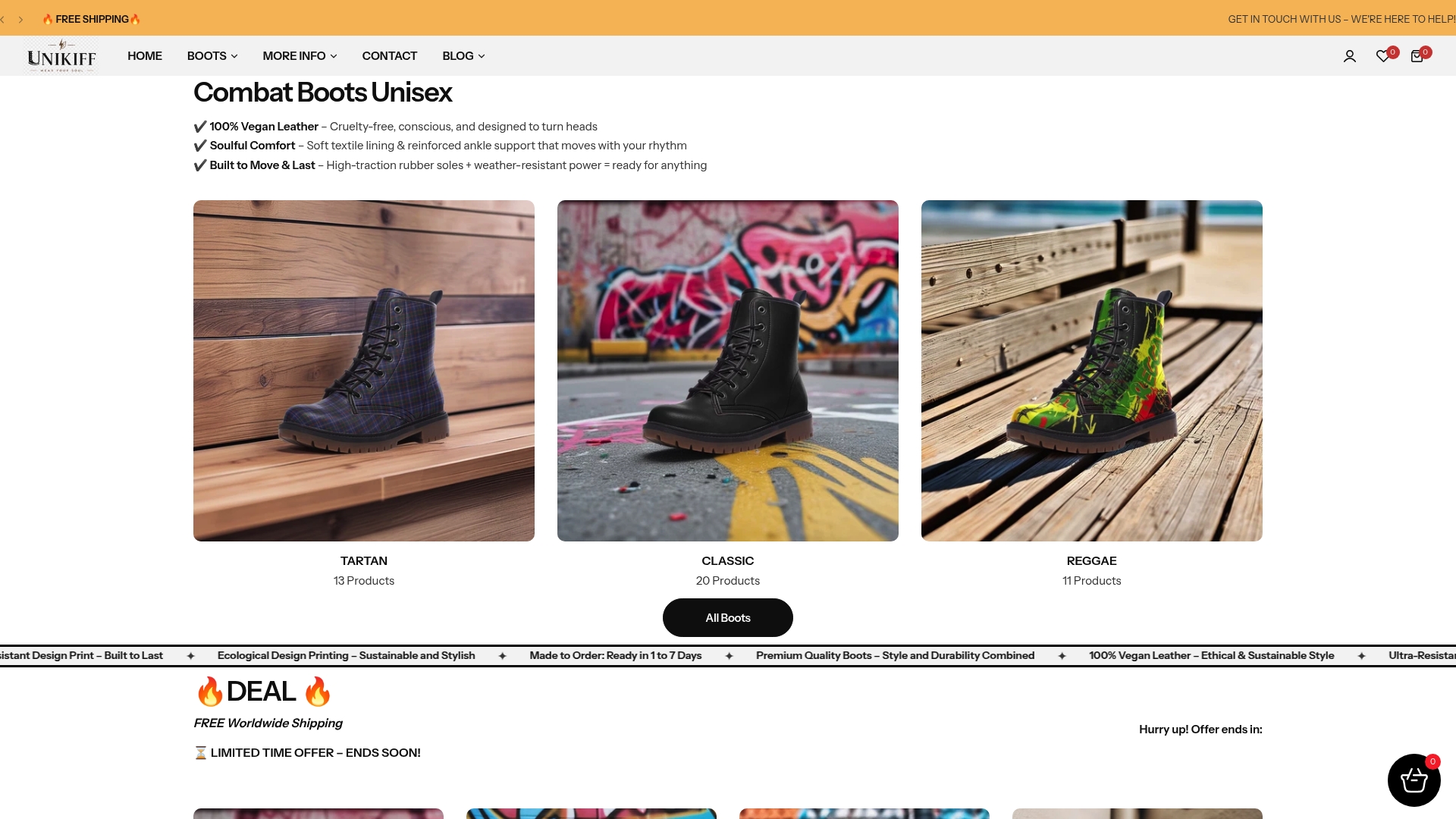
We make every boot vegan and cruelty-free by design, so you never have to run the three-step check on one of our pairs, that work is already done. Whether you’re after timeless Classic Combat Boots, bold Punk Combat Boots, or soft-meets-sturdy Cottagecore Combat Boots, the materials and testing policy behind them stay consistent.
A few ways to find your pair:
- Check our size guide before you order getting the fit right the first time.
- Read our vegan leather materials breakdown if you want the specifics before you commit.
FAQ
Does cruelty-free mean no animal testing?
Yes, that’s the core of the term: a cruelty-free claim means the brand asserts no animal testing was used in developing the product or its ingredients. It does not automatically mean the product is free of animal-derived materials, that’s a separate vegan claim.
Are boots cruelty-free by default?
No, boots are not automatically cruelty-free just because they’re footwear. Cruelty-free status depends on the brand’s actual testing policy and, ideally, independent certification like the Cruelty Free International approval programme, not an assumption based on the product type.
What are the downsides of vegan leather?
Some vegan leathers rely on fossil-derived polymers like PU or PVC, and certain plant-based versions use polymer coatings to improve durability, which can affect microplastic shedding at end of life. A 2026 analysis still found most vegan leathers carry a lower carbon footprint than bovine leather overall.
How can I check if a boot brand’s cruelty-free claim is real?
Look for a published cut-off date, named certification, or documented supply-chain audits rather than just the word “cruelty-free” on a tag. Combining a materials check with a quick question to customer service, as outlined in our guide to spotting authentic vegan and cruelty-free products, gives you a much clearer answer.
Does Unikiff make vegan and cruelty-free combat boots?
Yes, our vegan combat boots are made without animal-derived materials and without animal testing, so both claims apply to every pair. You can browse solid colors and printed styles across our collections to find the look that fits you.
Sources
- Our Approval Programme — Cruelty Free International
- Put Your Best Foot Forward With PETA’s Guide to Vegan Shoes — PETA
- The carbon footprint of leather: a comprehensive reassessment — ACS Sustainable Chemistry & Engineering