


Cruelty-free refers to testing practices; vegan refers to ingredients. Neither one automatically implies the other, and mixing them up is the single most common mistake shoppers make when trying to buy ethically. A product can pass one test and completely fail the other. The only way to know for sure is to check both claims separately, ideally against a real third-party certifier.
TL;DR:
- Brands claiming cruelty-free must be independently verified for the entire supply chain, as certification logos indicate their scope of testing practices.
- Vegan claims require ingredient-level audits and ongoing compliance checks, making certification from reputable organizations essential for verification.
- A product can be cruelty-free but not vegan if it contains animal-derived ingredients like beeswax or lanolin, which are common in cosmetics and footwear.
- Labels like “not tested on animals” and “vegan friendly” are often vague or misleading unless backed by recognized third-party certification.
- Footwear may contain animal derivatives in glues and dyes even if the upper material appears vegan; full supply chain transparency is crucial.
Table of Contents
- Cruelty Free vs Vegan: What “Cruelty-Free” Actually Covers
- Cruelty Free vs Vegan: What “Vegan” Means on a Product Label
- Where Cruelty-Free and Vegan Overlap (and Where They Don’t)
- How to Verify Cruelty-Free and Vegan Claims Before You Buy
- Watch for These Misleading Label Phrases
- The Hidden Animal Ingredients in Shoes (and Other Non-Cosmetic Goods)
- How Unikiff Builds Boots That Are Actually Vegan and Cruelty-Free
- Get Boots That Actually Match Your Values
- Certification Bodies and Databases Worth Bookmarking
- Sources
Cruelty Free vs Vegan: What “Cruelty-Free” Actually Covers
“Cruelty-free” is about testing, full stop. It means the finished product, its individual ingredients, and (ideally) its suppliers were not tested on animals at any stage of development. That last part matters more than most shoppers realize: a brand can honestly claim its final product wasn’t tested on animals while an ingredient supplier several steps up the chain still ran those tests.
That gap is exactly why third-party certifiers exist. Three names dominate the space, and they don’t all promise the same thing:
- Leaping Bunny audits the entire supply chain, including ingredient suppliers, not just the finished product.
- Cruelty Free International runs a similar supply-chain-focused program, mostly recognized in the UK and Europe.
- PETA’s Cruelty-Free program relies on a signed company statement rather than an independent audit.
Here’s the uncomfortable part: cruelty-free isn’t a legally defined term in most major markets, including the United States. The FDA offers labeling guidance, but it doesn’t regulate what “cruelty-free” or “not tested on animals” actually means on a package. That leaves the door wide open for brands to slap the phrase on a box with zero backup.
Cruelty Free vs Vegan: What “Vegan” Means on a Product Label
Vegan means no animal-derived ingredients or byproducts, anywhere in the formula or materials. That’s the whole definition, and it says nothing about testing. Legitimate vegan verification goes further than reading an ingredient list. It traces the supply chain, because a lot of animal-derived material hides under names that don’t sound animal-derived at all.
Watch for these common offenders on labels:
- Beeswax (often listed as “cera alba”)
- Lanolin (from sheep’s wool)
- Carmine (crushed insects, used for red pigment)
- Collagen and gelatin (typically animal connective tissue or bone)
- Shellac (secreted by lac insects)
- Casein (a milk protein, common in adhesives and some coatings)
The Vegan Society’s Vegan Trademark is the gold standard here because it requires an ingredient-level audit and ongoing compliance checks, not a one-time self-report. A brand that simply prints “vegan” on its packaging without that backing is making a claim, not proving one.
Where Cruelty-Free and Vegan Overlap (and Where They Don’t)
This is where things get genuinely confusing, so let’s make it concrete with real category examples.
- Cruelty-free but not vegan: A moisturizer made without any animal testing but formulated with lanolin or beeswax. Zero animal testing, but not vegan.
- Vegan but not cruelty-free: A 100% plant-based formula from a brand that still tests finished products on animals to meet a specific country’s import requirements. Fully vegan ingredients, but not cruelty-free.
- Both: A product with plant-based or synthetic ingredients from a brand certified by both Leaping Bunny and the Vegan Trademark.
- Neither: A product with animal-derived ingredients from a brand with no testing policy on record at all.
Three shopping rules cut through most of the confusion. First, verify both claims independently, since experts consistently warn against treating them as interchangeable. Second, favor products with recognized third-party logos over vague marketing copy. Third, actually read the ingredient list, especially on anything with wax, pigment, or a glossy finish.
Small, transparent brands that openly list every ingredient and answer direct questions about sourcing can sometimes be trusted even without a certification logo, like those offering personal-care or mask products with clear ingredient lists. Larger brands making bold ethical claims without any third-party backing deserve more skepticism, not less.
How to Verify Cruelty-Free and Vegan Claims Before You Buy
Each certification guarantees something different, so knowing what you’re actually looking at saves you from false confidence. Leaping Bunny checks testing practices across the entire ingredient supply chain. The Vegan Trademark audits ingredients and enforces a no-animal-testing-for-cosmetic-purposes rule as part of its criteria. PETA runs separate cruelty-free and vegan programs, and it’s worth checking which one (or both) a product actually carries.
A few fast, practical checks:
- Search the brand name directly in the certifier’s public database rather than trusting the logo alone.
- Check the brand’s own policy page for a fixed cut-off date, since a real cruelty-free commitment usually names one.
- Email customer support with a direct question if the policy page is vague. A brand with nothing to hide will answer clearly.
- Remember that some countries still require animal testing for cosmetics sold within their borders, which can affect a global brand’s status even if its home-market formula is untested.
Pro Tip: If a brand’s cruelty-free policy doesn’t list a specific starting date, treat that as a warning sign. Real commitments are dated because they mark a genuine before-and-after in company practice.
Watch for These Misleading Label Phrases
Marketing language and verified claims are not the same thing, and some phrases are designed to sound reassuring without promising anything specific.
Be cautious of:
- “Not tested on animals” without a certifier name attached.
- “Vegan friendly”, which is softer and less binding than a straight “vegan” claim.
- “Natural” or “ethical”, neither of which has a fixed legal meaning tied to testing or ingredients.
Red flags worth noticing: no certifier logo anywhere, vague language about “suppliers,” and total silence on whether the product is sold in markets that require animal testing.
Three quick questions cut through the fog fast: “Are you certified by Leaping Bunny, PETA, or the Vegan Trademark?” “Do you test in any country where it’s legally required?” “Can you confirm your full ingredient list is animal-free, including glues or coatings?”

The Hidden Animal Ingredients in Shoes (and Other Non-Cosmetic Goods)
Footwear plays by different rules than lipstick, and that’s exactly where most “vegan” shopping mistakes happen. A shoe can use synthetic upper material and still contain animal-derived components in places nobody checks.
The usual hiding spots:
- Casein or hide-based glues in the sole or lining, common enough in footwear construction that they deserve specific attention.
- Certain dyes and finishes that use animal byproducts in processing.
- Linings or trims that go unmentioned because the marketing focuses only on the visible upper material.
A single “vegan leather” label on the outside tells you nothing about the glue holding the sole together. That’s why whole-supply-chain certification matters more in footwear than in almost any other category. Before buying, ask for a material breakdown, check the product page for specifics on glue and lining, and lean toward brands that certify the entire construction, not just the upper.
Pro Tip: If a shoe brand’s product page mentions the upper material but stays silent on adhesives and lining, that silence is worth a direct question before you check out.
How Unikiff Builds Boots That Are Actually Vegan and Cruelty-Free
Unikiff builds every pair from vegan leather uppers with no animal-derived adhesives, linings, or finishes anywhere in the construction, not just the visible surface. That whole-boot approach is exactly what the difference between vegan and genuine leather comes down to in practice. If you’re ever unsure about a material, our team will confirm it directly. Check our vegan combat boots for confirmed cruelty-free, vegan pairs.
— David
Get Boots That Actually Match Your Values
You’ve read this far because you want the real answer, not a marketing slogan, and Unikiff’s boots deliver on both fronts at once. Every pair in our vegan combat boots collection uses vegan leather uppers with no hidden animal-derived glues or linings, so you’re not stuck cross-checking a supply chain yourself before you check out.
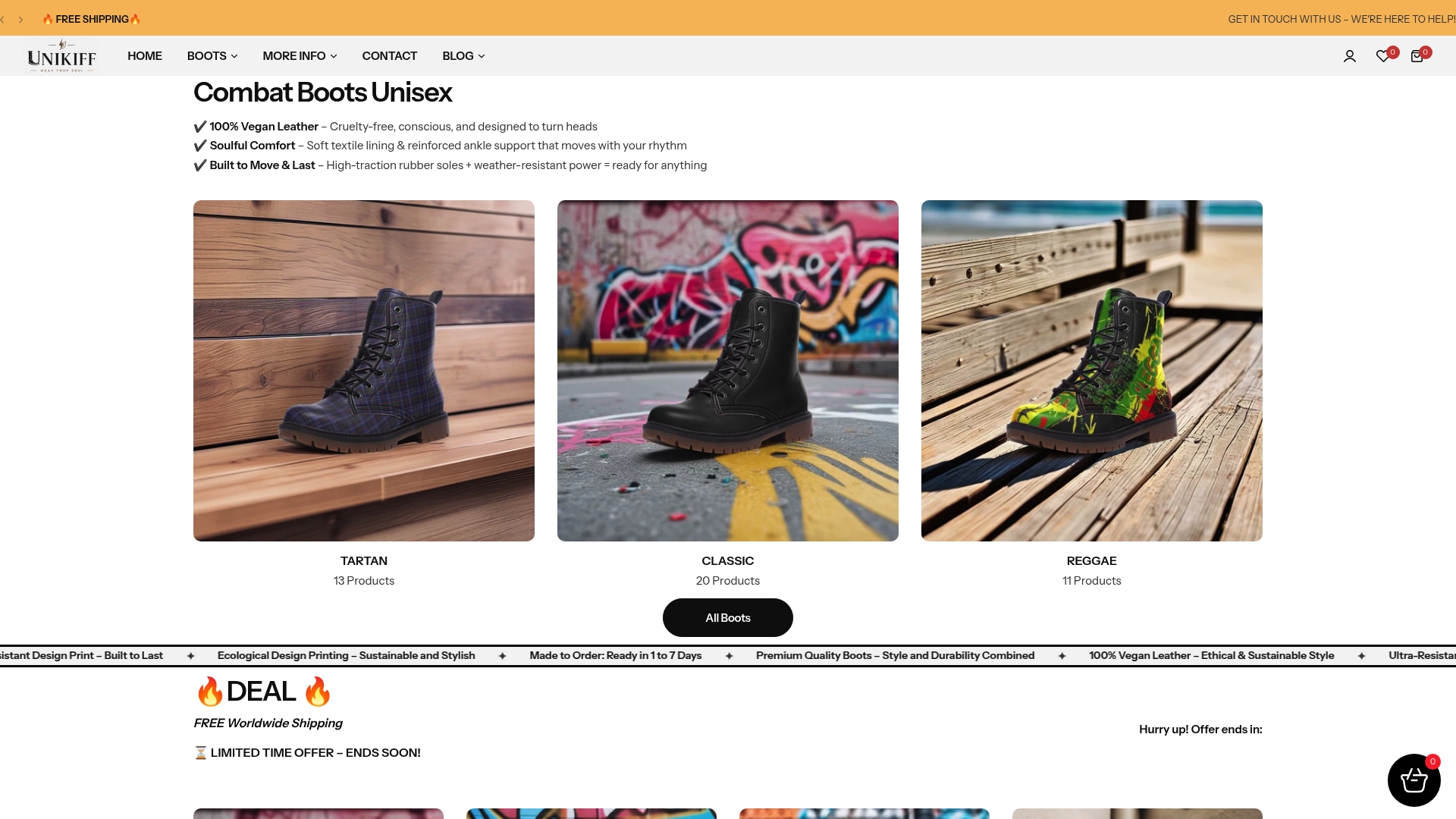
Whether you’re after solid black boots for everyday wear or a bold print for a punk or gothic look, styles like the Skull and Roses or Dark Purple pair combat-boot durability with a construction we stand behind fully. Not sure about sizing? Run through our size guide before you order so your first pair fits right the first time.
Certification Bodies and Databases Worth Bookmarking
- Vegan Trademark database — best for ingredient-level vegan checks.
- PETA’s cruelty-free and vegan programs — fast lookups and ingredient lists.
- FDA cosmetics labeling guidance — useful context for U.S. shoppers on what labels legally guarantee.
Sources
- The Difference Between ‘Cruelty Free’ and Vegan or Vegetarian? - Vegetarian Society
- Cosmetics labeling claims: cruelty-free/not tested on animals - FDA
- Cruelty-free and vegan makeup - PETA