


Vegan leather is any non-animal material engineered to look and perform like leather, and it falls into two broad camps: synthetic plastics (PU, PVC, microfiber) and plant or biotech based composites (pineapple, cactus, mushroom, apple, grape, cork, recycled plastics). You’ll see these names on hang tags and product pages constantly, so it helps to know what’s actually behind each one.
The material names you’ll run into most often:
- Polyurethane (PU) and polyvinyl chloride (PVC), the classic plastic-based options
- Microfiber, a finely woven synthetic backing
- Piñatex, made from pineapple leaf fiber
- Desserto, made from cactus
- Mylo, grown from mycelium (mushroom root structure)
- AppleSkin, made from apple waste
- Cork and recycled PET (from plastic bottles)
Here’s the catch most shoppers miss: even the plant-based options usually still need a polymer binder or fabric backing to hold together and resist wear. We’ll get into why that matters below.
Key Takeaways
Vegan leather durability and sustainability depend far more on the backing, coating, and construction quality than on whether the label says “plant-based” or “synthetic.”
| Point | Details |
|---|---|
| Two main categories | Vegan leather is either petroleum-based plastic (PU, PVC) or a plant/biotech composite (pineapple, cactus, mushroom, apple, grape). |
| Plant content varies widely | Even labeled “plant-based” products often blend fiber with a polymer binder; check the stated percentage before assuming it’s mostly natural. |
| Composites complicate recycling | Mixed plant-fiber-and-plastic materials rarely biodegrade fully and don’t fit standard plastic recycling streams. |
| Quality shows in construction | Look for a substantial fabric backing, even thickness, and clean edge stitching to judge real durability. |
| Built for daily wear | Unikiff’s vegan combat boots pair durable vegan leather uppers with reinforced ankle support and high-grip soles for long-term use. |
Table of Contents
- What Is Vegan Leather Made Of, Exactly?
- Materials Used in Vegan Leather: A Practical Rundown
- How Is Vegan Leather Produced?
- Which Plant-Based and Biotech Leathers Should You Know?
- Is Vegan Leather Biodegradable and Eco-Friendly?
- How to Spot Higher-Quality Vegan Leather
- Try Vegan Leather Combat Boots Built to Last
- Sources
What Is Vegan Leather Made Of, Exactly?
Vegan leather is a catch-all label for any non-animal material designed to mimic the look, feel, or performance of animal hide. That’s the whole definition. It doesn’t specify a single formula, which is exactly why the category spans everything from pure plastic sheeting to pineapple fiber composites.
You’ll also run into “faux leather,” “pleather,” and “PU leather” used almost interchangeably with vegan leather, and that’s worth untangling. Faux leather and pleather usually signal a plastic-based product, typically PU or PVC, with no plant content at all. “Vegan leather” is the broader umbrella term, and it’s the one brands lean on when marketing plant-based or lab-grown alternatives, since “faux” can sound cheap while “vegan” signals an ethical choice.
Here’s where it gets messy: some products marketed as vegan leather are marketed as plant-based when they’re mostly plastic with a small percentage of plant fiber mixed in. Percentage matters more than the marketing language, and we’ll show you what to check for later.
Materials Used in Vegan Leather: A Practical Rundown
Polyurethane (PU) and polyvinyl chloride (PVC) have dominated the vegan leather market for decades. Both are petroleum-based plastics, but they behave differently. PU tends to be more flexible and less prone to cracking than PVC, which is why it shows up more often in footwear and bags where flex matters. PVC is cheaper and more waterproof, but Greenpeace has flagged it for releasing hazardous pollutants and containing plasticizers that raise both environmental and health concerns over its lifecycle.
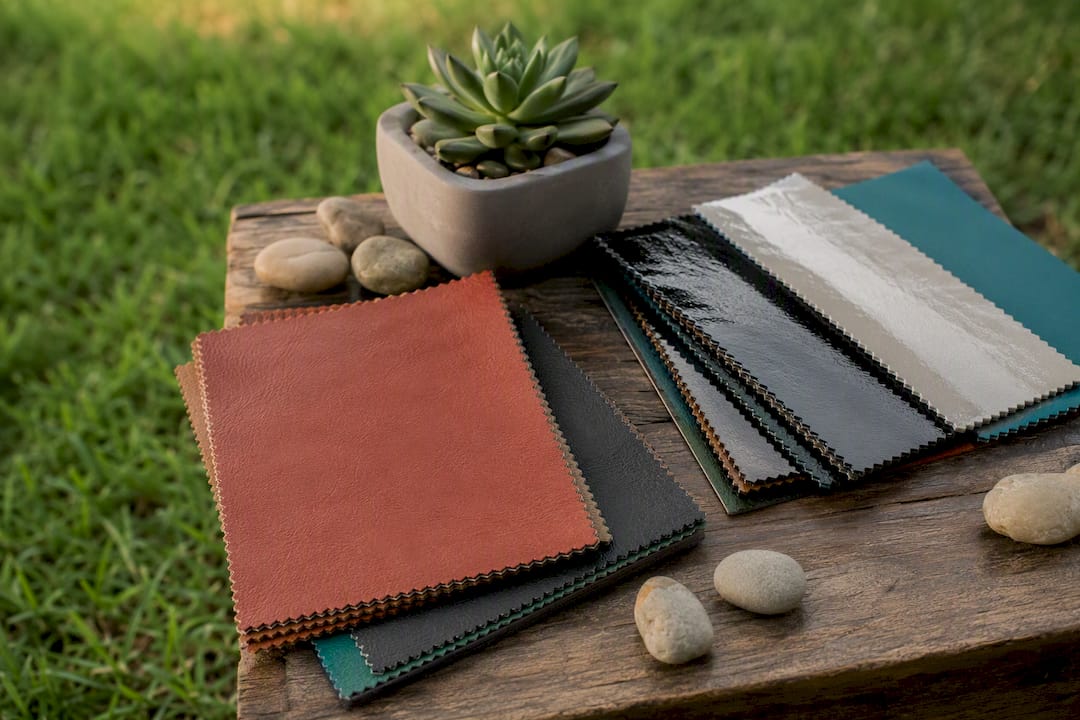
Microfiber synthetics use ultra-fine woven fibers as a backing layer, which improves breathability and gives a softer hand-feel than basic PU sheeting. Recycled PET variants repurpose plastic bottles into the backing or coating layer, cutting down on virgin plastic use, though the finished material is still a polymer and carries the same microplastic shedding concerns as any synthetic textile.
Then there’s the plant-based lineup:
- Piñatex, made from pineapple leaf fiber left over from harvest, prized for a fibrous, textured finish
- Desserto, made from cactus, known for a smoother, more leather-like surface
- AppleSkin, made from apple pomace waste from juice production
- Vegea/GrapeSkin, made from grape skins and seeds left over from winemaking
- Cork, harvested from cork oak bark, naturally water-resistant and lightweight
Each of these needs its durability tested against real use, not just the marketing photo. Pro Tip: When a label names a plant, check the fine print for the actual percentage of plant content. A “cactus leather” bag that’s 30% cactus and 70% polyurethane is still mostly plastic.
How Is Vegan Leather Produced?
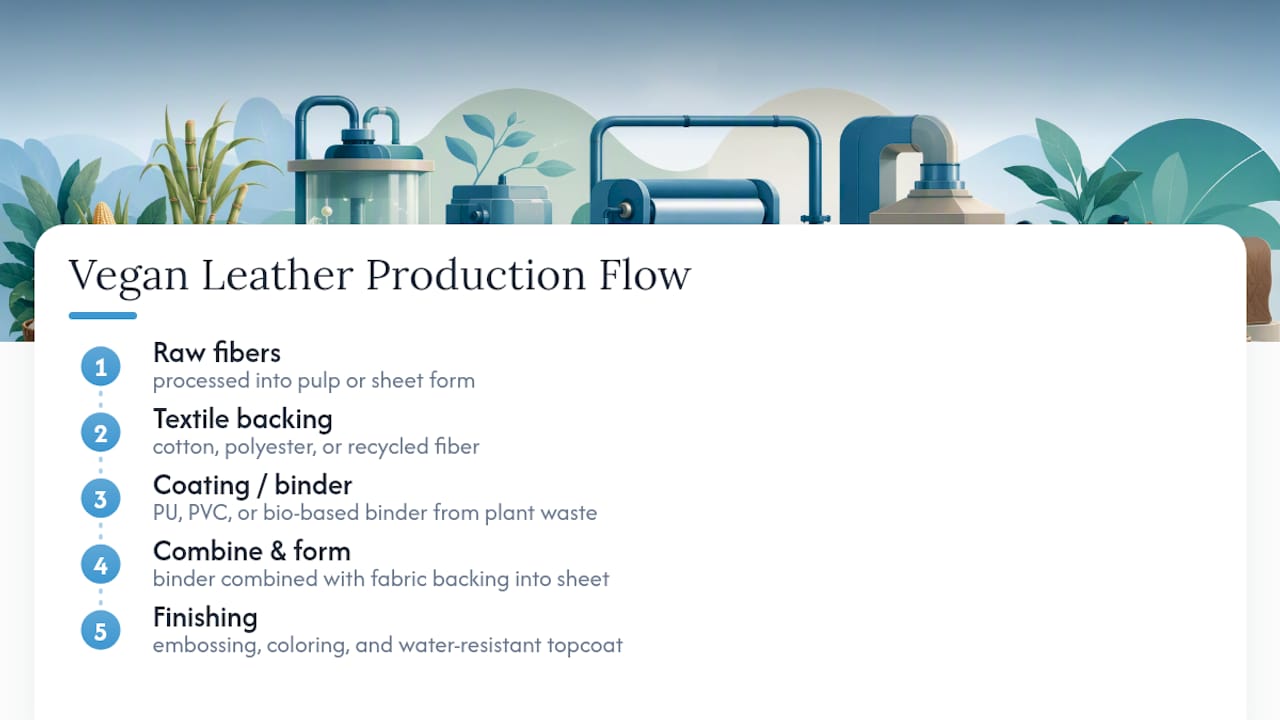
Most vegan leather is a composite, not a single material. Construction typically starts with a textile backing, cotton, polyester, or recycled fiber, that gives the material its structural strength. On top of that goes a coating layer, which might be PU, PVC, or a bio-based binder derived from plant waste. A finishing step follows: embossing to create a grain pattern, coloring, and often a water-resistant topcoat.
Plant fibers alone rarely have the tensile strength or abrasion resistance to survive daily wear, which is exactly why manufacturers add polymer binders or fabric backings in the first place. Pineapple leaf fiber, for instance, doesn’t hold together as a standalone sheet. It needs a resin system to bind it into something you can cut, stitch, and stretch over a boot form.
The material flow generally runs like this: agricultural waste or an extracted fiber gets processed into pulp or sheet form, combined with a binder and a fabric backing, then finished with color, texture, and a protective coating. Reading a product description with this flow in mind makes the ingredient list a lot less mysterious.
Which Plant-Based and Biotech Leathers Should You Know?
Piñatex starts as pineapple leaf fibers extracted during harvest, then felted into a non-woven textile and coated for durability. It’s become one of the most established plant-based leathers on the market, showing up in bags, wallets, and shoe uppers.
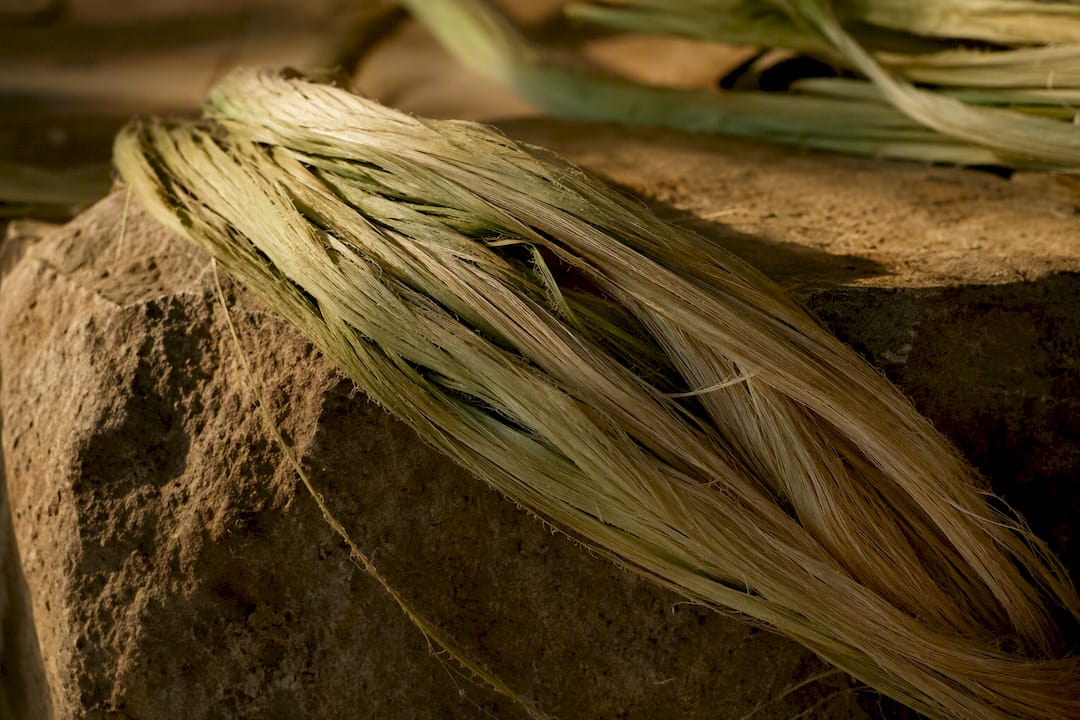
Desserto processes cactus pads harvested from mature plants (without harming the plant) into a fiber that’s then combined with a partially bio-based backing.
Mylo and similar mycelium leathers take a different route entirely: fungal networks are grown in controlled conditions into dense mats, then processed into sheets. This is genuinely biotech, not agricultural waste repurposing, and researchers are actively working to improve the tensile strength and abrasion resistance of these materials so they need less reliance on plastic binders.
Some newer entrants report notably high plant content. Viridis has reported a high plant-based content in its material, though even that still requires a polymer element for structure.
The honest downside across this whole category: most plant-based leathers still aren’t fully biodegradable because of that binder layer. Right now, they tend to suit accessories, bag panels, and shoe uppers better than high-flex, high-abrasion applications, though that’s shifting as formulations improve.
Is Vegan Leather Biodegradable and Eco-Friendly?
This is where the marketing gets ahead of the material science. Many plant-based leathers are sold with words like “circular” or “compostable,” but they’re composite materials, plant fiber plus plastic resin, and that combination complicates municipal recycling and end-of-life disposal in most existing waste streams. A bag that’s 40% pineapple fiber and 60% polyurethane doesn’t compost, and it usually can’t go through standard plastic recycling either.
Comparing the three broad categories at a high level: animal leather carries tanning-related chemical impacts, synthetic plastics come from fossil fuels and shed microplastics over their lifespan, and plant-based composites use less fossil-derived material upfront but still face durability and disposal challenges. Industry reporting has suggested some vegan leather production processes run lower in certain impact categories than animal leather, but that comparison depends heavily on the specific material and how long the finished product actually lasts.
Regulators and consumer-protection bodies are increasingly scrutinizing vague “plant-based” and “eco” marketing claims, precisely because composite materials create real recycling and labeling headaches that a simple hang tag can’t capture.
When you’re evaluating a claim, look for the actual percentage of plant content, recognized certifications like Oeko-Tex or USDA BioPreferred, and any transparent environmental product declaration. A brand willing to publish specifics is a brand worth trusting more than one leaning on the word “eco” alone.
How to Spot Higher-Quality Vegan Leather
Run your fingers along the edge of the material. Higher-quality vegan leather has a consistent, substantial backing (cotton or polyester, not a flimsy paper-thin scrim), even thickness across the panel, and clean stitching with no fraying at the seams.
Check the specs before you check the price:
- Percentage of plant or bio-based content, not just the material name
- Backing composition (cotton and polyester both perform differently over time)
- Any third-party certification backing up sustainability claims
- Surface finish, a slightly textured grain tends to hide scuffs better than a glossy, flat finish
Care matters just as much as the initial purchase. Clean synthetic surfaces with a damp cloth and mild soap; avoid high heat sources like radiators or direct sun, which accelerate cracking. Plant-based composites generally follow the same rule of thumb, gentle cleaning, no aggressive flexing, no prolonged heat exposure. Our guide on cleaning and maintaining vegan leather boots walks through the specifics.
Pro Tip: Give any vegan leather product a soft bend test before buying. If you see whitening or fine cracks at the fold, the coating is likely to peel with regular wear, no matter how nice the surface looks in the store.
Why Material Choice Matters for Vegan Boots
Combat boots take a beating that a handbag never will: constant flexing at the ankle, ground contact, weather exposure. That’s exactly why the backing and coating quality matter more here than almost anywhere else in vegan leather goods. A thin PU coating over a weak backing will crack at the crease line within months. A properly reinforced upper, paired with a durable coating, holds its shape and its finish through years of actual wear. Unikiff builds its boots around that reality, prioritizing cruelty-free materials that are chosen for resilience, not just for how they photograph on day one.
Try Vegan Leather Combat Boots Built to Last
Everything above points to one practical conclusion: durability comes down to the backing, the coating, and the construction quality, not just the material’s name on a hang tag. Unikiff’s vegan combat boots are built with that in mind, reinforced ankle structure, durable vegan leather uppers, and high-grip rubber soles designed for city streets, festivals, and everyday wear without cracking or peeling early.
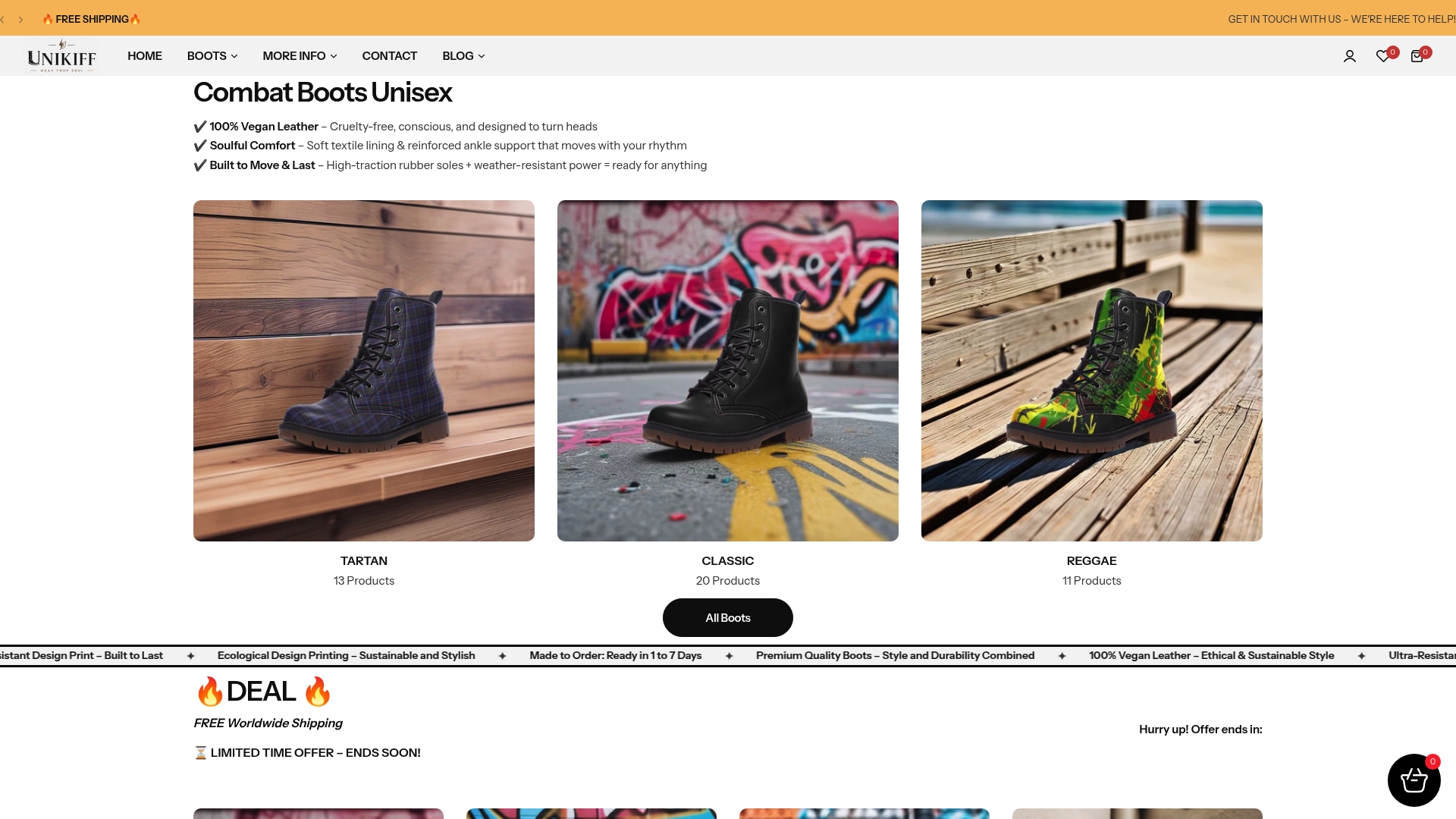
Every pair is made-to-order in solid colors or bold prints for gothic, punk, grunge, and cottagecore styles, so you get a boot that holds up as well as it stands out. If you’re ready to find your size, check the size guide before you order, or browse the current collection to see which print or colorway fits your look.
Sources
- Plant-based leather - Wikipedia
- PMC article on biotechnological materials (research overview)
- Phys
- What Is Vegan Leather Made Of? | Wirecutter (The New York Times)