


Most combat-style boots handle light to moderate rain just fine if the upper is water-resistant or treated, but they won’t stay fully dry in a downpour without extra help. For reliably dry feet in heavy or prolonged rain, pick a boot with a waterproof membrane like GORE-TEX EXTRAGUARD or apply a proven waterproofing treatment before you head out.
TL;DR:
- Gusseted tongues and sealed seams or welts block common entry points, while high grip rubber soles improve traction on wet sidewalks and trails.
- Full grain leather responds best to wax, while synthetic and mixed uppers suit sprays; avoid wax on textured vegan finishes unless the label approves.
- Clean boots before treatment, apply waterproofer while the uppers are slightly damp, cover seams and the tongue junction, then let them dry naturally.
- Reapply waterproofing when water stops beading; the timing depends on wear, dirt, oils, and abrasion rather than a fixed schedule.
- Dry soaked boots with paper stuffing or a fan, and avoid radiators and hair dryers because direct heat can crack leather or warp synthetics.
Table of Contents
- What makes a combat boot rain-ready: materials, membranes, and seams
- Wax, spray, or cream: choosing the right waterproofing method
- Step-by-step: waterproofing your combat boots at home
- Cleaning, drying, and long-term maintenance that protects your boots
- Our take: what to expect from vegan combat boots in wet weather
- Where to start: rain-ready vegan combat boots and care resources
- FAQ
- Sources
What makes a combat boot rain-ready: materials, membranes, and seams
The upper material sets the baseline. Full-grain leather resists water naturally and takes wax well. Vegan leather (synthetic PU) sheds light rain nicely and responds best to spray-on treatments rather than wax. Mixed textile uppers need a DWR finish to keep water from soaking in.
A waterproof membrane changes the game entirely. GORE-TEX EXTRAGUARD paired with seam-sealed construction delivers durable waterproofing and breathability, tested against specific water-simulation standards. Without a membrane, you’re relying on surface treatments alone, which work well but need upkeep.
A few construction details separate a rain-ready boot from a fair-weather one:
- Gusseted tongues keep splash and runoff from sneaking in through the laces.
- Sealed welts and seams close off the stitching points where water usually gets in first.
- High-grip rubber outsoles cut down on slips when sidewalks and trails turn slick.
A DWR (durable water repellent) coating is what makes water bead on the surface instead of soaking in, and it’s what keeps a boot’s fabric panels dry even before water reaches the membrane. DWR finishes degrade with dirt, oils, and abrasion, which is why boots that looked waterproof last season might start soaking through now.
Wax, spray, or cream: choosing the right waterproofing method
Not every treatment works on every material, and using the wrong one can do more harm than good; for example, you can learn more about waterproof leather hats with beeswax or spray techniques that share tips applicable to leather boot care.
- Wax suits smooth, full-grain leather best. Warming the boot slightly before application helps the wax soak in rather than sit on top. Skip wax on textured or suede-style vegan finishes unless the product label specifically says it’s safe for that surface.
- Spray-on waterproofers work well on mixed-material and synthetic uppers, including vegan leather. Tacticalgear for military and tactical boots, with cleaning always coming first.
- Creams and conditioners restore suppleness and help revive a fading DWR finish, but they work alongside a membrane, not instead of one.
If your boots have a waterproof membrane like GORE-TEX, be careful. Heavy wax can clog the fabric and cut down on breathability, which defeats the purpose of the membrane. Always check the product instructions before treating a membrane-lined boot.
Pro Tip: Test any new waterproofing product on a small, hidden patch first, especially on colored or printed vegan leather, since some sprays can slightly darken the finish.

Step-by-step: waterproofing your combat boots at home
Treating your boots properly takes a little time and pays off the first time you walk through a puddle.
- Prep the boots. Remove the laces, brush off loose dirt, and rinse away any mud.
- Clean before treating. A technical cleaner removes oils and residue that stop treatments from bonding properly.
- Apply while damp. Treating footwear while it’s still slightly wet helps the product absorb into the material rather than sitting on a dry, sealed surface.
- Focus on seams and seals. Seams, welts, and the tongue junction are where water gets in first, so cover these spots thoroughly and evenly.
- Dry naturally. Only use gentle heat if your product’s instructions allow it. High heat can warp synthetic uppers and damage adhesives.
- Run a bead test. Drop a few drops of water on the treated surface. If it beads up and rolls off, you’re set. If it soaks in, apply another thin layer.
Pro Tip: Reapply waterproofing as soon as water stops beading on the surface. How often that happens depends entirely on how much you wear your boots and in what weather.
Cleaning, drying, and long-term maintenance that protects your boots
Clean boots hold treatments better than dirty ones. A technical cleaner, such as the kind used in the REI waterproofing process for mixed-material boots, removes residue that would otherwise block a new coat of DWR from bonding.
When it comes to drying:
- Skip direct heat sources like radiators or hair dryers, which can crack leather and warp synthetics.
- Stuff boots with dry paper to absorb moisture and swap it out as it gets damp.
- Point a fan at them for faster, even drying.
- Spray-on or wash-in DWR products can revive a worn-out water-repellent finish, and some formulas call for a quick, low-heat reactivation step per the label.
On a rainy day with no time to treat your boots properly, a quick spray of waterproofer, a pair of gaiters, or simply packing spare socks will keep you comfortable until you can do the full routine. For a deeper clean beforehand, our guide to cleaning vegan combat boots without damage walks through the safest products and techniques.
Our take: what to expect from vegan combat boots in wet weather

We design our vegan combat boots for everyday durability and traction, with reinforced details. We don’t pretend every boot handles a downpour the same way a sealed, membrane-lined boot would.
If you’re walking through heavy or prolonged rain, reach for styles with sealed details and give the upper a proper treatment before you go. Stick to a regular reproofing schedule and dry your boots the right way after every soak. That combination protects both the vegan material and the bold look you picked your boots for in the first place.
— David
Where to start: rain-ready vegan combat boots and care resources
We build every pair with cruelty-free vegan uppers, reinforced detailing, supportive ankle structure, and high-grip rubber soles.
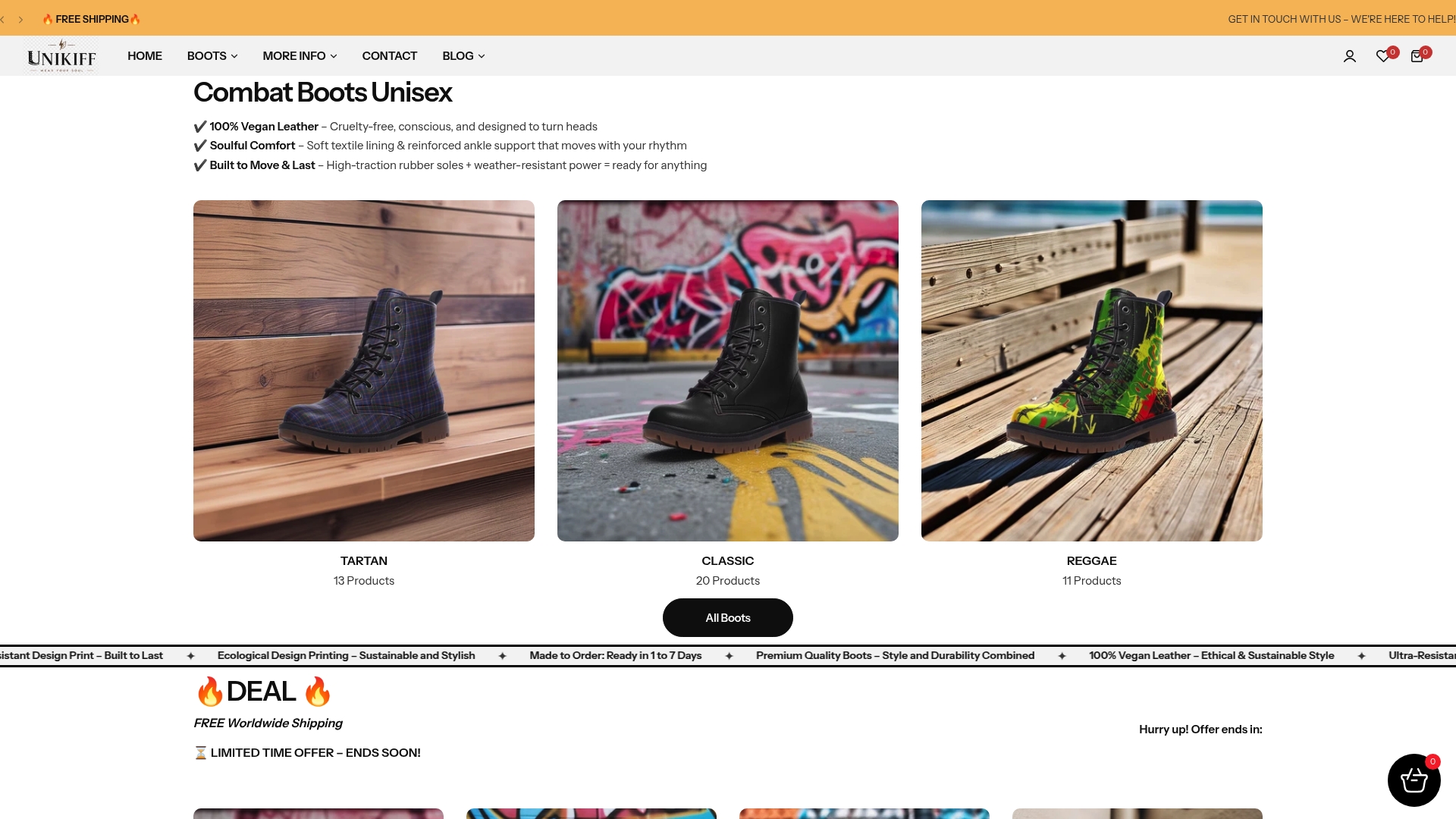
Ready to find your pair? Here’s where to start:
- Browse our full vegan combat boots collection for solid colors and bold prints alike.
- Check the size guide before you order to get the right fit.
- Read our vegan leather care guide so your boots stay rain-ready season after season.
If you love a reinforced, street-ready look, our Classic Combat Boots are a solid everyday pick, while the Skull Combat Boots bring a bolder statement to wet-weather outfits.
FAQ
Can I wear my boots in the rain?
Yes, most combat-style boots can handle light to moderate rain, especially if the upper has a water-resistant finish or has been treated. For heavy or prolonged rain, choose a boot with a waterproof membrane or apply a dedicated waterproofing spray first.
Which are the best military boots for wet conditions?
The best choice depends on your needs, but boots built with GORE-TEX EXTRAGUARD technology and sealed seams offer some of the most reliable waterproof performance available. Outside of membrane-based boots, a well-treated leather or vegan leather boot with sealed welts also performs well in wet weather.
Who makes the best waterproof boots?
Waterproof performance usually comes down to construction rather than a single brand: look for sealed seams, a waterproof membrane, and a DWR-treated upper. Brands that combine these elements, like those using GORE-TEX technology, tend to deliver the most consistent results.
Is WD-40 good for waterproofing boots?
Some products in the WD-40 lineup, such as WD-40 Specialist Silicone, are noted as an option some people use to add water resistance to leather work boots. For vegan or synthetic uppers, a dedicated fabric and leather waterproofing spray is a better match since it’s formulated to preserve breathability.
How often should I reapply waterproofing treatment?
Reapply whenever water stops beading on the surface instead of rolling off, since that’s a clear sign the DWR finish has worn down. How often that happens depends on how much you wear your boots and how much dirt, oil, and abrasion they pick up along the way.
Sources
- DWR Coating: Application, Cleaning & Care | REI Expert Advice
- GORE-TEX Extraguard Combat Boots | GORE-TEX Professional
- Tacticalgear