


The safest way to clean vegan leather boots is dry-brush first, then wipe with a damp microfiber cloth and a drop of mild clear soap, always spot-testing before you start. Skip the harsh solvents and skip soaking the boot. Allow your boots to air-dry completely before conditioning or waterproofing, using products suitable for your boot’s finish.
TL;DR:
- Use a microfiber cloth and a soft brush to remove loose dirt before applying a mild soap solution for cleaning vegan leather boots.
- Avoid harsh solvents, heavy oils, or soaking; always allow boots to air-dry fully before conditioning or waterproofing.
- Identify your boot’s finish type—patent, matte, or plant-based—to select appropriate cleaning methods and avoid damage.
- Condition with vegan-specific products or small amounts of coconut oil sparingly, and apply waterproof protection only when boots are completely dry.
- Perform a spot test with any cleaner or conditioner on a hidden area first, to prevent discoloration or finish deterioration.
Table of Contents
- What You’ll Need to Clean Vegan Leather Boots Safely
- Step-By-Step Cleaning Routine for Vegan Leather Boots
- Removing Scuffs, Stains, and Stubborn Marks
- Conditioning and Waterproofing Synthetic Uppers
- Drying, Shaping, and Storage Best Practices
- Quick Troubleshooting for Odors, Soaked Boots, and Delamination
- Unikiff’s Care Recommendations for Vegan Combat Boots
- Do Different Vegan Leather Materials Need Different Cleaning Methods?
- Eco-Friendly and Non-Toxic Cleaning Products Worth Using
- How to Spot-Test Any Cleaning Product Before Full Application
- How Your Care Routine Should Match How You Actually Wear Your Boots
- Ready to Add a New Pair to the Rotation?
- Sources
What You’ll Need to Clean Vegan Leather Boots Safely
Grab a few basics before you touch a single boot. Most of what you need is already in your bathroom cabinet.
- A microfiber cloth (two, ideally)
- A soft-bristled brush or an old toothbrush for seams and hardware
- A soft sponge
- Mild, clear dish soap (skip anything dyed or scented)
- Lukewarm water
- A vegan-specific conditioner or a small amount of coconut oil (optional)
- A synthetic-safe waterproofing spray
Stay away from acetone, bleach, strong solvents, and any leather oil that isn’t labeled safe for synthetic materials. Non-vegan conditioners often contain animal fats or heavy waxes that can leave a greasy film on PU or vinyl finishes. Wring your cloth until it’s damp, not wet, and always test on a hidden patch first.
Pro Tip: Keep a dedicated “boot cloth” separate from your regular cleaning rags. Old cloths can carry trace dye or detergent residue that transfers straight onto a light-colored upper.
Step-By-Step Cleaning Routine for Vegan Leather Boots
This routine takes about 15 minutes per pair and works for most matte and smooth vegan leather boots, including combat-style builds with reinforced stitching.
1. Prep the boot. Pull the laces and insoles if they come out easily. Dry-brush loose dirt from the seams, welt, hardware, and tread using your soft brush. This matters more than people think. Grit trapped in stitching can abrade the thread over time, especially around platform soles and reinforced eyelets, where debris tends to collect.
2. Mix your solution. Combine a few drops of mild clear soap with lukewarm water. Dampen your microfiber cloth in the mixture and wring it out until it’s barely wet. You want moisture on the surface, not soaking into the material.
3. Wipe in sections. Work the boot in small areas rather than trying to clean the whole thing in one pass. Rinse your cloth often so you’re not just spreading dirt around. Follow up with a second, cleaner damp cloth to lift any leftover soap film. This second wipe is the step most people skip, and it’s the reason boots end up looking dull or streaky after they dry.
4. Handle mud and salt separately. Let mud dry completely, then brush it off rather than scrubbing it in while wet. Road salt is trickier. It leaves a white residue that can eat into synthetic finishes if left alone. A diluted white vinegar rinse (spot-tested first) usually lifts it without harming the material underneath.
5. Final wipe and dry. Go over the whole boot one more time with a clean, barely damp cloth to even out the finish. Then set the boots aside to air-dry completely before conditioning or applying any protector. This lines up with what most footwear brands recommend: soapy water and a cloth work well for vegan shoes, and giving them a full day to dry prevents trapped moisture and lingering odors.
Pro Tip: If your boots have printed or painted uppers, wipe with even less pressure than you would on a solid color. Inks sit on top of the base material and can rub or fade faster than the surrounding finish.
Removing Scuffs, Stains, and Stubborn Marks
Not every mark responds to the same fix, and the wrong one can dull a finish permanently. What works depends entirely on what your boots are made from.
- Patent or vinyl finishes: A damp microfiber cloth handles most scuffs. For deeper marks, a tiny drop of glass cleaner on a cloth can restore shine, but spot-test on an inside panel first since not every patent coating reacts the same way.
- Matte PU and plant-based leathers: Skip solvents entirely. Mild soap handles most grime. For scuffs, a clean pencil eraser or a baking soda paste (a spoonful of baking soda mixed with a few drops of water) can lift marks without stripping the finish.
- Dye transfer from jeans or other fabric: Try a cotton swab lightly dampened with isopropyl alcohol, but only after testing on a hidden spot. If the stain doesn’t budge or you’re not confident, a cobbler is a safer bet than guessing.
Matching the fix to the finish is the whole game here. Identifying whether your boots are patent, matte, or plant-based determines which cleaners are safe and which ones will leave you with a dull patch you can’t undo.
Conditioning and Waterproofing Synthetic Uppers
Conditioning isn’t mandatory for every pair, but it helps some synthetics resist the cracking that comes with age and repeated flexing at the ankle. The catch is overdoing it. Too much conditioner leaves a tacky residue that actually attracts more dirt than it repels.
- Use a vegan-specific conditioner, or a very small amount of coconut oil as an occasional alternative.
- Apply sparingly with a soft cloth, then buff off any excess so nothing feels greasy to the touch.
- Reach for a synthetic-safe waterproofing spray only after the boots are completely dry, and follow the product’s instructions on distance and reapplication.
Vegan leather is generally water-resistant on its own, but rarely fully waterproof, so a protector spray genuinely adds value before festival season or a rainy commute. Reapply it seasonally based on how often you wear the boots. It’s also worth noting that a light conditioning routine prevents brittleness, but skipping the buffing step is exactly what leads to that dirt-magnet residue people complain about.
Drying, Shaping, and Storage Best Practices
How you dry and store your boots matters almost as much as how you clean them. Get this part wrong and you undo all the careful work from the wipe-down.
- Air-dry in a well-ventilated spot away from direct heat. Never use a hair dryer or set boots on a radiator. Extreme heat can warp synthetic uppers, crack the surface, and weaken the adhesive bond between sole and upper.
- For tall-shaft boots, use boot trees, shaft shapers, or loosely stuffed acid-free tissue paper to stop creases from setting in while they dry.
- Store pairs in dust bags or breathable boxes, and keep patent finishes separated from other pairs so they don’t stick together or transfer color in storage.
Quick Troubleshooting for Odors, Soaked Boots, and Delamination
Every boot owner runs into one of these eventually. Here’s the fast fix for each.
- Odors: Sprinkle baking soda inside the boots and leave it overnight, or use activated-charcoal inserts for ongoing control. Swap or hand-wash removable insoles when you can.
- Soaked boots: Pull out the insoles and laces, stuff the inside loosely with plain paper (it absorbs moisture without bleeding ink), and let them dry slowly at room temperature.
- Delamination or peeling seams: Stop wearing the boots and skip any waterproofing until it’s fixed. Photograph the damage and take the pair to a cobbler rather than trying to glue it yourself.
Unikiff’s Care Recommendations for Vegan Combat Boots
Combat boots take more abuse than a typical pair of flats, especially at festivals or on daily city wear where reinforced seams and hardware pick up grit fast. A weekly wipe-down keeps dirt from settling into stitching, a deeper soap-and-water clean once a month handles anything the weekly pass misses, and a protector spray before a rainy or muddy season adds a real buffer.
Printed and painted uppers deserve extra caution. Test any cleaner or polish on an inconspicuous edge first, since inks can react differently than the base material underneath, especially on bold designs where the print sits close to a seam.
For a deeper walk-through with photos and material notes specific to combat-boot construction, Unikiff’s full boot care guide covers seam and hardware maintenance in more detail.
Do Different Vegan Leather Materials Need Different Cleaning Methods?
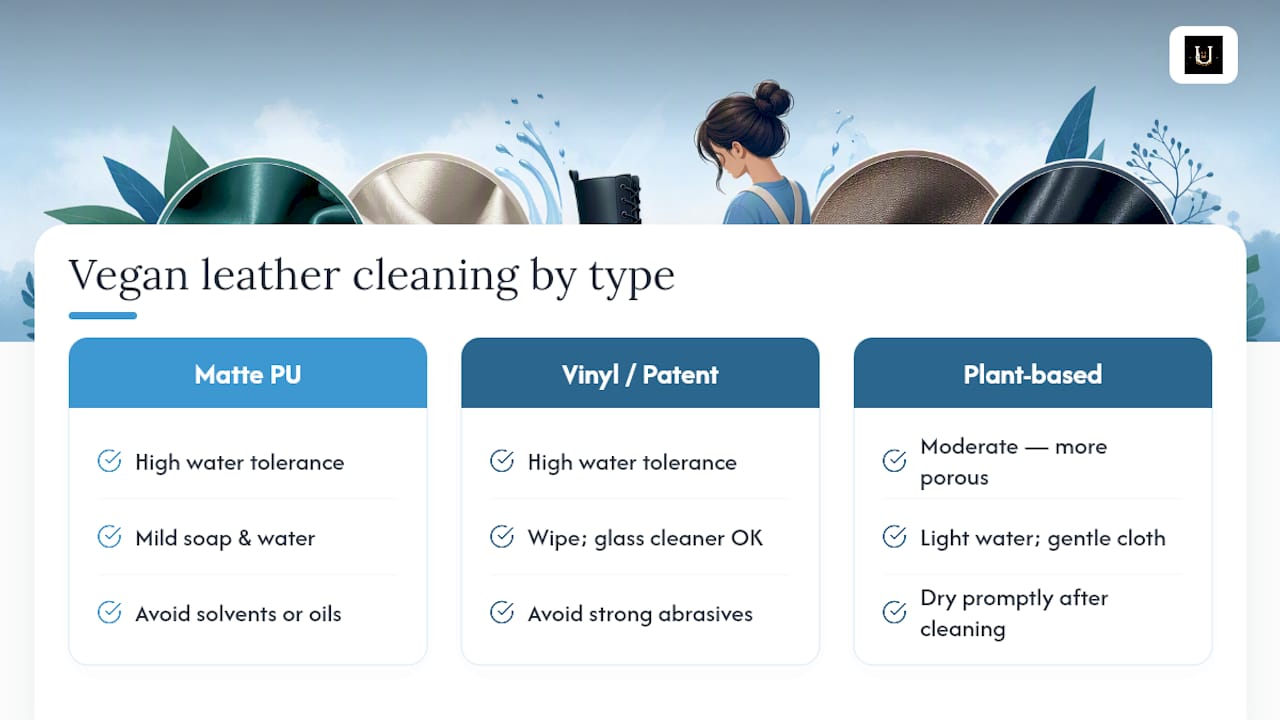
Yes, and this is where most cleaning mistakes happen. “Vegan leather” covers several distinct materials, and treating them all the same way is how boots end up damaged.
Polyurethane (PU) with a matte finish is the most forgiving. It tolerates mild soap and water without much fuss, but it doesn’t love solvents or heavy oils, which can soften the surface coating over time. Vinyl and patent-style finishes are shinier and tougher, standing up to a bit more wiping pressure, and they’re the one category where a dab of glass cleaner can genuinely help restore gloss.
Plant-based leathers made from materials like cork, cactus, or mushroom fiber sit somewhere in between. They’re generally sturdy but can be more porous than PU, meaning they absorb moisture faster and need a lighter hand with water. Choosing sustainable materials for footwear often comes with a tradeoff between eco-credentials and how much water the surface can handle before it needs extra drying time.
Textured or embossed finishes, common on printed combat boots, need gentler brushing since grit hides in the texture grooves. Knowing which category your boots fall into before you clean them is the single biggest factor in whether your routine helps or hurts.
Eco-Friendly and Non-Toxic Cleaning Products Worth Using
You don’t need a cabinet full of specialty shoe products to keep vegan leather boots looking sharp. Some of the most effective options are things you probably already own.
Mild, clear castile soap diluted in water is gentle enough for nearly every vegan leather finish and skips the synthetic fragrances and dyes found in many commercial shoe cleaners. Baking soda does double duty here too, working as both a stain-lifting paste and an overnight odor absorber, without a single harsh chemical involved. White vinegar diluted with water handles salt residue in winter without the ozone-layer concerns tied to aerosol de-icers.
When you do want a dedicated product, look for waterproofing sprays and conditioners specifically labeled safe for synthetic or vegan materials rather than traditional leather care lines, since traditional leather conditioners often carry animal-derived ingredients or heavier solvents that can degrade PU coatings over time. Water-based, low-VOC formulas are generally the better fit for synthetic uppers. Reading the label for “synthetic-safe” or “vegan leather approved” language takes ten seconds and saves you from a ruined finish.
How to Spot-Test Any Cleaning Product Before Full Application
Skipping this step is the single most common reason people damage a boot they were trying to clean. Vegan leather finishes vary enormously between brands and even between color batches, and a product that works beautifully on one pair can dull, discolor, or soften another.
Pick a small, hidden area first, like the inside of the tongue, the back of the heel near the top, or a spot under the boot’s flap where it won’t show. Apply a tiny amount of your cleaner, conditioner, or protector spray exactly as you would during full application. Let it sit for the amount of time you’d normally leave it on, then wipe it away and check the spot after it’s fully dry, not while it’s still wet, since some reactions only show up once the material dries.
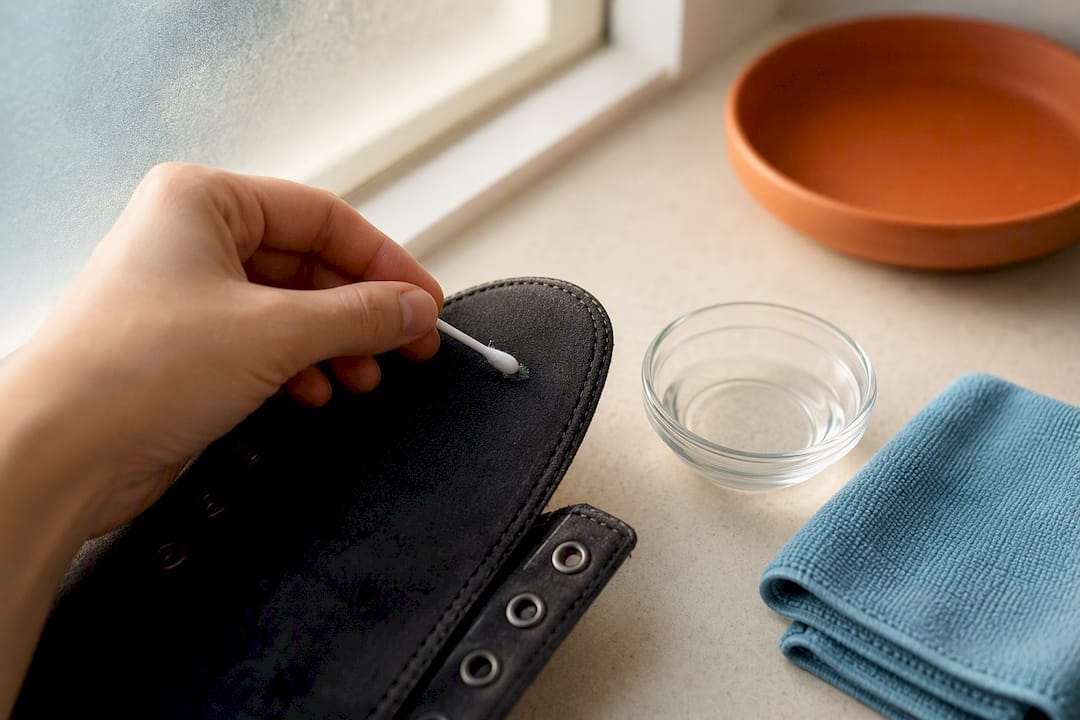
Look for any color change, stickiness, stiffness, or dulling of the finish. If nothing’s changed after a few hours, you’re clear to move on to the rest of the boot. If you notice any of those signs, stop and try a milder approach, or skip that product entirely. This takes maybe five extra minutes and it’s the cheapest insurance you’ll ever buy for a pair of boots.
How Your Care Routine Should Match How You Actually Wear Your Boots
Cleaning advice isn’t one-size-fits-all, and the biggest mistake I see is people applying the same routine to a daily-wear pair and a statement pair with a bold print. Printed and painted uppers need a gentler touch and more spot-testing before you try anything beyond a basic soap wipe. The ink layer is more fragile than the base material, and it’s not worth risking a favorite design to save two minutes.
If you’re wearing boots to festivals or through wet, muddy conditions regularly, waterproofing deserves more attention than shine. Nobody’s judging your boots for looking a little worn after a weekend in the mud. They will notice if the seams start failing because moisture got in.
Rotating between two or more pairs also does more for boot longevity than any product on this list. It gives materials time to fully dry between wears and cuts down on the odor buildup that comes from constant moisture exposure.
Ready to Add a New Pair to the Rotation?
Once you’ve got a cleaning routine down, the easiest way to keep your boots looking sharp longer is owning more than one pair so no single pair takes the daily beating. The vegan combat boots collection covers everything from solid black and brown pairs built for daily wear to bold printed designs made for festival looks and statement outfits.
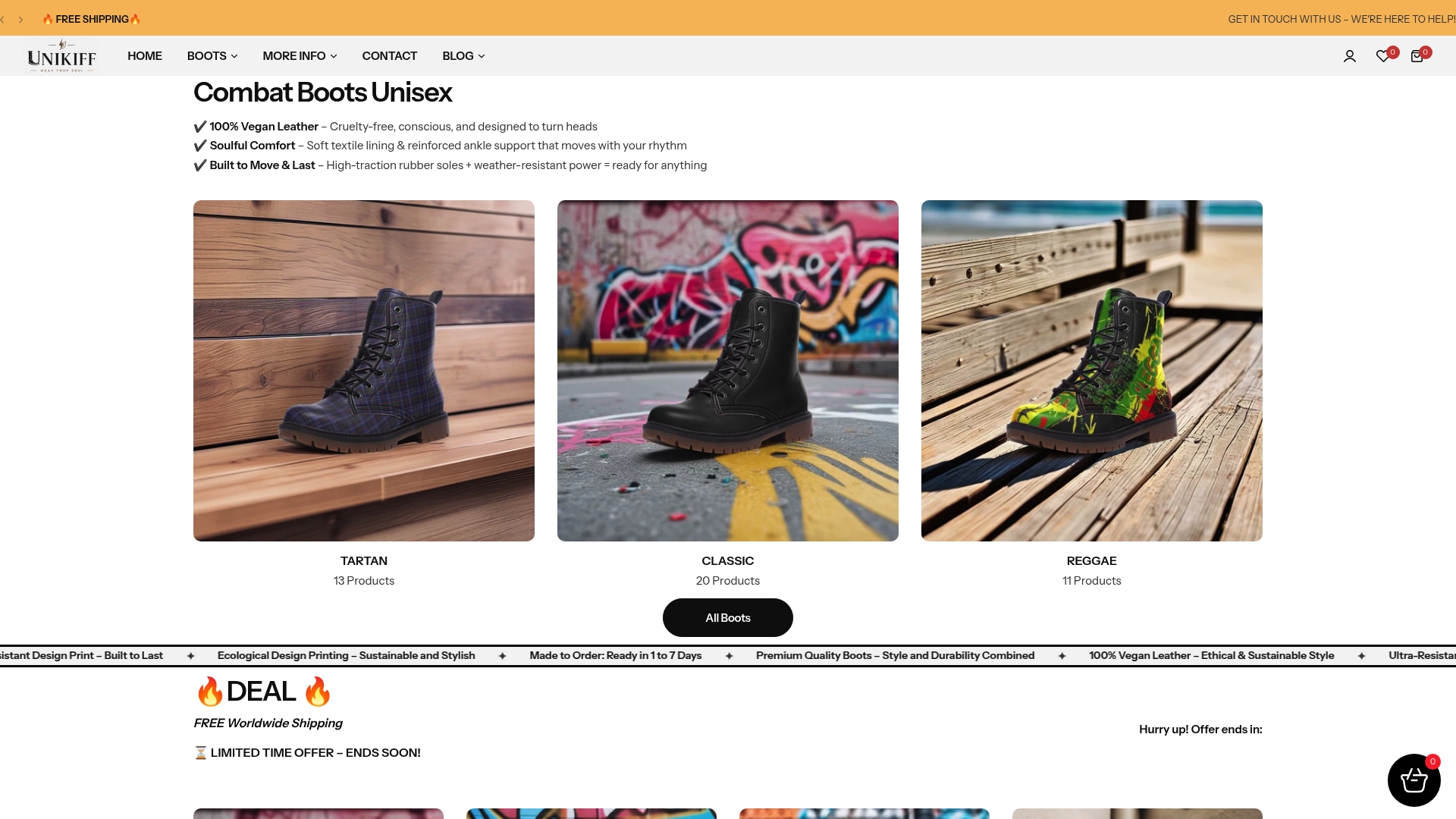
Not sure which size fits your foot shape? The size guide walks you through measuring at home so you avoid a return. If you’re drawn to printed styles, pairs like the Skull and Roses design are a good example of the kind of bold upper that benefits most from the gentle, spot-tested cleaning approach covered above. Browse the collection, find your size, and place your order when you’re ready.