


Yes, vegan boots can crack, but it’s not random bad luck. Cheaper PU and PVC coatings dry out from heat, oils, and repeated flexing until fine lines appear at the toe and heel. That’s different from peeling or delamination, where whole layers lift off the fabric backing. Good news: the right care routine slows cracking down dramatically, and catching it early usually means repair, not replacement.
TL;DR:
- Cracking occurs mainly at flex points such as the toe and heel, driven by plasticizer loss due to heat, UV exposure, and body oils.
- Proper routine maintenance, including regular cleaning, air drying, and monthly protectant application, can significantly extend the lifespan of vegan boots.
- Quality materials like high-grade PU, microfiber, or plant-based leathers last longer, often several years, especially with good care and rotation.
- Fixing surface cracks at home is possible with flexible adhesives and paints, but extensive delamination usually requires professional repair or replacement.
- Reinforced designs, supportive construction, and correct sizing reduce flex stress, improving durability and resisting early coating failure.
Table of Contents
- Why Vegan Boots Crack: The Materials and Failure Points Behind It
- Cracking vs. Peeling: How to Tell What’s Actually Happening
- How Long Do Vegan Boots Actually Last?
- A Maintenance Routine That Prevents Cracking
- Repairing Small Cracks (and When It’s Only a Temporary Fix)
- How Unikiff Builds Boots to Resist This
- Is Vegan Leather Right for You If Longevity Is the Priority?
- Ready for Boots Built to Last? Here’s What to Check First
- Sources
- FAQ
Why Vegan Boots Crack: The Materials and Failure Points Behind It
Most vegan boots use one of a handful of materials: polyurethane (PU), polyvinyl chloride (PVC), microfiber synthetics, or newer plant-based leathers made from cactus, apple, or cork byproducts. Every one of these is built the same basic way. There’s a fabric or knit backing underneath, and a flexible plastic coating on top that gives the surface its leather-like look and grain.
That top coating is where the trouble starts. It contains plasticizers, chemical compounds that keep the plastic soft and bendable. Heat, UV exposure, and body oils gradually strip those plasticizers out. Once that happens, the coating stiffens. Every time you flex your foot walking, that stiffened plastic can’t bend smoothly anymore, so it develops micro-cracks. Walk on it another few thousand steps and those micro-cracks widen into the visible white lines most people picture when they hear “cracked vegan boots.”
Cracking doesn’t show up evenly across a boot. It concentrates at:
-
- The toe flex point, where the boot bends hardest with every step
- The heel counter, especially on boots that get shoved on and off without unlacing
- Seam edges, where stitching stresses the coating at a fixed line
Manufacturing quality affects how fast this happens. Thicker coatings, tighter-woven backing fabric, and proper bonding adhesives all buy time before cracks form. A durability guide from BootsGuru points to flex-point cracking as the single most common failure mode across vegan boots, which is exactly why prevention steps matter more here than with most footwear categories.
Cracking vs. Peeling: How to Tell What’s Actually Happening
Not every damaged spot on your boots is the same problem, and the fix depends entirely on which one you’re looking at.
- Check for fine white or gray lines at the flex points. Thin surface lines that run across the toe or heel, without any flaking, usually mean cracking, a coating that’s dried and stiffened but is still attached.
- Look for flaking or peeling layers. If you see chunks lifting away and the woven fabric backing showing through underneath, that’s delamination, not cracking.
- Run the flex-and-feel test. Bend the boot gently at the affected spot. If the coating stays bonded and just shows a crease, you’re dealing with cracking. If it separates or lifts away from the backing, the bond itself has failed.
- Clean the area and check adhesion. Wipe away dust and oils, then press a fingernail lightly against the edge of any damaged spot. If material lifts easily, that’s delamination.
- Consult a cobbler for anything beyond surface cracks. A professional can tell you fast whether you’re looking at a five-minute fix or a boot that’s reached the end of its useful life.
Peeling happens through hydrolysis, a moisture-driven chemical breakdown where the polyurethane coating separates from its fabric base. Heat and humidity speed this up. Once delamination sets in extensively, repairs tend to be temporary patches rather than permanent fixes, because the underlying bond has already broken down.
How Long Do Vegan Boots Actually Last?
Lifespan depends almost entirely on material grade and how you treat the boots day to day.
- Low-end PU or PVC: a few months up to about 2 years, especially with daily wear and no maintenance
- Good microfiber or high-grade PU: 2 to 5+ years when cared for properly
- Plant-based leathers (cactus, apple, cork-based): variable, depending heavily on how the manufacturer processes and coats the material
One long-term reviewer who wore vegan leather boots for a full year noted that quality vegan boots resist the fading and patina that leather develops, but they stay vulnerable specifically at flex points and to surface abrasion. That tracks with what cobblers see too: forum threads on repair communities like r/AskACobbler show cracking showing up first at the toe bend, almost without exception.
Climate matters as much as the boots themselves. Heat and UV exposure accelerate plasticizer breakdown, so a pair stored near a sunny window or worn constantly in a hot climate ages faster than the same boots in a cooler, shadier setup. Rotating between two pairs, rather than wearing one daily, meaningfully extends life on both.
A Maintenance Routine That Prevents Cracking
Cracking is largely preventable with a routine that takes minutes, not hours.
Weekly:
- Wipe down dirt, sweat, and oils with a damp microfiber cloth
- Let boots air dry naturally, away from direct heat sources like radiators or car dashboards
- Remove insoles when they get wet so moisture doesn’t sit trapped against the coating
Monthly:
- Apply a silicone-based protectant made for vinyl or synthetic leather
- Skip petroleum-based leather conditioners entirely. They’re formulated for animal hide, not plastic coatings, and can actually soften and degrade PU over time
- Avoid alcohol or ammonia-based cleaners, which strip plasticizers even faster than normal wear does
Storage:
- Rotate at least two pairs if you wear boots daily
- Keep boots away from direct heat and UV, including car trunks in summer
- Use shoe trees or stuff the toe box with paper when storing, so deep creases don’t set permanently at the flex points
Shopping cues that predict better durability: look for listings with explicit material specs (PU vs. microfiber vs. plant-based) rather than vague “vegan leather” labeling, and check for PETA-approved vegan certification or Oeko-Tex mentions. Brands willing to specify materials and certifications tend to have tighter manufacturing oversight, and that oversight usually shows up as a longer-lasting product.
Pro Tip: Test any new cleaner or protectant on a hidden spot, like the inside of the tongue, before applying it across the whole boot. Some products react differently with different coating formulas, and you’d rather find that out on an inch you’ll never see.
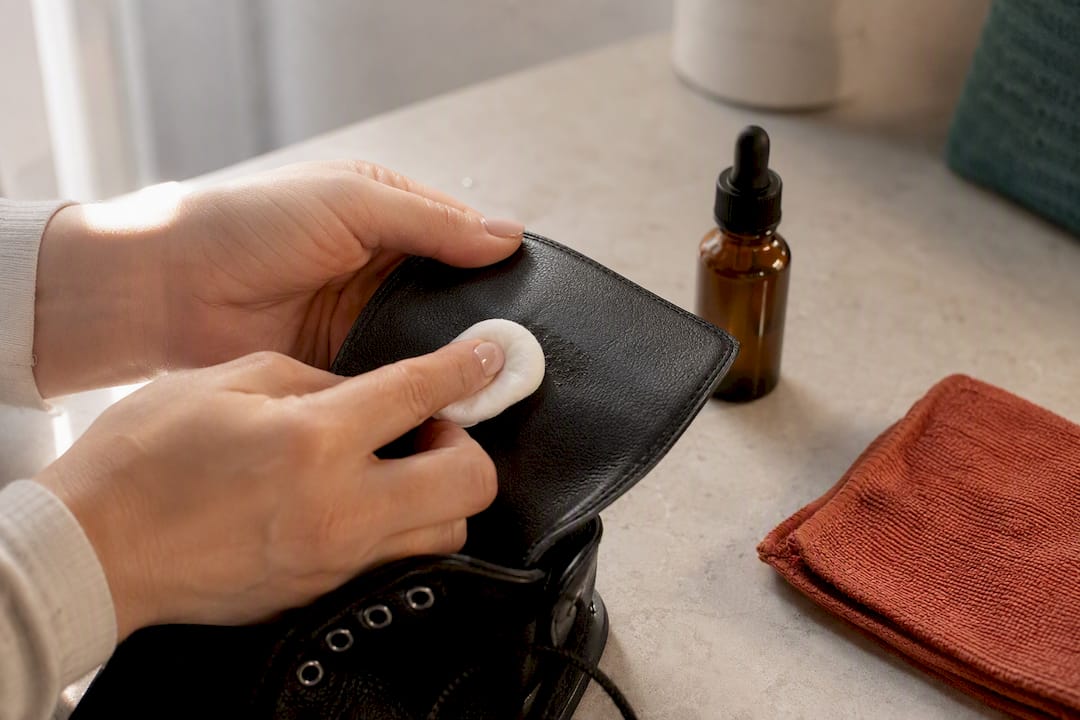
For a full breakdown of cleaning steps by material type, Unikiff’s guide on how to clean and maintain vegan leather boots walks through the process in more depth.
Repairing Small Cracks (and When It’s Only a Temporary Fix)
Small cracks are fixable at home if you use the right products and skip the shortcuts.
- Clean the cracked area thoroughly with mild soap and water, then let it dry completely before touching it with any product.
- Apply a flexible vinyl adhesive, not standard super glue. Super glue dries rigid and cracks again almost immediately under the same flexing that caused the original damage.
- Fill deeper cracks with a flexible filler made for synthetic leather, smoothing it level with the surrounding surface.
- Touch up color with synthetic leather paint designed to flex with the material, never standard acrylic craft paint, which sits stiff on top and flakes off within days.
Delamination is a different animal. When the coating has separated from the backing across a wide area, home fixes only buy time. Heat-welded patches or professional vinyl repair can extend life on a favorite pair, but a cobbler can’t rebond a coating that’s chemically broken down at scale. At that point, replacement is the honest recommendation, not another round of adhesive.
Always test any repair product on an inconspicuous spot, like the inner heel, before committing to the visible flex points.
How Unikiff Builds Boots to Resist This
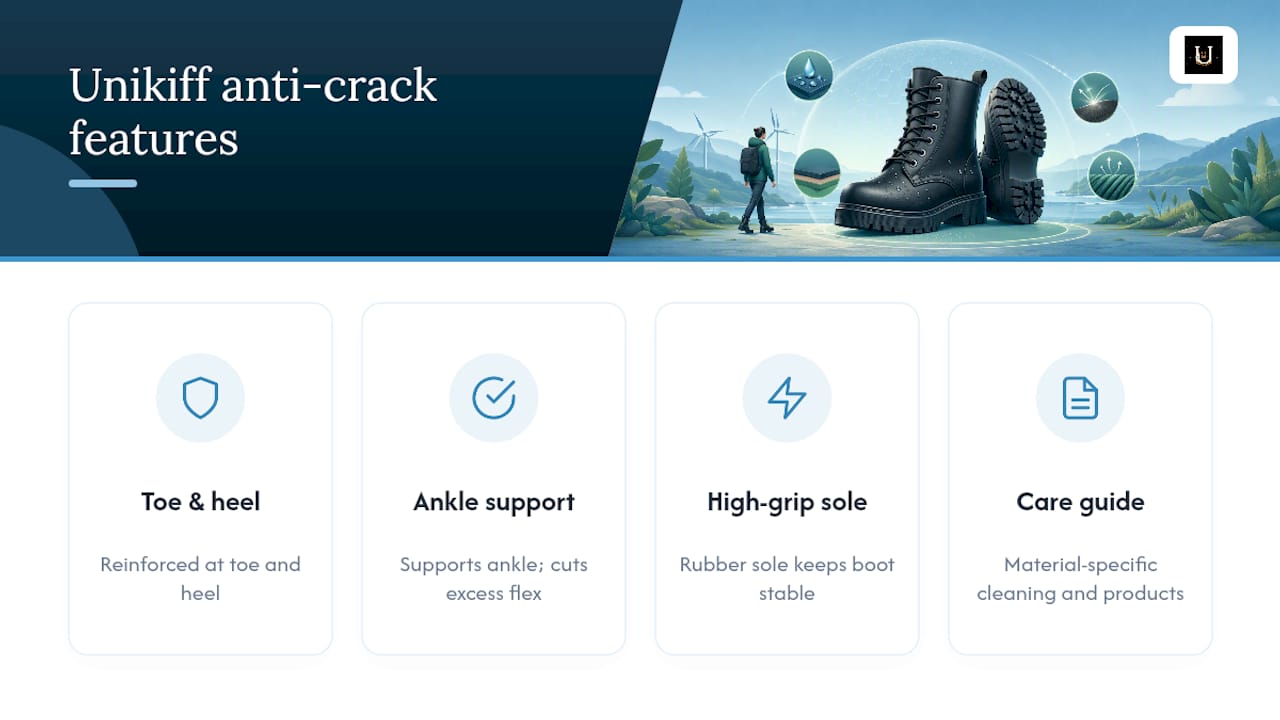
Unikiff designs combat boots with the failure points above in mind, not around them. Reinforced detailing at the toe and heel reduces stress exactly where cracking typically starts, supportive ankle structure cuts down on the excess flexing that wears coatings thin, and high-grip rubber soles keep the boot stable so the upper isn’t compensating for slip.
That structural approach only works alongside real maintenance. Unikiff’s care guide for vegan leather boots covers cleaning frequency and product choices specific to the materials used across the collection, so owners aren’t guessing which protectant is safe.
Made-to-order production also means less mass-market corner-cutting on coating thickness and backing quality, two of the biggest variables that separate a boot that cracks in one season from one that holds up for years.
Is Vegan Leather Right for You If Longevity Is the Priority?
If your priority is ethics or a specific aesthetic, vegan materials win outright. No debate there. If your absolute top priority is multi-decade longevity with zero maintenance, traditional leather or premium synthetics still hold a slight edge, though that gap is closing as material quality improves across the category.
The realistic middle ground: buy higher-grade synthetics, rotate pairs, and commit to the weekly wipe-down and monthly protectant routine outlined above. Do that consistently and most quality vegan boots perform well for years, not months.
One action to take right now: flex your current boots at the toe and heel, and check whether the coating stays bonded or shows early separation. That five-second test tells you more than a hundred reviews.
— David
Ready for Boots Built to Last? Here’s What to Check First
Some vegan combat boots are built with reinforced toe and heel detailing, supportive ankle structure, and high-grip rubber soles that reduce the flexing stress that leads to cracking. That’s a real, checkable difference from bargain synthetic boots that skip reinforcement to hit a lower price.
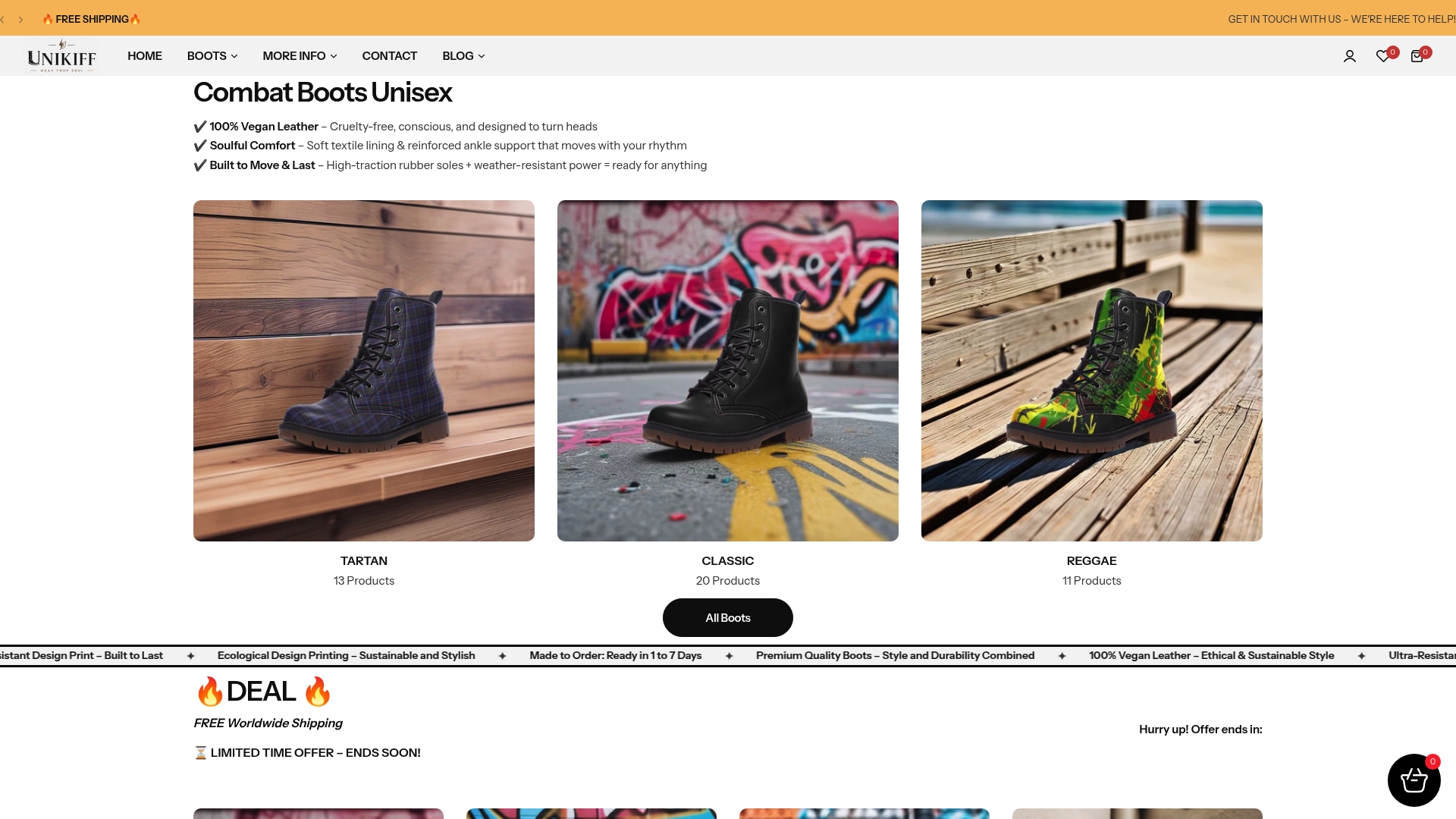
Before you buy, confirm the fit using Unikiff’s size guide for vegan combat boots. A boot that fits correctly flexes less at odd angles, which means less unnecessary stress on the coating from day one. Browse the full vegan combat boots collection to find a pair in a solid color or a bold print, then pair it with the weekly care routine above and you’re set up for years of wear, not months.
Sources
- Fix peeling leather boots: Ultimate 2025 — NuShoe
- How do you prevent faux leather and fake leather from peeling, cracking or flaking? — Tannery Talk
- How to prevent synthetic leather from cracking — wikiHow
FAQ
Does vegan leather crack easily?
Lower-grade PU and PVC coatings crack fairly easily under heat, friction, and lost plasticizers, but high-grade microfiber or well-made PU resists cracking far longer with basic care.
What is the downside of vegan leather?
The main downside is coating breakdown over time. Vegan leather doesn’t develop a leather patina, and its plastic coating is more vulnerable to heat, oils, and flexing than natural hide.
Why are my faux leather boots cracking?
Cracking almost always traces back to plasticizer loss from heat or UV exposure, combined with repeated flexing at the toe and heel that turns stiffened coating into visible fracture lines.
How long does vegan leather typically last?
Cheap PU or PVC boots often last only months to about 2 years, while high-grade microfiber or premium PU boots can last 2 to 5 years or more with regular cleaning and protectant care.