


Most squeaks come from friction at one specific interface, so the fix depends entirely on where the sound starts. Powder under the insole handles interior squeaks in minutes; a dryer sheet or light sanding quiets a smooth outsole on hard floors; a faux-leather-safe conditioner settles a rubbing tongue or upper. New boots often quiet down after a week or two of wear. If a squeak persists after conditioning and stays loud, that usually points to a bonding issue worth a repair check.
TL;DR:
- Squeaks originate from specific friction points such as the outsole on hard floors or interior layers rubbing, requiring targeted fixes for effective silence.
- The high-frequency slip pulses causing squeaks are measurable and typically occur at four main interfaces: outsole, insole, tongue, and layered components.
- Using inappropriate products, like oil-based conditioners on vegan faux leather, can worsen friction noise by leaving slick residues that increase squeaking.
- Proper diagnosis involves simple tests to identify the squeak source, which guides effective, one-step fixes instead of guesswork.
- Vegan boots designed with textured soles and reinforced seams can significantly reduce squeaks from the start, even on harsh surfaces.
Table of Contents
- Why Vegan Boots Squeak: The Simple Physics Behind It
- Quick Fixes Mapped to Where Your Squeak Comes From
- Caring for Vegan Boots So the Squeak Doesn’t Come Back
- Diagnostic Checklist: Find the Source Before You Fix It
- Why Unikiff Boots Are Built to Squeak Less From the Start
- The Real Lesson Behind Every Squeaky Boot
- Boots Built to Stay Quiet, Not Just Look Good
- Sources
Why Vegan Boots Squeak: The Simple Physics Behind It
A squeak is friction turning into sound. When two surfaces slide against each other, they don’t glide smoothly. They grip, release, then grip, release, in a pattern researchers call slip and stick. Each tiny release sends a vibration through the material, and if that vibration happens fast enough, your ear hears it as a squeak instead of a scrape.
Lab work backs this up with real numbers. Researchers at Harvard SEAS measured these slip pulses firing at roughly 5 kHz, which lines up almost exactly with the pitch of a typical shoe squeak. That’s not a coincidence. It’s the mechanical signature of the noise itself.
Squeaks aren’t random. They’re a measurable vibration with a specific frequency, which is why targeted fixes work better than random ones.
Four spots cause almost every squeak: the outsole against the floor, the insole against the footbed, the tongue or upper rubbing a seam, and layered midsoles or heel cups flexing against each other. Moisture changes the equation too. Environmental humidity and even tiny electrostatic discharges can trigger the pressure bursts that kick off a slip pulse, according to reporting from Live Science.
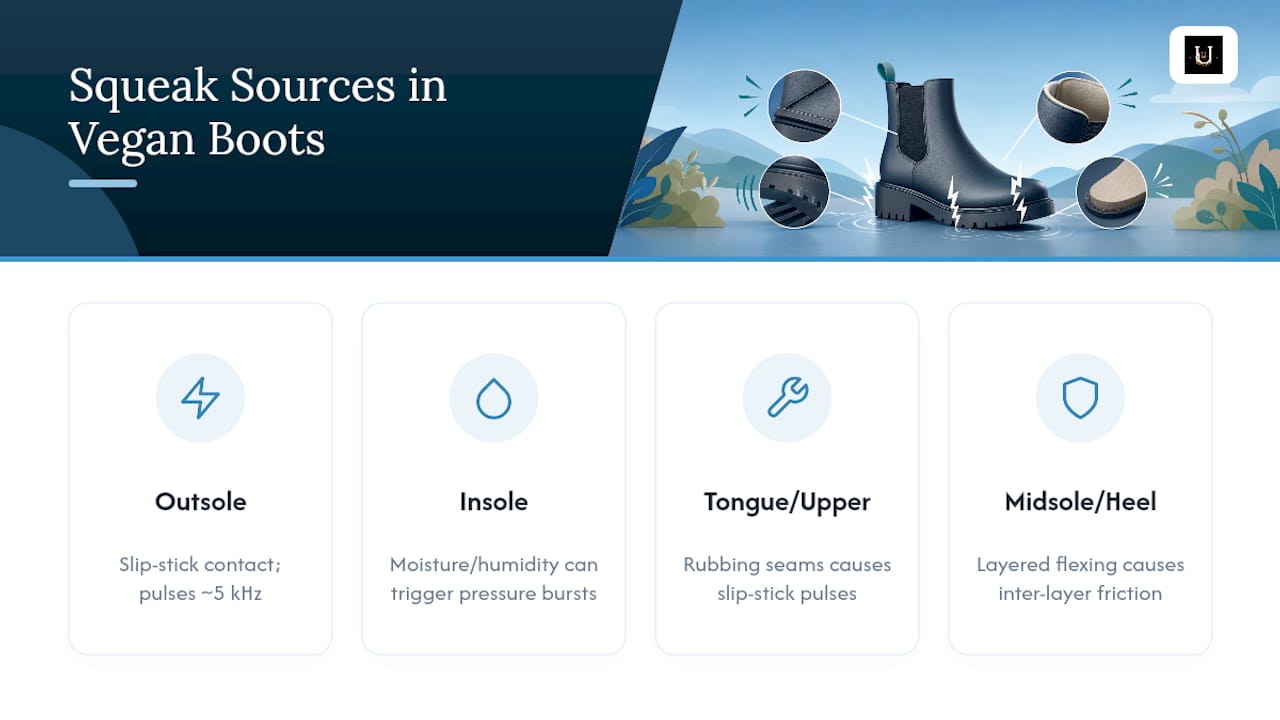
Vegan uppers behave differently from animal leather here. Real leather is porous, so oils and conditioners soak in and change how the surface grips. Faux leather and other synthetics used in vegan combat boots are closed surfaces. Oil-based leather treatments tend to sit on top instead of absorbing, which can leave a slick residue that actually worsens friction noise instead of fixing it.
Quick Fixes Mapped to Where Your Squeak Comes From
Trying five fixes at once tells you nothing except that the noise stopped somewhere. Match the fix to the source, test one at a time, and you’ll know exactly what worked.
1. Outsole squeaks (smooth rubber on hard floors)
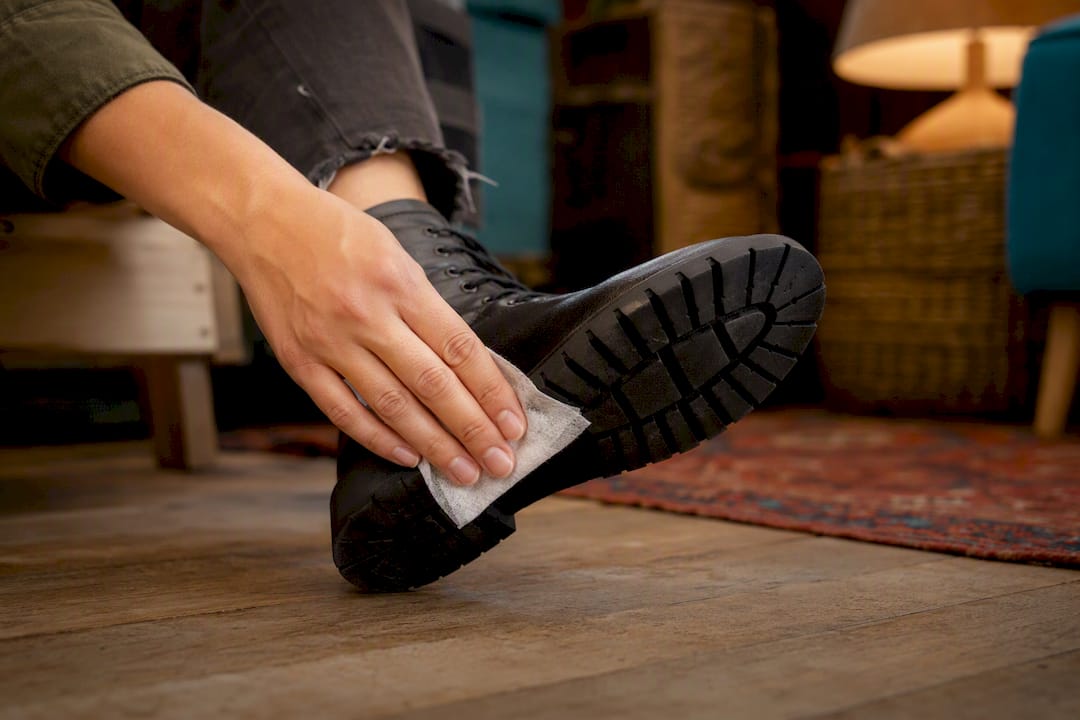
Confirm the source first: walk on tile or wood, and if the squeak matches your heel or toe strike, it’s the sole. Rub a dryer sheet across the bottom of the outsole to cut static and add a light coating that reduces grip-and-release friction. If that doesn’t hold, lightly rough up the smooth spots with fine sandpaper. Sole geometry directly affects how a squeak behaves, and research on slip pulses shows that changing surface texture or ridge pattern changes whether you get a clean squeak or no sound at all. Go light. A few passes over the smooth zones is enough. Sanding too aggressively wears down tread and shortens the life of your outsole.
2. Insole and interior squeaks
This is the most common complaint and usually the easiest fix. Pull the insole out completely and check both sides for moisture. Sprinkle talcum powder or cornstarch across the footbed and under the insole itself, then reseat it. If the squeak comes specifically from the heel area lifting and dropping, a small dab of wax under the rear edge of the insole stops that “cupping” sound without greasing the whole interior. Dry the boot fully before doing any of this. Moisture can temporarily mute a squeak or make it worse, so trapping dampness under a layer of powder or wax just delays the problem.

3. Tongue and upper squeaks
If the noise comes from the front of the boot as you flex your foot, loosen the laces first and walk a few steps. If the squeak disappears, the tongue is rubbing tight against the eyelets or side panels. Apply a synthetic-safe conditioner to the seams and contact points; avoid mineral oil or petroleum-based leather balms since they can degrade PVC and other synthetic finishes over time. Swap out laces if they’ve stiffened or frayed, since rough lace texture against faux leather adds its own friction noise.
4. Break-in squeaks and possible defects
Brand-new boots often squeak for the first few wears simply because the layers inside haven’t settled yet. Conditioning the upper before your first outing helps the material flex more naturally. If a squeak is still loud and unchanged after two to three weeks of regular wear, and none of the fixes above touch it, that’s often a sign of a bonding or glue issue rather than normal break-in noise. At that point, a repair specialist or the retailer’s return policy is the better move than more powder.
Pro Tip: Apply exactly one remedy at a time and re-test on the same floor where the squeak first showed up. Layering three fixes together might silence the noise, but you’ll have no idea which one actually worked next time it happens.
Caring for Vegan Boots So the Squeak Doesn’t Come Back
Prevention comes down to two things: using the right products for synthetic materials, and keeping moisture from building up inside the boot.
Skip conditioners formulated for animal leather. Faux leather doesn’t absorb oil the way real hide does, and mineral oil or petroleum-heavy balms can sit on the surface and degrade the finish, which is especially risky on printed or coated boots where the top layer carries the design. Use a conditioner labeled safe for synthetic or vegan leather instead.
Drying matters just as much as cleaning. Pull the insoles out after wet wear, let them air-dry separately from the boot, and never point a heater or hair dryer directly at either piece. Direct heat can warp synthetic uppers and crack printed finishes, and trapped moisture is one of the environmental factors tied to squeak-triggering friction.
A short monthly routine keeps most squeaks from starting in the first place:
- Wipe down the upper and check glue lines along the sole for any separation.
- Condition with a synthetic-safe product, focusing on seams and flex points.
- Remove insoles and check for moisture or wear on the footbed.
- Confirm laces are seated evenly and not stretched thin on one side.
- Inspect printed or coated surfaces for cracking before it spreads.
For step-by-step cleaning and conditioning routines built specifically for vegan leather, a dedicated care guide walks through product choices in more depth.
Diagnostic Checklist: Find the Source Before You Fix It
Don’t guess. A five-minute test sequence tells you exactly where the noise starts.
- Walk the same ten steps on tile, then on carpet. If the squeak disappears on carpet, it’s the outsole.
- Flex the sole by hand while off your foot. A creak here points to sole layers or a heel cup, not the floor contact.
- Press firmly on the tongue and side panels while stationary. If you hear the squeak without walking, it’s upper rubbing.
- Remove the insole and walk a few steps in the bare boot. If the squeak stops, the footbed or insole was the source.
- Take the insole itself and flex it away from the boot. A squeak here confirms the insole material, not the boot structure.
If the sound only shows up after removing the insole and pressing the empty shell, that’s usually a bonding issue between layers, not something powder or conditioner will resolve. Re-gluing or a professional resole is the next step, and if the boots are recent, check the warranty before paying for repair.
Why Unikiff Boots Are Built to Squeak Less From the Start
Unikiff designs its vegan combat boots with reinforced construction specifically to reduce the friction points that cause noise down the line. Every pair uses high-grip rubber soles with texture built into the tread, which limits the flat, smooth contact that tends to squeak on hard floors. Reinforced ankle structure and secure lace-up closures reduce the kind of shifting that leads to tongue and upper rubbing over time.
A few practical notes for anyone wearing or shopping for vegan combat boots:
- Choose insoles with a bit of texture or arch support rather than dead-flat foam, since a snug, non-sliding fit reduces footbed friction.
- Stick with laces close to the original thickness when replacing them. Thinner laces can pull unevenly and add rubbing against eyelets.
- Printed and coated designs only need surface-safe conditioners. Anything oil-heavy risks fading the artwork faster than normal wear would.
Readers curious about the materials behind these design choices can find more detail in Unikiff’s guide to vegan boot construction, which covers how sustainable materials hold up compared to traditional leather.
The Real Lesson Behind Every Squeaky Boot
Most squeak advice online treats the fix as guesswork: try powder, try oil, try a new insole, see what sticks. That approach wastes time and sometimes damages vegan materials that never needed oil in the first place. The physics is actually simple once you see it: a squeak is a specific vibration at a specific interface, and once you find that interface, the fix almost always follows a predictable path.
The bigger mistake I see is people reaching for leather products on synthetic boots because that’s the advice that’s been repeated for decades. Faux leather doesn’t behave like animal hide, and treating it like one shortens its life instead of extending it. The reader’s first move should always be diagnosis, not product shopping. Five minutes of isolation testing saves you from guessing your way through three products that were never going to fix a problem they weren’t designed to solve.
— David
Boots Built to Stay Quiet, Not Just Look Good
Unikiff’s vegan combat boots pair high-grip textured outsoles with reinforced bonding at every seam, which means fewer of the loose contact points that turn into squeaks six months down the road. Bold prints, solid colors, and gothic, punk, and grunge-ready designs all sit on the same durable construction, so you’re not trading style for a quiet step.
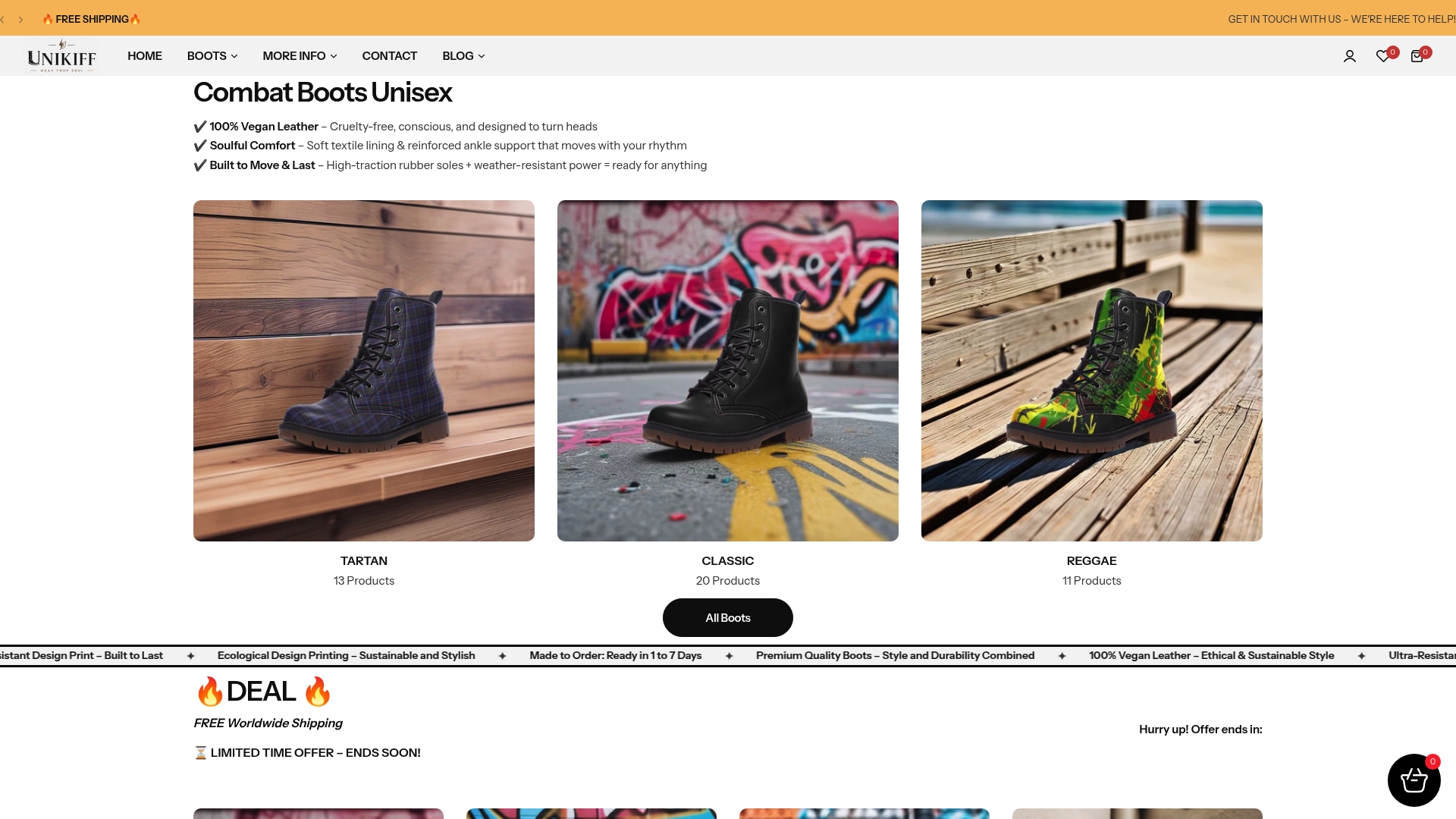
If you’re shopping for your next pair, browse the full vegan combat boots collection to see the current styles, from solid black essentials to statement prints like Skull and Roses. Not sure what size will fit snugly enough to prevent interior sliding and footbed friction? Check the boot size guide before you order so your new pair fits right from the first wear.
Sources
- Harvard SEAS: physics of squeak
- Physics Today: A peek into the physics of squeaky sneakers
- Live Science: We now know why shoes squeak, and it involves miniature lightning bolts