


Yes, vegan boots can keep your feet warm all winter long, as long as they are built with real insulation, a thermal lining, waterproofing, and a thick sole. The upper material matters far less than people think: wet feet, not the fabric covering them, cause most cold-weather discomfort. For city winters, light-to-moderate snow, and many outdoor errands, a well-built vegan boot performs right alongside leather.
TL;DR:
- For everyday commuting, a boot with about 200 grams of synthetic insulation and a fleece lining suits temperatures from 20°F to 40°F.
- In slush or rain, prioritize a sealed waterproof membrane and taped seams because wet linings lose warmth despite ample fill.
- For long periods outdoors in subzero weather, choose a tall snow boot with heavy insulation; tested models reach ratings of minus 25°F to minus 40°F.
- A roomier toe box leaves space for thermal socks and supports circulation, while tight lacing can make feet cold despite adequate insulation.
- When you stand outdoors in cold conditions, add a reflective insulated insole to reduce heat loss through the sole.
Table of Contents
- How boots actually keep your feet warm
- Vegan materials vs. leather: what actually affects warmth and drying
- Which vegan boot styles handle cold and wet winter conditions
- Practical tips to make vegan boots warmer and more winter-ready
- What winter wearers say about vegan boot warmth
- Average temperature ranges for vegan winter boots
- Why we built our combat boots around real winter performance
- Ready for boots that handle winter and look the part?
- FAQ
- Sources
How boots actually keep your feet warm
Warmth in a boot comes from a system, not a single material. Insulation is the first layer of that system: synthetic fill (measured in grams), fleece, and wool each trap air pockets that slow heat loss. A boot with 200 grams of synthetic insulation and a fleece lining kept wearers comfortable in 20 to 40°F conditions during testing, which gives you a real benchmark when comparing product specs.
Lining matters just as much as fill. Spacer and knitted linings trap air between fibers and build thermal resistance, and certain cotton-blend spacer fabrics showed the strongest cold-weather performance in textile testing, beating standard interlock knits for both warmth and breathability.
Moisture control decides whether that insulation stays effective. Feet release a measurable amount of sweat during normal wear, and the same research notes that typical foot perspiration runs around 30 mL per hour, which a wet lining cannot wick away fast enough. Once moisture builds up, insulation loses its grip on warmth, which is why breathable, wicking linings matter as much as the fill weight.
Finally, heat escapes downward through the sole. A thin sole against cold pavement or snow pulls warmth straight out of your foot through direct contact, and footwear specialists point to conductive heat loss through the sole as a major, often overlooked factor.
What to check before buying a winter boot:
- Insulation weight: 100 to 200 grams for everyday winter wear, more for extreme cold.
- Lining type: fleece or spacer knit for trapped-air warmth and breathability.
- Waterproofing: a sealed membrane keeps moisture from reaching the insulation.
- Sole thickness: a thick, lugged rubber sole limits conductive heat loss.
Average foot perspiration runs close to 30 mL per hour, which means a boot’s ability to move moisture out matters just as much as how much insulation it packs in.
Vegan materials vs. leather: what actually affects warmth and drying
Leather has a long-standing reputation for warmth, but the research points to lining performance, not the upper material, as the real driver. Cow leather lining showed about 40% higher water vapor permeability than sheep lining, along with stronger wicking and diffusion, which helps sweat move away from your skin and dry out faster.
Vegan boots can close that gap and sometimes match it. Spacer knitted linings trap air in a honeycomb structure that builds thermal resistance while staying breathable, and textile testing on shoe linings found these fabrics performed well for both insulation and moisture control, independent of whether the outer material was animal-based.
What this means in practice:
- Look for a lining labeled as spacer knit, fleece, or moisture-wicking rather than judging warmth by the upper material alone.
- Pair that lining with a sealed waterproof membrane so sweat and outside moisture both stay managed.
- Treat material choice (vegan vs. leather) as a style decision, not the deciding factor in warmth.
Layered construction is what makes the difference: a waterproof membrane under the upper, a spacer or fleece liner inside, and sometimes a removable insulated insole for extra customization. None of those layers require animal leather to work, which is why a well-built vegan boot can hold its own against a traditional leather boot in cold, wet conditions.
Which vegan boot styles handle cold and wet winter conditions
Different winter situations call for different boot styles. Matching the style to your conditions matters more than chasing a single “warmest” option.
- Deep cold or standing outdoors: choose insulated snow boots with heavy synthetic fill and a tall shaft, since warmth ratings on tested cold-weather boots as low as -25°F to -40°F come from this combination of insulation, fleece lining, and a waterproof breathable membrane.
- Wet city winter: pick a waterproof chelsea or ankle boot with a sealed membrane and moderate insulation, since slush and standing water do more damage than cold air alone.
- Everyday grip on snow or ice: go with a lug-soled combat-style boot, since a thick tread adds traction and the extra sole depth reduces conductive heat loss.
Before buying, run through this checklist: a waterproof membrane, sealed seams at the stitching lines, a stated insulation weight or named fill type, a fleece or spacer liner, a sole thick enough to resist cold transfer, and enough tread depth for ice and snow.
Fit changes warmth outcomes too. A slightly roomier toe box leaves space for thermal socks and lets your toes wiggle, which keeps circulation (and warmth) moving. A boot laced too tight cuts off that circulation and makes your feet colder, even with great insulation inside.

Practical tips to make vegan boots warmer and more winter-ready
Small adjustments often matter more than buying a new pair of boots. Start with what goes inside: merino wool or synthetic thermal socks hold warmth even when damp, and a breakdown of warm winter fabrics for wet, dry, and active days walks through which fibers perform best in each condition. For sock material specifically, a comparison of cotton vs. synthetic blends explains why synthetic or wool blends usually outperform cotton once feet start sweating.
- Add a reflective or foil-backed insulated insole for standing in cold conditions.
- Size boots to leave room for thicker socks rather than squeezing your usual size.
- Avoid lacing so tight that it restricts blood flow to your toes.
- Clean uppers regularly and reapply a compatible waterproofing spray to preserve the water-repellent finish, following care steps built for vegan leather boots.
Pro Tip: Seal the stitching around the sole with a flexible seam sealant before the first snowfall. It is a five-minute step that keeps meltwater from creeping in through the seams.
Reach for thicker insulation or a dedicated snow boot once you are standing outside for long stretches in sustained freezing temperatures. For regular commuting and errands, the sock and insole upgrades above usually cover the gap.
What winter wearers say about vegan boot warmth
Shoppers who already use vegan winter boots consistently point to the same formula: insulation plus waterproofing equals warm feet, regardless of the upper material. Retail listings and buyer forums for vegan winter footwear repeatedly tag their boots as “waterproof” and “insulated,” and wearers report comfortable use down into the low 20s Fahrenheit when both features are present.
The pattern in these accounts is consistent. Wearers who report cold feet in vegan boots almost always point to a missing waterproof seal or thin insulation, not the vegan upper itself. Wearers who report staying warm almost always mention a sealed membrane, a fleece or spacer lining, and a thicker sole, the same combination the lining and insulation research backs up.
This lines up with what footwear testing shows across both vegan and leather boots: the system of insulation, lining, and waterproofing determines comfort, and the upper material is a secondary factor. For anyone reading reviews before buying, the most useful details to look for are specific mentions of temperature range, insulation weight, and whether the boot stayed dry in slush or snow, not just a general “warm” or “cold” verdict.
Average temperature ranges for vegan winter boots
Matching a boot’s rated range to your actual conditions avoids both cold feet and overpaying for capability you will not use. Lightly insulated vegan boots with a waterproof membrane and fleece lining suit mild winter days and light snow, generally in the 30s and 40s Fahrenheit. A boot with around 200 grams of synthetic insulation and a fleece lining, the same construction tested on a mainstream winter boot, holds up well in the 20 to 40°F range for daily wear, shoveling, and commuting.

For sustained subzero conditions or long periods standing outside, boots need heavier insulation and taller shafts. Boots tested with ratings down to -25°F to -40°F combine high-gram insulation, fleece lining, and a waterproof breathable membrane, a specification tier built specifically for alpine or extreme winter use rather than everyday city wear.
For wet conditions at any temperature, waterproofing outranks insulation weight. Slush, puddles, and packed snow soak through unsealed seams quickly, and once the lining gets wet, even heavy insulation stops performing. Choosing a boot rated for your actual temperature range and confirming it has a sealed waterproof construction covers most winter situations without needing to size up to an extreme-cold boot you will rarely need.
Why we built our combat boots around real winter performance
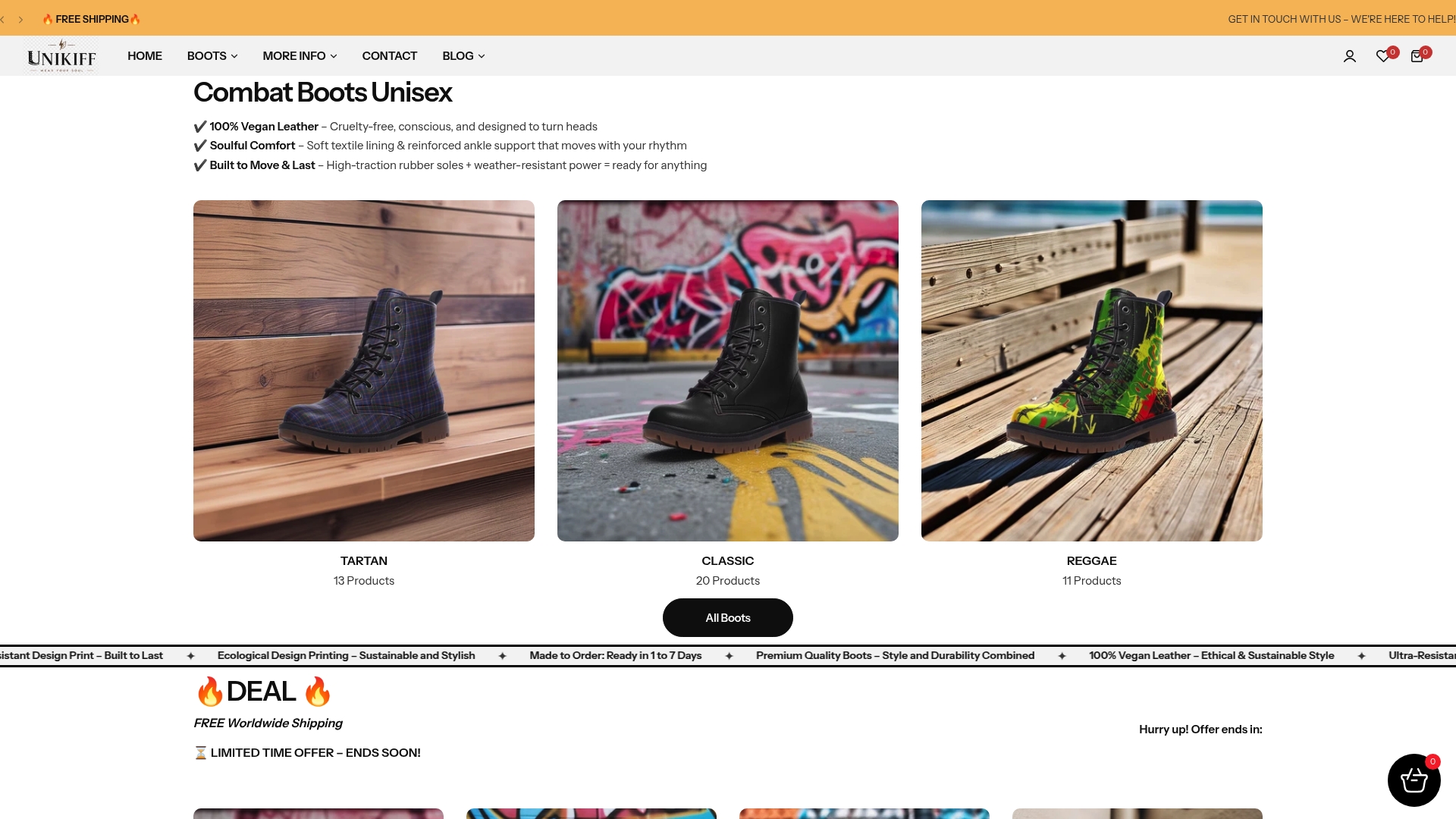
We design every pair of our combat boots with cruelty-free vegan materials, reinforced detailing, and a supportive ankle structure, features that matter just as much in January slush as they do on a festival dance floor. Our high-grip rubber soles add the tread and sole depth that reduce conductive heat loss on cold pavement, and the lace-up closure lets you adjust for thicker winter socks without sacrificing support.
We put these features to the test in cold, wet city conditions, which we cover in detail in our post on whether vegan combat boots hold up in winter. That post walks through specific styling and care tips for wearers who want the combat-boot look without giving up winter function.
— David
Ready for boots that handle winter and look the part?
We built our combat boots to carry you through cold, wet winters without giving up the bold, alternative style you actually want to wear. Features like reinforced ankle support, high-grip rubber soles, and durable vegan construction help provide everyday winter performance in a boot that still looks unmistakably yours.
| What you get | Why it matters in winter |
|---|---|
| High-grip rubber soles | Better traction on ice and snow, plus a thicker barrier against cold pavement |
| Supportive ankle structure | Stability on slushy or uneven sidewalks |
| Reinforced detailing | Holds up to repeated wear through the coldest months |
| 100% cruelty-free vegan materials | Winter style with no animal leather involved |
Browse our vegan combat boots collection to find your pair, or check our size guide first to make sure you leave enough room for thick winter socks.
FAQ
What are the warmest boots to wear?
The warmest boots combine heavy insulation, a fleece or spacer lining, and a sealed waterproof membrane; some tested cold-weather boots carry warmth ratings as low as -25°F to -40°F under that combination. For everyday winter wear rather than extreme cold, a lighter build like 200 grams of insulation with a fleece lining usually covers temperatures in the 20 to 40°F range.
Are vegan leather boots good?
Vegan leather boots can perform just as well as traditional leather when they include a quality waterproof membrane, a spacer or fleece lining, and adequate insulation. Research on shoe linings shows that spacer knitted fabrics trap air and build thermal resistance independent of whether the upper is animal-based.
What are the warmest vegan boots available?
The warmest vegan boots pair heavy synthetic insulation with a sealed waterproof membrane and a fleece or spacer-knit lining, the same construction formula used in high-rated cold-weather boots generally. Checking for a stated insulation weight and a waterproof rating on the product page is the most reliable way to judge warmth before buying.
Is vegan leather worth buying?
Vegan leather is worth buying for anyone who wants cruelty-free materials without giving up durability or warmth, since warmth comes primarily from insulation and lining rather than the upper material itself. Our vegan combat boots use reinforced construction and high-grip soles built to hold up through daily winter wear.
Do vegan boots keep feet warm in snow?
Vegan boots keep feet warm in snow when they include a waterproof membrane, insulation, and a lugged sole that limits conductive heat loss through contact with the ground. Moisture control matters most here, since wet linings lose their insulating effect quickly in snowy, slushy conditions.
Sources
- Investigation of the physical and thermal comfort characteristics of knitted fabrics used for shoe linings
- KEEN Revel IV Polar Review: The Ultimate Winter Workhorse | GearJunkie
- The North Face Shellista VI Winter Boot Review | Better Trail
- Effective ways to protect your feet from winter’s chill | Nick’s Boots