


“Vegan leather” describes an umbrella category of animal-free materials, from plant-based fibers to fully synthetic polymers, while “faux leather” almost always means a plastic coating (PU or PVC) laminated onto a textile backing. Neither term guarantees the other is more sustainable. The real question isn’t which label sounds better on a tag. It’s what’s in the layers underneath, how long the item will hold up, and whether you can repair it instead of tossing it.
TL;DR:
- Many plant-based leathers still rely on polymer binders, which complicate recycling and prevent composting, even if labeled as eco-friendly.
- The durability of vegan and faux leathers varies widely, with cheaper PVC products peeling within a year or two, while higher-grade PU and plant-based composites last much longer.
- The environmental impact of animal leather mainly comes from land use and deforestation, whereas synthetic leathers contribute to pollution and are rarely recyclable.
- Proper care, including regular cleaning and storage away from heat, can significantly extend the lifespan of vegan and faux leather items.
- Buyers should ask for specific composition details and lifespan expectations from brands, as “vegan” and “sustainable” claims often lack concrete data.
Table of Contents
- Vegan Leather vs Faux Leather: What Each Term Actually Means
- Durability, Repairability, and Lifespan: How They Behave in Real Use
- Environmental Trade-Offs and Life-Cycle Impacts
- Care, Maintenance, and Making Items Last
- How to Choose Between Vegan and Faux Leather for Ethical Shoppers
- Common Misconceptions and Marketing Language to Watch
- Unikiff’s Take on Choosing Materials That Actually Last
- Ready to Shop Vegan Combat Boots That Are Built to Last
- Sources
Vegan Leather vs Faux Leather: What Each Term Actually Means
Here’s the confusion in one sentence: all faux leather is vegan, but not all vegan leather is faux leather in the traditional PU/PVC sense. “Vegan” only tells you no animal was involved. It says nothing about the actual material science happening in the layers.
Most of these materials share a similar build: a woven or knit textile base, a surface coating that gives it grain and flex, and adhesive layers holding it together. What differs is the coating chemistry.
- Polyurethane (PU): the most common coating, generally more flexible and considered less toxic to produce than PVC.
- Polyvinyl chloride (PVC): cheaper and stiffer, historically the classic “pleather” feel, with more concerning manufacturing byproducts.
- Plant-based inputs: pineapple leaf fiber (Piñatex), cactus, apple pomace, cork, and mycelium (mushroom root structure) are increasingly used as the visible surface layer.
- Bio-based polyurethanes: partially plant-derived polymer blends marketed as lower-impact alternatives to standard PU.
The catch is that most plant-based leathers still need a polymer binder for strength and abrasion resistance, according to Wirecutter’s review of vegan leather materials. A “cactus leather” jacket might contain a significant portion of cactus fiber blended with polyurethane. That’s not a scandal, but it’s information you deserve before you pay a premium for it.
Durability, Repairability, and Lifespan: How They Behave in Real Use
Animal leather ages by developing patina and stretching to fit its wearer. Coated synthetics don’t age gracefully. They crack, peel, and delaminate once the surface layer starts breaking down from flexing, heat, or UV exposure.
Cheaper PVC pleather is the most common victim of early peeling, sometimes within a year or two of regular wear, based on consumer accounts documented in The Atlantic’s reporting on faux leather durability. Higher-grade PU constructions and well-engineered plant-based composites tend to last considerably longer, though exact lifespan depends heavily on coating thickness, backing quality, and how the item gets used day to day.
- Cracking and peeling: usually a coating failure, not a backing failure, and it’s rarely fixable.
- Delamination: the surface layer separates from the textile base, often starting at flex points like toe boxes or elbows.
- Stretching and patina: typical of animal leather, generally not seen in synthetic alternatives.
Repairability tracks the same pattern. A scuffed animal leather boot can often be conditioned and buffed back to life. A peeling synthetic coating usually can’t be restored. Once that layer goes, the item is functionally done, which is exactly why construction quality matters more than the marketing label on the box.
Pro Tip: Flex a sample of the material sharply between your fingers before buying. If you see white stress lines or the coating feels papery, that’s an early warning sign of premature cracking.
Environmental Trade-Offs and Life-Cycle Impacts
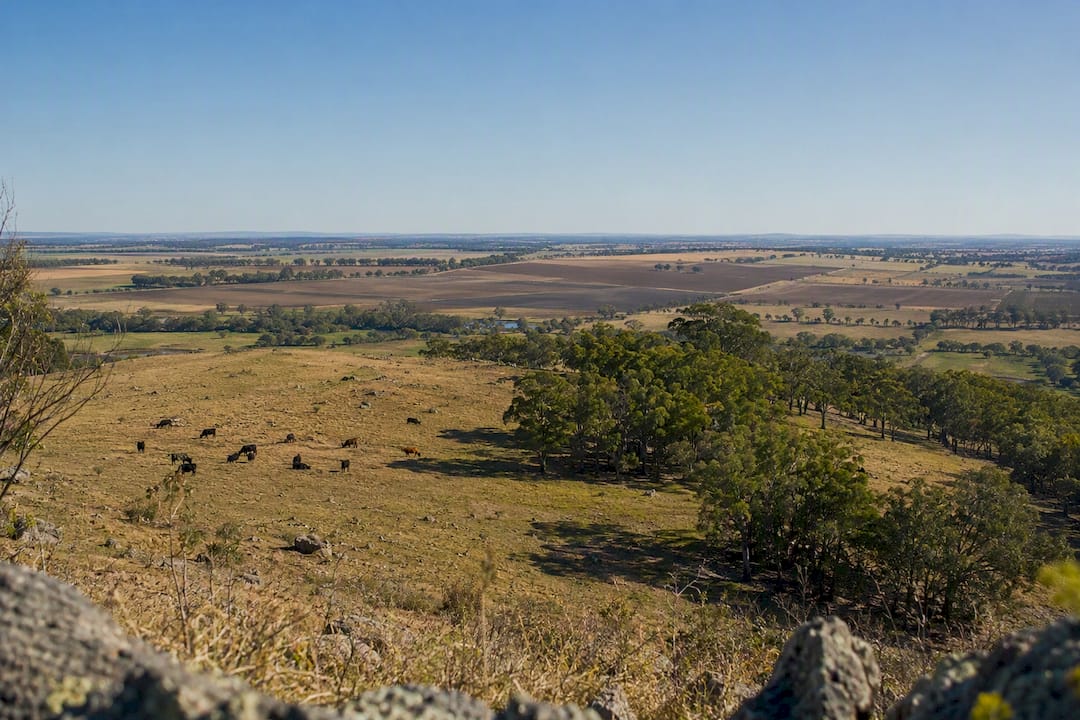
No material in this comparison walks away clean, and pretending otherwise does readers a disservice. Animal leather’s biggest cost isn’t the tanning process. It’s the land behind it. Livestock and the feed crops that support them account for a substantial share of global agricultural land use, a major driver of deforestation tracked through satellite observation by NASA Earth Observatory. Our World in Data’s research on agricultural land use shows just how much of the planet’s usable land goes toward raising animals and growing what feeds them.
Statistic callout: Industry life-cycle assessments compiled by the Leather Panel confirm that tanning and livestock production carry a measurable, significant carbon and pollution footprint, distinct from but comparable to the impact synthetic leathers generate through polymer and additive production.
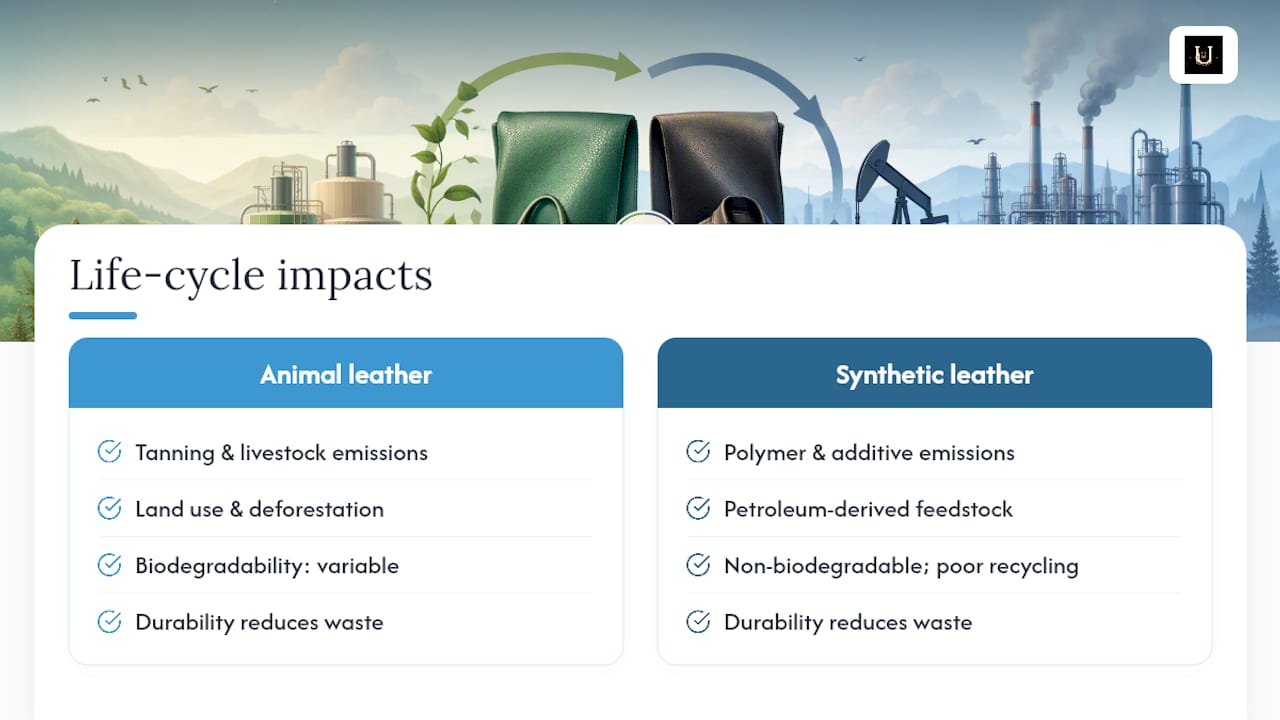
Faux leather’s problem sits on the other end of the life cycle. PU and PVC are petroleum products. They don’t biodegrade, and recycling infrastructure for coated textile blends is essentially nonexistent in most regions.
Plant-based vegan leather promises a way out of both problems, but the promise doesn’t always hold. Investigative analysis from The Conversation found that many plant-derived leathers still rely on plastic binders for structural integrity, which blocks composting and complicates recycling regardless of what the front label says.
The lever that actually moves the needle across every material category is simple: an item that lasts five years instead of one reduces waste no matter what it’s made from.
Care, Maintenance, and Making Items Last
Longevity is the cheapest sustainability upgrade available, and it costs nothing but a few minutes a month.
- Wipe coated synthetics with a damp cloth and mild soap; avoid alcohol-based cleaners, which break down PU and PVC coatings over time.
- Condition plant-based leathers occasionally with a water-based conditioner made for synthetic materials, never oil-based leather balm.
- Store items away from direct sunlight and heat sources, both of which accelerate coating breakdown and color fading.
- Address small scuffs immediately rather than letting them spread into cracks that can’t be repaired.
- Know when to call it, once delamination starts, professional repair rarely restores the surface.
Unikiff’s guide to cleaning and maintaining vegan leather boots walks through the exact products and techniques that keep boots looking sharp for years.
How to Choose Between Vegan and Faux Leather for Ethical Shoppers
Start with intended use, not material buzzwords. A jacket you’ll wear twice a year has different requirements than boots you’ll wear three days a week.
- Ask how many years of regular wear the product is built to survive.
- Ask whether the item can be repaired, and by whom, if the surface gets damaged.
- Request layer-level composition: what percentage is bio-based fiber versus polymer binder.
- Ask what happens to the item at end of life, landfill, recycling, or compostable breakdown.
- Treat vague “eco-friendly” or “sustainable” claims as a prompt for more questions, not a reason to trust the brand outright.
Brands that can answer these questions with actual numbers, not just adjectives, are the ones worth your money. Fitinline’s buyer guidance on vegan versus genuine leather recommends requesting exactly this kind of composition breakdown before purchase. If a brand can’t tell you what’s in the layers under the surface, that’s a red flag, not a technicality. You can dig deeper into how the two categories stack up overall in Unikiff’s comparison of vegan leather versus genuine leather.
Common Misconceptions and Marketing Language to Watch
“Vegan” answers one question: did an animal die for this? It says nothing about carbon footprint, land use, or what happens when the product wears out. A pineapple-leaf wallet with a plastic binder core isn’t automatically better for the planet than a well-made animal leather one that lasts twenty years.
- “Plant-based” doesn’t mean compostable. The plant fiber is often a thin surface layer over a polymer core.
- “Eco leather” has no regulated definition. Treat it as marketing copy, not a certification.
- A material can be both vegan and petroleum-based. Standard PU pleather qualifies as vegan while being entirely synthetic.
The label “vegan” answers an animal-origin question, not a sustainability one, according to analysis from Leather Advice, which recommends buyers look for hard numbers, percent bio-based content, recyclability data, rather than adjectives on a swing tag.
Unikiff’s Take on Choosing Materials That Actually Last
Unikiff builds every pair of vegan combat boots around one priority above the rest: the boot has to survive real wear, not just look good in a photo. That means picking vegan leather constructions with reinforced stitching at stress points, ankle support that reduces flex fatigue, and high-grip rubber soles that don’t need replacing after one festival season.
Transparency matters just as much as toughness. Reinforced toe caps, quality lace hardware, and sturdy backing layers all extend usable life, the same durability lever this entire comparison keeps circling back to. You can see how Unikiff weighs these trade-offs in its breakdown of vegan leather combat boot pros and cons.
— David
Ready to Shop Vegan Combat Boots That Are Built to Last
Unikiff sells one thing, and does it well: vegan combat boots built for people who want bold style without the guesswork over what’s inside the material. Every pair uses cruelty-free construction, reinforced ankle support, and high-grip rubber soles, made-to-order rather than mass-produced, so you’re not buying into the fast-fashion churn that makes durability irrelevant.
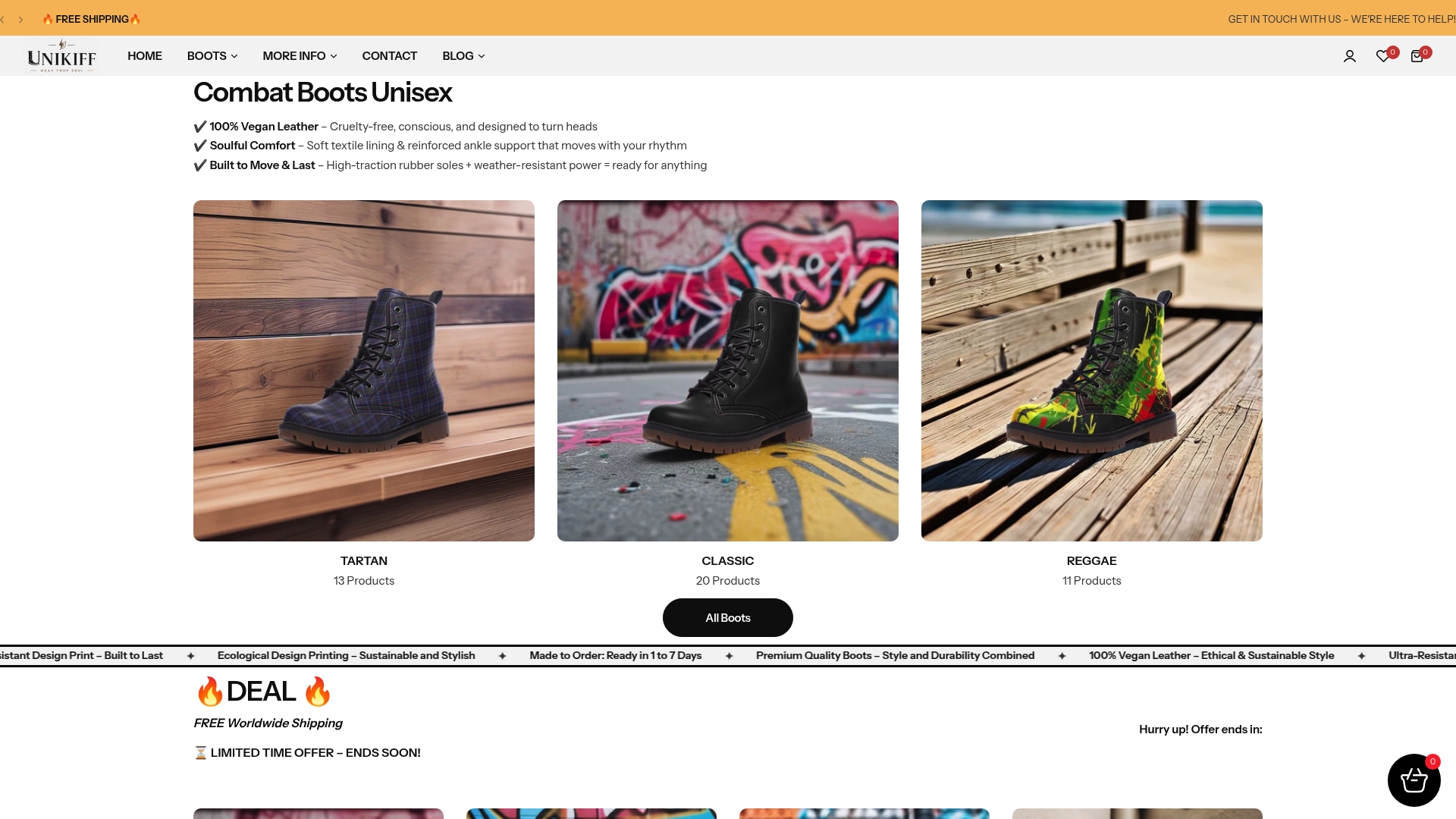
Whether you want a solid black pair for everyday wear or a bold printed design for a festival look, browse the full vegan combat boots collection and check the size guide before you order to get the fit right the first time. If you gravitate toward statement pieces, the Skull and Roses design and the Dark Purple pair are both built on the same reinforced construction discussed above. Pick your style, confirm your size, and order a pair that’s designed to hold up long after the season it was bought for.
Sources
- Global land for agriculture | Our World in Data
- Deforestation update | NASA Earth Observatory
- Leather carbon footprint (Leather Panel / industry report)
- Vegan leather isn’t as sustainable or eco‑friendly as brands might claim | The Conversation
- What Is Vegan Leather Made Of? | Wirecutter (New York Times)