


Yes, that fishy or chemical smell in vegan leather almost always fades or comes off with safe cleaning. Most of it is either off-gassing from new synthetic material or trapped moisture from wear, not permanent damage. Start with two fixes: air the item out in a shaded, ventilated spot for a day or two, then treat any remaining odor with baking soda or a light, diluted white-vinegar wipe after testing a hidden spot first.
TL;DR:
- Most vegan leather odors come from off-gassing VOCs or trapped moisture, and they usually fade within a few days with proper airing.
- Using baking soda or a diluted vinegar wipe can effectively neutralize lingering smells, but aggressive cleaning or heat damages the material.
- Persistent chemical odor beyond a week, tacky surface, or health concerns indicate a manufacturing flaw, warranting a return.
- Prevent future odors by rotating footwear, storing with moisture absorbers, and avoiding soaking or direct heat.
- High-quality vegan boots with transparent material labeling and reinforced design resist odors better and last longer.
Table of Contents
- What Causes That Vegan Leather Smell in the First Place
- How to Get Rid of Vegan Leather Smell Safely
- Mistakes That Make Vegan Leather Smell Worse
- Preventing Odor From Coming Back
- When a Smell Means You Should Return the Item
- Quick Care Habits for Vegan Combat Boots
- The Smell Isn’t the Problem. Ignoring the Cause Is
- Where to Find Vegan Combat Boots Built to Resist Odor
- Sources
What Causes That Vegan Leather Smell in the First Place
The smell almost always traces back to one of two things: how the material was made, or how it’s been used. Knowing which one you’re dealing with tells you whether patience or cleaning is the better move.
New vegan leather, especially polyurethane (PU) based material, releases volatile organic compounds as it cures and settles after manufacturing. The EPA describes VOCs as gases released from many synthetic products, and they’re a common source of that “new item” smell in everything from shower curtains to car interiors. Vegan leather is no exception.
Polyurethane itself is a flexible polymer coating, and its chemistry can trap odor compounds inside the material until air exposure lets them escape. PVC-based faux leather works a bit differently. It typically relies on plasticizers and other additives to stay flexible, and PVC’s chemical profile means it can carry a stronger, more chemical scent right out of the box compared to PU.
Then there’s the “fishy” specific smell. Practitioner guides point to amines, a byproduct sometimes used in adhesives and coatings, along with certain dyes and preservatives that can break down and give off that unmistakable odor.
A few common causes stack up like this:
- Off-gassing: VOCs from PU or PVC base materials, strongest right after manufacturing.
- Amine breakdown: certain adhesives and coatings degrade slightly and smell fishy.
- Packaging buildup: long storage in sealed plastic traps and concentrates any existing odor.
- Wear-based moisture: sweat absorbed into non-porous linings over repeated use, which smells different from new-item odor and needs a different fix.
How to Get Rid of Vegan Leather Smell Safely
Work through these steps in order. Most items only need the first two.
- Air it out first. Set the item in a shaded, well-ventilated spot, like near an open window or on a covered porch, away from direct sun and heat. Off-gassing odors typically fade within a few days, though a strong chemical smell on a new item can take several days of intermittent airing to drop off noticeably.
- Apply baking soda for lingering odor. Sprinkle a light, even layer over the surface or stuff a sock filled with baking soda inside boots and bags. Let it sit for 6 to 8 hours or overnight, then brush or shake off the residue completely. Baking soda absorbs odor molecules without adding moisture, which makes it one of the safest first-line treatments for vegan leather.
- Try a diluted white vinegar wipe for stubborn smell. Mix white vinegar and water in a 50:50 ratio, dampen a soft cloth, and wipe the surface lightly. Always patch-test on an inconspicuous spot first since vinegar’s acidity can dull some finishes. Focus on exterior surfaces; let the item air-dry fully afterward rather than wiping dry with a towel.
- Clean with mild soap and water for general grime. A drop of gentle dish soap in warm water, applied with a microfiber cloth in small circular motions, lifts surface dirt that can hold onto odor. Wipe away suds with a clean damp cloth and let the item air-dry.
- Treat interior linings carefully. A small amount of rubbing alcohol on a cloth, dabbed rather than soaked, can cut through odor-causing bacteria inside shoe linings or bag interiors. If insoles are removable, take them out and treat or replace them separately. This is often where the most stubborn wear-based smell actually lives.
- Reach for a pH-balanced deodorizer spray when the smell keeps coming back. A light botanical or pH-balanced spray is gentler on synthetic finishes than heavy solvent-based commercial products, and it’s a smart pick for items you wear often.
Pro Tip: Never combine methods in the same session. Baking soda one day, vinegar the next if needed. Layering treatments on wet material slows drying and can trap moisture right back into the lining you’re trying to freshen up.
Mistakes That Make Vegan Leather Smell Worse
A few instincts feel logical but actually backfire on synthetic materials.
- Soaking or machine-washing. Water works its way into the backing fabric and weakens adhesives, which leads to delamination and peeling over time.
- Using heat or direct sun to speed up drying. A hair dryer or a hot car dashboard can crack the surface finish and, ironically, can increase chemical release rather than clear it.
- Reaching for harsh solvents or undiluted bleach. These strip protective coatings and can leave the surface dull, sticky, or discolored.
- Scrubbing with stiff or abrasive brushes. This wears down printed designs and textured finishes faster than normal use ever would.
Stick to spot-cleaning, air-drying, and mild, pH-balanced products instead. Vegan leather responds well to a light touch and patience, not aggressive intervention.
Preventing Odor From Coming Back
A few small habits go a long way toward keeping vegan leather smelling fresh long after the initial new-item phase passes.
- Follow the 24-hour rotation rule. Non-breathable materials need a full day to release trapped moisture between wears. Owning two pairs you alternate cuts odor buildup dramatically.
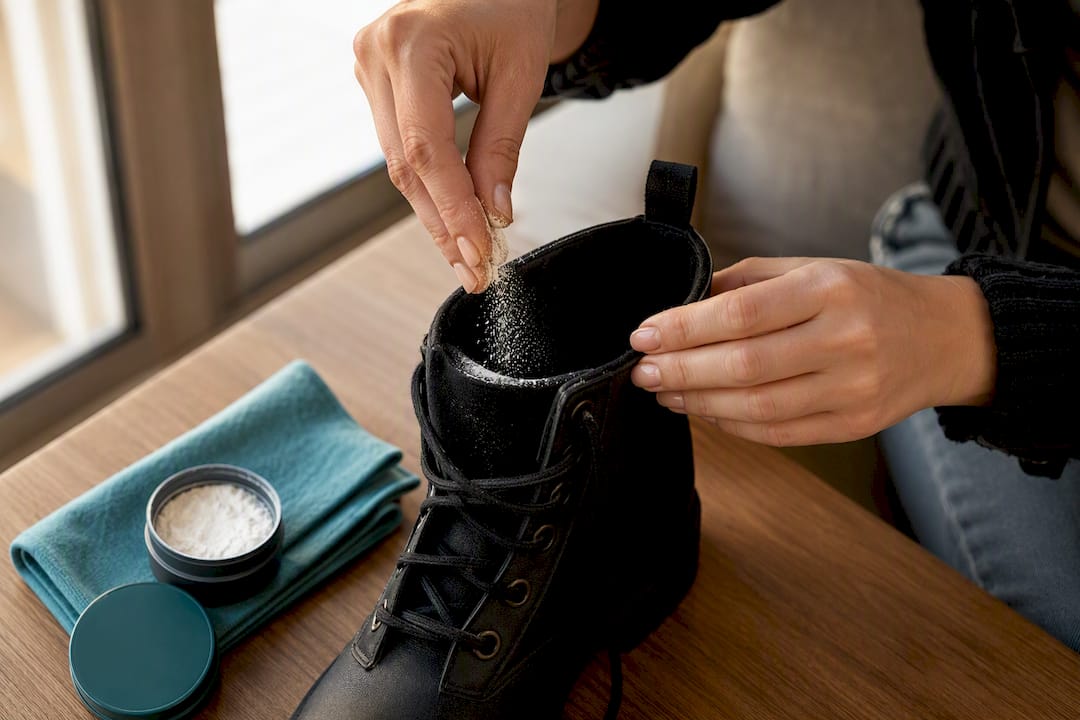
- Dust a moisture-absorbing, talc-free powder inside footwear before each wear. It takes about 10 seconds and keeps sweat from soaking into the lining in the first place.
- Store with cedar shoe trees, crumpled newspaper, or silica gel packs. All three pull ambient moisture out of the interior while the item sits unused.
- Mist with a light deodorizer spray after wear if you know an item runs warm on your feet or gets heavy use.
- Swap out insoles periodically. They absorb the bulk of sweat and odor over time, and a fresh set resets the interior smell completely.
The common thread here is moisture management, not the material itself. Rotation and prevention habits matter more for long-term freshness than any single deep clean.
When a Smell Means You Should Return the Item
Some smells are a fix. Others are a sign of a manufacturing problem you shouldn’t have to live with.
- The smell hasn’t faded after a week of airing and one round of safe cleaning. Persistent, sharp chemical odor at that point usually points to lower-grade PVC or poor processing, not something that will resolve with more patience.
- The surface feels tacky, sticky, or is flaking off in small pieces. These are signs of a formulation issue, and they typically get worse, not better, with more wear.
- You’re concerned about health effects from the smell. The EPA’s guidance on VOCs notes that most off-gassing from consumer goods diminishes with ventilation, but a smell that lingers at full strength for weeks is worth raising with the seller rather than continuing to air it out indefinitely.
Quick Care Habits for Vegan Combat Boots
Boots trap moisture differently than bags or jackets, so the routine matters more. A recommended care habit is a 10-second powder dusting inside each boot before wear and rotating between two pairs if worn daily, which helps keep sweat from settling into the lining long-term.
For the outer finish, spot-clean prints and solid colors with a barely damp microfiber cloth rather than a wet one, and let boots air-dry away from radiators or direct sun. Skip stiff brushes entirely. They dull printed designs faster than normal wear ever would. This full cleaning routine covers both exterior and interior care in more depth.
The Smell Isn’t the Problem. Ignoring the Cause Is
Most people treat vegan leather smell as one problem with one fix, and that’s where they go wrong. Off-gassing and wear-based odor need opposite responses: one wants time and air, the other wants moisture control and rotation. Reach for vinegar on a brand-new pair straight out of the box and you’re often just wasting effort on a smell that would have faded in three days anyway.
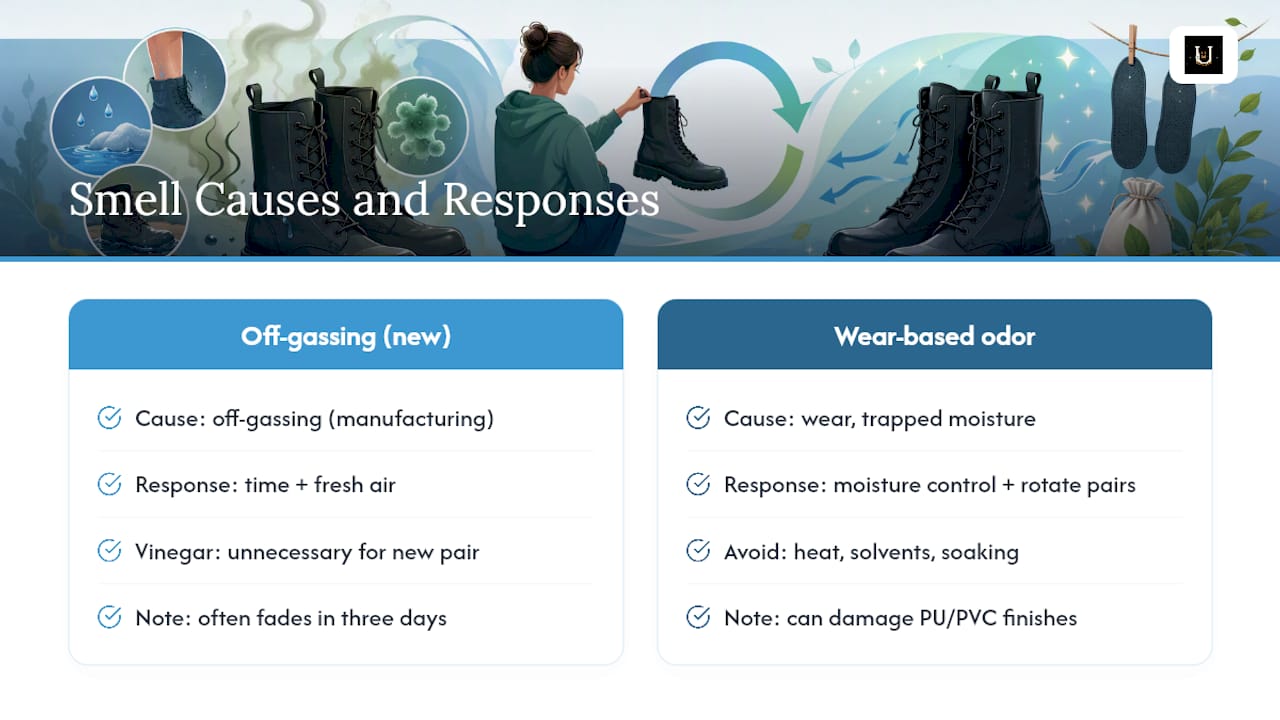
The bigger blind spot is treating synthetic finishes like they can handle anything real leather can. They can’t. Heat, solvents, and soaking do lasting damage to PU and PVC coatings in ways that don’t always show up immediately, which is exactly why so many people accidentally shorten the life of a pair of boots while trying to “fix” a smell that was never going to hurt the material in the first place.
If there’s one habit worth adopting over any single cleaning trick, it’s prevention. A pre-wear powder dusting and rotating pairs solve more odor problems before they start than any remedy solves after the fact.
— David
Where to Find Vegan Combat Boots Built to Resist Odor
Well-made vegan leather starts with stable material and honest labeling, and that’s exactly where odor problems get headed off before they start. Unikiff builds its vegan combat boots with clear material disclosure and finishes designed to hold up under real wear, not just look good on day one.
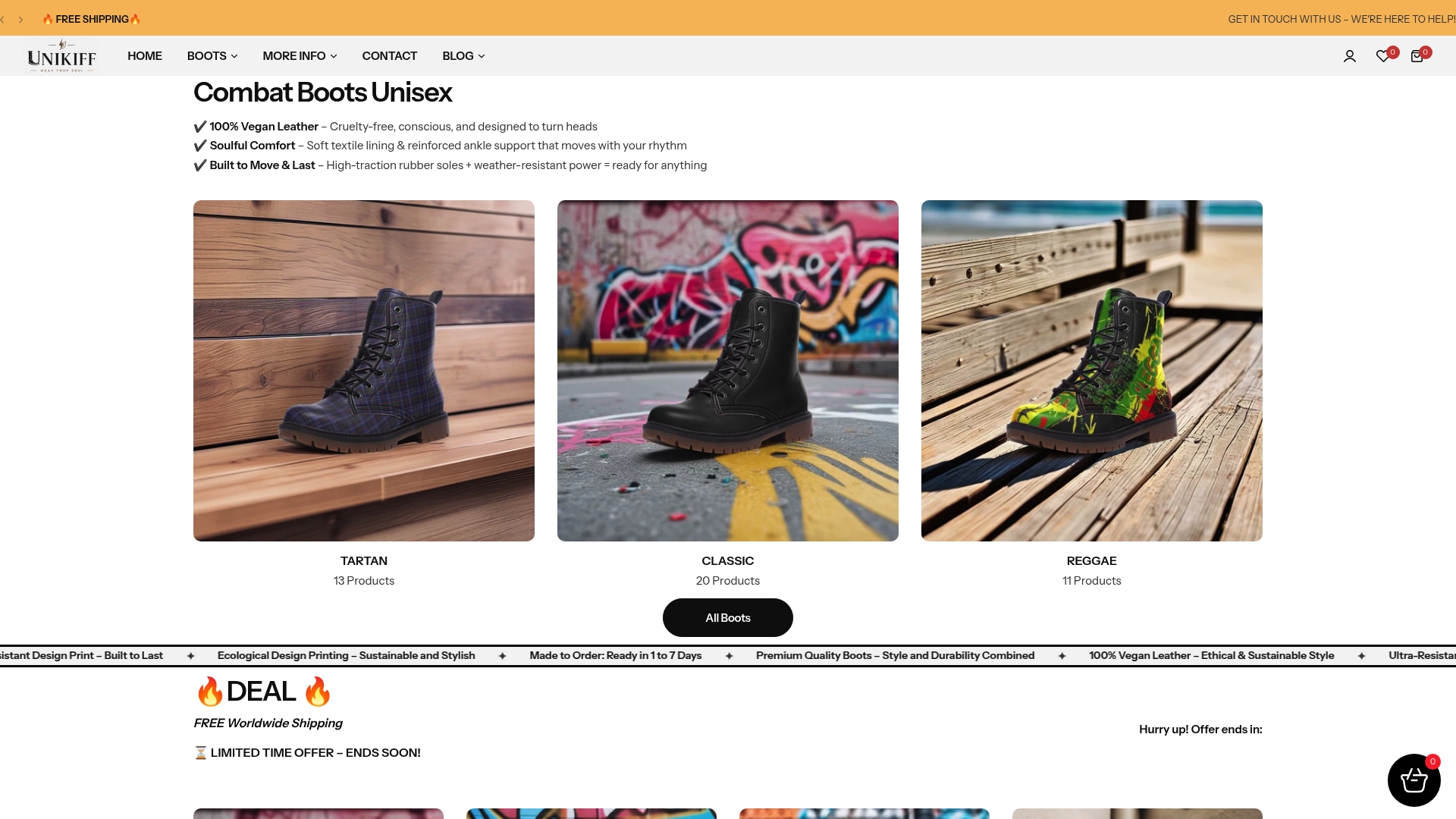
Whether you’re drawn to a solid black pair or a bold print like skull and floral designs, every pair is made-to-order with reinforced details and high-grip soles built for daily rotation, not just occasional wear. Before buying any vegan leather item anywhere, check the listing for material disclosure and care instructions. A brand that’s upfront about what’s in its boots is usually a brand that got the formulation right in the first place.
Not sure which size fits best? Run through Unikiff’s size and fit guide before you order, and browse the full boot lineup to find a pair that matches your style, whether that’s gothic, punk, grunge, or something entirely your own.
Sources
For readers who want to dig into the chemistry or care details further:
- What are volatile organic compounds (VOCs)? | US EPA
- What is polyurethane? | Polyurethanes Industry
- How To Get Fish Smell Out Of Faux Leather | The Leather Colour Doctor
- Why Your Vegan Leather Boots Reek (And the 3-Minute Fix) | Lumi Outdoors