


Vegan leather is not automatically more sustainable. Its environmental impact depends on what it’s made of, how long it lasts, and how it gets disposed of at the end. Composition (plastic versus genuine bio-based content), durability, and end-of-life fate are the three factors that decide whether a “vegan” tag means anything. Watch for microplastic shedding, hidden chemical finishes, and short service life. Those three problems show up again and again once you look past the label.
TL;DR:
- The sustainability of vegan leather depends more on durability and end-of-life plans than just its plant-based ingredients or absence of animal products.
- Manufacturing impacts, especially those related to petrochemical polymer production and chemical finishes, often outweigh land-use benefits associated with plant-based alternatives.
- Microplastic shedding from aging plastic coatings and chemical finishes poses significant environmental risks that are rarely disclosed by brands.
- Products with a longer lifespan and repairability significantly reduce their environmental footprint, making durability the most critical factor for sustainability.
- Consumers should verify composition percentages, third-party testing, and repair policies rather than rely solely on marketing claims or visual cues.
Table of Contents
- What Does “Vegan Leather” Actually Mean? The Main Material Types
- Where the Environmental Costs Really Show Up in Production
- The Chemical and Microplastic Problem Nobody Puts on the Label
- Why Durability Matters More Than the Word “Vegan”
- Vegan Leather vs. Animal Leather: Weighing the Real Trade-Offs
- How to Spot a Genuinely Lower-Impact Vegan Leather Product
- Simple Care Habits That Extend the Life of Vegan Leather
- What Unikiff Prioritizes When Sourcing Vegan Materials
- Why the “Vegan = Sustainable” Shortcut Fails Shoppers
- Sources
What Does “Vegan Leather” Actually Mean? The Main Material Types
“Vegan leather” is a marketing umbrella, not a material spec. It covers everything from fully synthetic plastics to genuinely plant-derived composites, and the differences between them are massive.
Polyurethane (PU) and polyvinyl chloride (PVC) are the most common types. Both start with a woven or knit textile backing, usually polyester or cotton blend, then get coated in a plastic layer that’s embossed to look like grain leather. PVC is the harder-wearing but more chemically intensive of the two; PU is softer and considered less toxic to produce, but still fossil-fuel-based from the ground up.
Plant-based alternatives, made from pineapple leaf fiber, cactus, mushroom mycelium, or apple pomace, get most of the sustainability attention. Here’s the part most marketing skips: these materials are almost always composites, not pure plant matter. They need a polymer binder, usually PU, to hold the fibers together and give the surface durability. Some brands disclose that percentage. Many don’t.
That construction choice matters downstream:
- Pure plastic (PU/PVC) sheets are more likely to be mechanically recyclable in specialized streams.
- Fiber-plastic composites are harder to separate, which limits recycling options.
- Backing textile blends affect how the whole product biodegrades, if at all.
Where the Environmental Costs Really Show Up in Production
Manufacturing is where the biggest, least-visible impacts happen. PU and PVC production both rely on petrochemical feedstocks, and the polymerization process is energy-intensive, typically drawing on whatever grid mix (coal, gas, or renewables) powers the factory. That single variable can swing the carbon footprint of two otherwise identical rolls of synthetic leather by a wide margin.
Land and water tell a different story. Animal leather production is downstream of livestock farming, which is among the most land-intensive uses of agricultural ground worldwide, according to Our World in Data’s global land-use analysis. Synthetic and plant-based leathers generally sidestep that particular pressure, since they don’t require grazing land or feed crops at the same scale. That’s a real point in vegan leather’s favor on this one axis, even though it doesn’t settle the broader question.
The supply chain has its own hotspots:
- Polymer manufacturing (the chemical plants making raw PU/PVC resin)
- Solvent-based coating and finishing processes
- Long-distance shipping of fabric backing, resin, and finished rolls across different countries before a boot or bag ever gets assembled
Quick fact: Livestock farming is one of the largest drivers of global agricultural land conversion, which is why avoiding animal leather reduces land pressure in principle, though it has to be weighed against the plastic and chemical trade-offs discussed next.
The Chemical and Microplastic Problem Nobody Puts on the Label
This is where “vegan” and “sustainable” start to pull apart. Researchers at RMIT University have warned that many products marketed as vegan leather blend plant fibers with petroleum-derived plastic coatings, and those coatings can shed microplastics as they age and degrade. A boot that looks and feels like a plant product on the shelf can behave exactly like a plastic one once it starts breaking down.
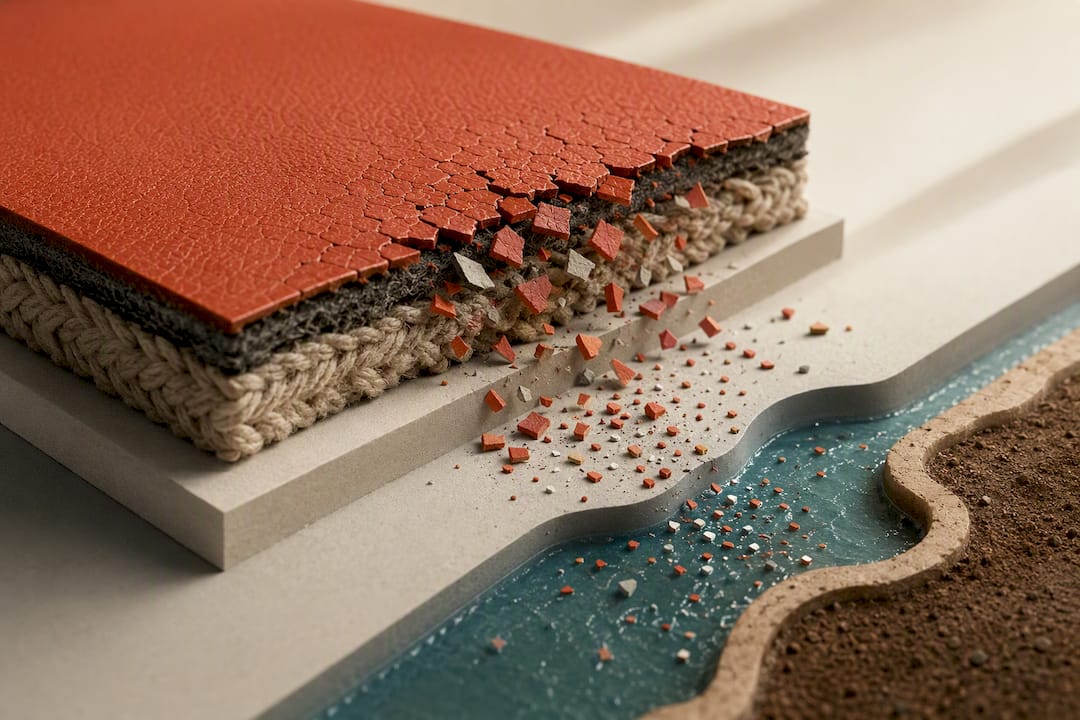
Microplastic shedding isn’t a fringe concern. The European Environment Agency links textile fibers and coatings directly to microplastic pollution and recommends circular-economy design as the practical fix, meaning products built to be repaired, reused, and eventually recovered rather than landfilled after a season. Separate materials-science research on polymer coatings backs up the underlying mechanism: as plastic finishes weathe, they flake and fragment into smaller particles that end up in waterways and soil.
PFAS and solvent-based finishing chemicals are the other quiet issue. Not every brand uses them, but few disclose whether they do.
Before you trust a “vegan” label, look for:
- Explicit PFAS-free certification, not just “eco-friendly” language
- Independent lab test reports, not brand self-testimonials
- Clear composition percentages (plant fiber versus polymer binder)
Why Durability Matters More Than the Word “Vegan”
Here’s the math that most sustainability marketing conveniently skips: a product’s environmental cost gets divided by how many years you actually use it. A boot that lasts eight years has roughly a quarter of the annual footprint of one that falls apart in two, regardless of what it’s made from.
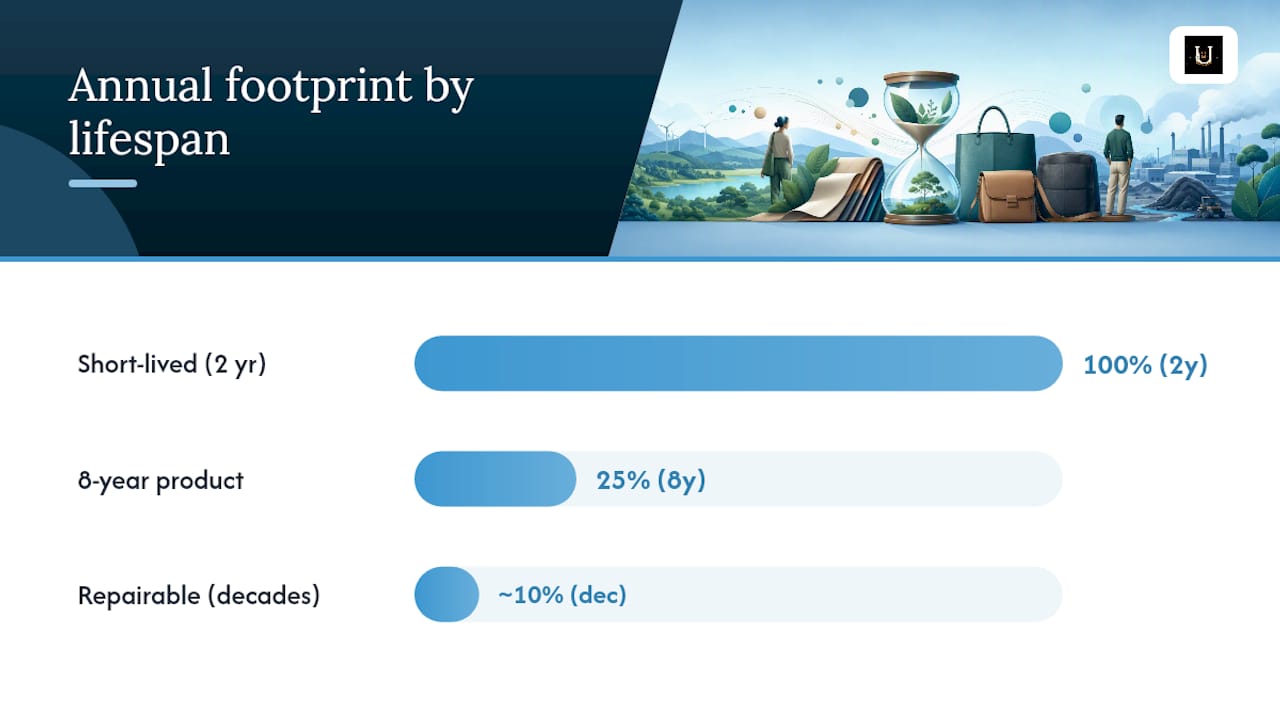
That math is exactly why lifespan claims deserve scrutiny. Some plant-based leather products have reported service lives as short as two years, largely because the fiber-plastic composite construction cracks and peels faster than either full-grain animal leather or well-made pure synthetic alternatives. For footwear specifically, construction quality (stitching, sole bonding, reinforcement at stress points) often determines lifespan more than the surface material does.
Repairability compounds the gap. Animal leather can typically be reconditioned, re-dyed, and resoled by a cobbler for decades. Many vegan composites can’t be repaired the same way once the surface layer starts flaking, which pushes them toward the trash sooner.
Pro Tip: Ask a brand directly how many years its vegan leather is warrantied or expected to last before it cracks. A vague answer is itself useful information.
- Longer lifespan = lower annual footprint, full stop
- Composite materials without reinforcement often fail at stitch points first
- Reconditioning options (or their absence) should factor into any purchase decision
Vegan Leather vs. Animal Leather: Weighing the Real Trade-Offs
Neither material wins outright, and treating this as a clean binary misses the point. Animal leather carries the land-use and greenhouse gas burden of livestock farming. Vegan leather carries the plastic, microplastic, and end-of-life burden of petrochemical-based coatings. Both can be reasonably durable or disappointingly flimsy depending on how they’re made.
A few honest trade-offs worth sitting with:
- A high-quality animal leather item used for fifteen years can have a lower lifetime footprint than a plastic-coated vegan alternative that’s replaced every two.
- A genuinely durable, well-sourced plant-based composite with a real repair or takeback program can beat both.
- Neither material earns “sustainable” status just by existing. Longevity and end-of-life planning decide the outcome, not the raw ingredient list.
The honest answer depends on the specific product, not the category. That’s exactly why life-cycle evidence (not slogans) belongs at the center of any comparison, a point echoed directly by analysis from The Conversation on how marketing exploits the gap between “vegan” and “sustainable.” You can dig deeper into how the two materials stack up in our comparison of vegan leather and genuine leather.
How to Spot a Genuinely Lower-Impact Vegan Leather Product
Marketing copy won’t tell you what you need to know. These questions will:
- Ask for composition percentages. What share is plant fiber versus polymer binder? A brand that can’t answer probably hasn’t measured it.
- Request LCA or third-party test data. Independent lab reports (the kind issued by testing firms like Eurofins or Intertek) carry more weight than a brand’s own claims.
- Confirm PFAS-free status in writing, not just as a hashtag.
- Check the warranty and repair policy. A brand confident in its durability will back it with a real repair or resole option.
- Ask about end-of-life plans. Does the company offer a takeback program, or does the product just go to landfill?
Regulators are starting to demand this kind of evidence too. The Australian Competition and Consumer Commission’s greenwashing guidance spells out what brands are expected to substantiate before using words like “sustainable” or “eco-friendly.”
Pro Tip: Prioritize durability and repair policy over plant imagery on the label. A boot covered in pineapple-leaf marketing that lasts eighteen months isn’t doing the planet any favors.
Simple Care Habits That Extend the Life of Vegan Leather
Keeping a product in use longer is one of the most effective things you can do, and it costs nothing but a little attention. Wipe synthetic and plant-based surfaces with a damp cloth rather than harsh solvents, which accelerate cracking. Store boots away from direct heat or sunlight, both of which dry out coatings and cause premature peeling.

Small scuffs or loose stitching are worth a cobbler visit before they become a reason to replace the whole item. Once cracking spreads across a large surface area, repair usually isn’t cost-effective anymore, and replacement makes more sense. When a pair is truly done, look into textile takeback programs or donation before landfill. Our guide to cleaning and maintaining vegan leather boots walks through the specifics step by step.
What Unikiff Prioritizes When Sourcing Vegan Materials
We build boots to be worn for years, not seasons. That means asking suppliers for composition transparency, testing for durability under real conditions, and designing details like reinforced stitching and repairable soles from the start.
You can see that construction philosophy applied across our vegan combat boots collection, where reinforced ankle support and high-grip soles are built in rather than bolted on as an afterthought.
Why the “Vegan = Sustainable” Shortcut Fails Shoppers
The research here supports one conclusion clearly: a product’s environmental footprint is decided by how long it lasts and what happens when it dies, not by whether an animal was involved in making it. That’s a harder message to put on a hangtag than “cruelty-free,” which is exactly why it gets skipped.
Conventional advice tells shoppers to look for plant-based ingredients and stop there. That’s backwards. A cactus-leather wallet built on an unlabeled polymer binder that cracks in two years is not a better outcome than a durable, repairable alternative, vegan or otherwise. The ingredient list matters less than the engineering behind it.
If you take one thing from this, make it this: ask brands for composition data and repair policies before you ask what the surface is made from. Durability and transparency are the real sustainability signals. Everything else is packaging.
— David
Sources
- RMIT University: ‘Vegan leather’ is not as sustainable as it sounds
- ‘Vegan leather’ isn’t as sustainable or eco‑friendly as brands might claim — The Conversation
- EEA: Microplastics from textiles — towards a circular economy for textiles in Europe
- ACCC greenwashing guidance (environmental and sustainability claims)
- Our World in Data: global land for agriculture