


A mid-calf merino or merino-blend midweight sock is the best all-around choice for combat boots, keeping feet dry and blister-free during long wear. For hot climates or fast-drying needs, a synthetic tactical sock is the better call. Skip cotton entirely for anything beyond a quick errand, and always make sure the cuff clears your boot collar so nothing rubs or slides.
TL;DR:
- Midweight merino or merino-blend mid-calf socks are ideal for daily wear and long hours standing, providing temperature regulation and odor resistance.
- Synthetic tactical socks are best for hot weather or high-sweat activities because they dry faster and offer reinforced zones for durability.
- Socks should be tall enough to stay above the boot collar, with appropriate cushioning focused on the heel, ball of the foot, and lacing areas to prevent hotspots and blisters.
- Avoid cotton socks for extended wear as they retain moisture, increasing blister risk, and opt for reinforced, seam-free, and anatomically designed socks for durability.
- Proper fit testing involves checking sock height, cushioning, and heel snugness, and replacing worn socks regularly to maintain performance and comfort.
Table of Contents
- Best Socks for Combat Boots: A Quick Shortlist
- Comparing Sock Materials, Cushioning, and Fit
- How Do You Match Sock Height to Boot Collar?
- Why Sock Material Actually Changes How Your Feet Feel
- Where Cushioning Prevents Blisters (and Where It Doesn’t)
- How to Style Visible Socks with Combat Boots
- Washing and Replacing Performance Socks
- Where to Buy Quality Socks for Combat Boots
- What Should You Expect to Pay for Boot Socks?
- How to Tell If a Sock Will Actually Last
- Red Flags to Avoid When Choosing Boot Socks
- Comfort and Style Aren’t Separate Decisions
- Find Boots Built to Handle a Real Sock
- Sources
- FAQ
Best Socks for Combat Boots: A Quick Shortlist
You don’t need to test ten pairs to find what works. Combat boots pair well with five main sock categories, and each one solves a different problem.
- Merino midweight (mid-calf): best for daily wear and multi-hour standing; regulates temperature and resists odor even after a full day.
- Merino-synthetic blend (mid-calf to over-the-calf): best for mixed conditions where you want wool’s comfort with added durability from nylon or polyester fibers.
- Synthetic tactical sock (crew or mid-calf): best for hot weather, sweat-heavy activity, or fast turnaround between wears since synthetics dry quicker than wool.
- Lightweight athletic sock (crew): best for PT, short walks, or breaking in new boots, but too thin for long rucks or all-day wear.
- Heavyweight wool sock (over-the-calf): best for cold-weather duty or winter outfits where insulation matters more than breathability.
Pro Tip: If you’re torn between two categories, think about your longest wear session of the week, not your average one. Buy for the extreme, not the routine.
Combat boots with an 8-inch shaft need a sock tall enough to stay above the collar even after hours of movement. That usually rules out ankle socks for combat boots unless you’re only wearing them for a quick trip to the store. Thick socks for military boots make sense for rucking and cold-weather duty; lightweight synthetics make more sense for hot pavement and gym sessions. Once you know your primary use case, the category picks itself.
Comparing Sock Materials, Cushioning, and Fit
Choosing between wool socks for combat boots and synthetic options comes down to matching material to activity, not picking a “best” sock in isolation. Here’s how the main categories stack up.
| Material | Typical Cushioning | Best For | Fit/Height Recommendation |
|---|---|---|---|
| Merino wool | Light to full cushion | Daily wear, multi-day trips, temperature swings | Mid-calf for standard boots |
| Synthetic blend (nylon/poly) | Full cushion with reinforced zones | Rucking, high-abrasion activity, humid climates | Mid-calf to over-the-calf |
| Merino-synthetic blend | Medium to full cushion | All-around use, balances comfort and durability | Mid-calf |
| Lightweight synthetic | Minimal cushion | PT, short walks, hot weather | Crew |
| Cotton | Varies, but retains moisture | Not recommended for extended wear | Any height, limited use only |
Durability separates these categories more than most people expect. One tested synthetic-blend military sock survived roughly 42,000 abrasion cycles compared with far fewer cycles for older standard-issue socks. That gap explains why reinforced nylon exteriors show up so often in socks built specifically for combat boots.
Cotton keeps landing on “avoid” lists for a simple reason: it holds moisture against skin instead of moving it away, and wet cotton fibers increase blister risk during long wear. If you’re rucking, standing for shifts, or wearing boots daily, that moisture buildup adds up fast. Save cotton for casual outfits where the boots come off within an hour or two.
- Rucking or long marches: reinforced merino-synthetic blend, mid-calf or taller.
- Daily wear and errands: merino midweight, mid-calf.
- Hot weather or high-sweat activity: lightweight synthetic, crew or mid-calf.
- Cold-weather duty: heavyweight wool, over-the-calf.
How Do You Match Sock Height to Boot Collar?
Getting sock height wrong is the fastest way to end up with a blister you didn’t see coming. The fix takes about two minutes.
- Check your boot’s shaft height. Standard combat boots run 6 to 8 inches tall, which calls for a crew or mid-calf sock. Taller shafts need over-the-calf socks to prevent the top edge of the boot from rubbing directly on skin.
- Put the sock on and lace up normally. Don’t skip lacing; a loose boot changes how the sock sits against your ankle and shin.
- Walk 10 to 20 paces. Pay attention to bunching at the toe, pressure across the top of your foot, and any heel slip inside the boot.
- Adjust the variable that’s actually wrong. If your toes feel cramped, size down in thickness rather than forcing a thin boot to fit a heavyweight sock. If your heel slips, look for a sock with a deeper heel pocket instead of just going up a size in boots.
- Retest before committing to a full day. Testing new socks on a short walk before a long shift or ruck catches problems while they’re still minor annoyances instead of open blisters.
The cuff clearing the collar isn’t a style detail; it’s the difference between a sock protecting your ankle and a boot edge doing the rubbing itself.
Why Sock Material Actually Changes How Your Feet Feel
Material choice isn’t just marketing language on a sock label. It changes how your foot performs over an 8-hour shift or a weekend of festival walking in combat boots.
Merino wool wicks moisture away from skin, regulates temperature in both directions, and resists odor buildup better than synthetic fibers alone. That combination makes it a strong choice for multi-day wear where you can’t swap socks every few hours. Synthetic fibers like nylon and polyester bring different strengths: faster drying time and higher abrasion resistance, which matters if you’re on pavement, gravel, or rough terrain regularly. Blended socks try to capture both, layering wool against skin with a synthetic exterior for reinforcement.
Durability testing found one synthetic-blend military boot sock lasting 42,000 abrasion cycles, a dramatic jump over older standard-issue socks in the same Military Times testing.
Beyond raw material, a few construction features separate a sock built for boots from one built for sneakers. Look for a reinforced heel and toe, which takes the brunt of friction inside a rigid boot shell. A seamless toe closure avoids the pressure ridge that causes blisters on long walks. An anatomical heel cup keeps the sock locked in place instead of migrating down inside your boot. And mesh ventilation panels across the top of the foot help manage heat during warmer months without sacrificing the cushioning underneath. Tactical sock makers build these features into socks specifically because rigid boots create friction points that sneakers rarely do.
Where Cushioning Prevents Blisters (and Where It Doesn’t)
Cushioning only helps if it’s placed where your foot actually needs protection. Three zones matter most inside a combat boot: the heel, the ball of the foot, and the area where laces press across the top of your foot. Targeted cushioning in those spots absorbs impact and reduces the friction that turns into a hotspot after a few miles.
Cushioning density should scale with activity, not personal preference alone. Heavier cushioning suits rucking and long-distance wear, while lighter cushioning works better for high-intensity movement or hot days when you need more breathability than padding. Wearing a heavyweight cushioned sock to a summer festival in combat boots will likely leave your feet overheated by hour three.
Run through this quick checklist before you head out the door:
- No bunching or folding at the toes when the boot is fully laced.
- Heel sits snugly inside the sock’s heel pocket, not sliding with each step.
- Cuff stays in place at the top of the boot without rolling down.
- If a hotspot appears anywhere, change socks immediately rather than pushing through.
Pro Tip: Carry a spare pair in your bag on days you know you’ll be on your feet for hours. A five-minute sock change beats a blister that ruins the rest of your day.
Manufacturer testing on targeted heel and ball padding shows it reduces pressure points during long-duration wear in rigid boots, which is exactly the environment combat boots create.
How to Style Visible Socks with Combat Boots
Socks with combat boots aren’t just a comfort decision. Letting the cuff show above your boot shaft turns a functional choice into a styling one, and it’s one of the easiest ways to add texture to an outfit built around a hard, structured boot.
A ribbed or chunky knit sock peeking above a leather boot creates contrast that a hidden sock never will. Fashion guidance on the socks-with-boots trend points out that combat boots handle bulkier, textured socks well precisely because the boot’s silhouette is already bold enough to balance a heavier knit. Thin-gauge socks work better with sleeker ankle boots where you want a cleaner line instead of visual weight.
Color and texture should follow the outfit, not fight it. Muted charcoal or olive tones suit utilitarian, workwear-inspired looks. Patterned, striped, or heavily ribbed socks fit right into punk, grunge, or gothic outfits where clashing textures are part of the aesthetic. If you’re building a look around one of Unikiff’s printed designs, a solid neutral sock lets the boot stay the focal point, while a plain black boot gives you room to go bold with the sock instead.
- Fold the cuff once for a clean, intentional edge instead of letting it slouch unevenly.
- Match sock texture to boot texture: chunky wool against smooth vegan leather, ribbed cotton-blend against a printed design.
- Keep one visual anchor per outfit. If your boots are already a bold print, keep the sock simple.
For more outfit pairings built around combat boots, Unikiff’s guide to choosing combat boots by color walks through texture and shade coordination in more depth, and the roundup of outfit ideas featuring women’s combat boots shows several visible-sock looks in action.
Washing and Replacing Performance Socks
Performance socks lose their wicking and cushioning properties faster when they’re washed wrong, so a few habits go a long way toward extending their life.
- Wash in cold or warm water, and skip bleach and fabric softener, both of which break down elastic fibers and coat wool in residue that blocks moisture wicking.
- Use a gentle cycle for wool or wool-blend socks to avoid felting and shrinkage.
- Air-dry when possible, or tumble dry on low heat. High heat degrades the elastic band and compresses cushioning fibers over time, shortening the sock’s usable life.
- Turn socks inside out before washing to protect any exterior reinforcement panels from abrasion in the machine.
Replace a pair once the elastic cuff stops holding its shape, the cushioning under the heel or ball feels noticeably thinner than a new pair, or you keep getting hotspots in the same spot even after confirming the fit is correct. A sock that’s lost its structure won’t fix a fit problem no matter how new the boots are.
Where to Buy Quality Socks for Combat Boots
Established sock brands with a track record in military and outdoor gear are generally your safest bet for boot-specific socks. Names like Darn Tough, Thorlo, Minus 33, CEP, Swiftwick, Fox River Mills, Wigwam, and Jefferies show up repeatedly in gear reviews because they build socks around boot-specific problems: abrasion, moisture, and pressure points, rather than adapting a general athletic sock.
A few specific models worth knowing by name if you’re comparing options directly: the Darn Tough T4021 Tactical Midweight Boot Sock (Berry compliant, built for mid-calf coverage), the Minus 33 Mountain Heritage full cushion boot sock (heavyweight merino for cold conditions), the CEP Hiking Max Cushion tall compression sock (over-the-calf with graduated compression), the Swiftwick Aspire One (lightweight, low-cushion for warm climates), the Fox River Mills 6074 Military Wick Dry maximum medium weight mid-calf sock, the Wigwam Ultra Cool Lite Stripe crew sock (ultra-lightweight for hot weather), and the Jefferies Men’s Military Rib Top Combat Crew Boot Socks, a budget-friendly ribbed option built specifically for boot wear.
You’ll find these through outdoor retailers, military surplus stores, and direct manufacturer sites. Buying direct from the brand usually gets you accurate sizing charts and, in some cases, warranty coverage against wear. Avoid third-party marketplace listings with no brand verification. Counterfeit “tactical” socks show up often enough in online marketplaces that a mismatched logo or unusually low price is worth treating as a warning sign before you buy.

What Should You Expect to Pay for Boot Socks?
Sock pricing tracks pretty closely with material quality and construction complexity, so it helps to think in three tiers.
Budget synthetic or cotton-blend socks run in the lower price range and work fine for occasional wear or breaking in new boots, but they typically lack the reinforced zones and moisture management that prevent blisters during long days. Mid-range merino or merino-blend socks cost more per pair but deliver noticeably better temperature regulation and odor resistance, making them the better value for anyone wearing combat boots several days a week. Premium tactical socks with full nylon reinforcement, deep heel pockets, and manufacturer warranties sit at the top of the price range, and they earn that price through documented durability, including the abrasion-cycle testing mentioned earlier.
Cost per wear tells a more honest story than sticker price alone. A $25 merino sock that lasts two years of regular wear costs less over time than five pairs of $6 cotton socks replaced every few months because the elastic gave out or the heel wore through. If you’re wearing combat boots daily for work or as a core part of your wardrobe, spending more upfront on two or three pairs of quality socks usually beats cycling through cheap ones constantly.
How to Tell If a Sock Will Actually Last
Durability isn’t something you can always judge by touch in a store, but a few signals give you a reliable read before you commit to a pair.
Check the fiber content first. A higher percentage of nylon or polyester blended with merino typically signals a sock built for abrasion resistance rather than pure softness. Reinforced panels at the heel and toe, visible as a slightly thicker or differently textured knit, indicate the manufacturer designed the sock for friction zones specifically. A snug, structured cuff that holds its shape when you stretch it gently suggests the elastic will survive repeated washing without going slack after a month.
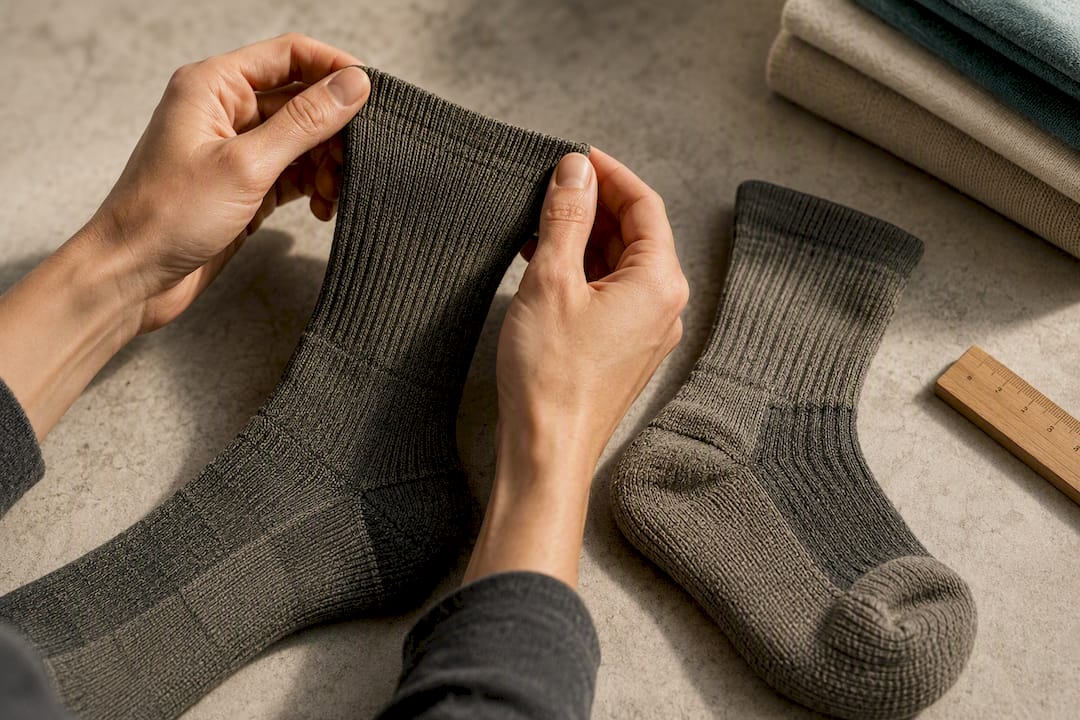
Manufacturer warranties are one of the more underrated durability signals available. Some tactical sock brands back their products against wear defects, which only makes financial sense if the sock is built to hold up. That kind of guarantee is a stronger signal than marketing copy alone, since a company backing a claim with a warranty has skin in the game.
Watch how a sock performs after its first few washes, not just out of the package. Elastic that loosens noticeably, cushioning that flattens, or a heel pocket that starts sliding are all early warning signs the sock won’t hold up to the durability claims on the label. A sock rated for high abrasion cycles should still feel structured after a month of regular wear and washing, not just on day one.
Red Flags to Avoid When Choosing Boot Socks
A few warning signs consistently point to socks that won’t hold up in combat boots, no matter how good the price looks.
Cotton content above a small percentage is the biggest one. Even blended socks marketed for boots can sneak in enough cotton to retain moisture and undercut the wicking benefits you’re paying for, so check the fiber breakdown before buying. Thin, unreinforced construction is another warning sign. If a sock feels identical at the heel and the cuff, with no thicker knit anywhere, it likely wasn’t designed with boot friction in mind.
Watch for vague marketing language with no specifics. “Tactical” or “military-grade” printed on packaging means nothing without backing details like fiber content, cushioning zones, or Berry compliance for actual military-spec gear. A sock that’s tall enough to bunch up inside your boot rather than sitting flush against your leg will cause pressure points no matter how good the material is, so height and fit matter as much as fabric.
Finally, be cautious of socks with no return policy or unusually short lifespan claims compared to competitors. If a listing can’t tell you what the sock is made of or how it’s constructed, that’s usually reason enough to look elsewhere.
Comfort and Style Aren’t Separate Decisions
People treat sock choice and boot choice like two unrelated purchases, and that’s backward. The fit of your boot determines how much room a thicker sock actually has, and a boot with a cramped toe box will fight you no matter how good the sock is.
Some combat boots are designed with a roomier toe box and supportive ankle structure to accommodate midweight merino socks comfortably over long wear periods. That’s a design decision, not an accident, because a boot that only fits well with paper thin socks limits what you can wear it with, both functionally and stylistically. A boot built to accommodate a chunky ribbed sock also gives you more room to play with the visible-cuff looks covered earlier in this guide. For more outfit direction built around that flexibility, the style tips and tricks guide breaks down several pairings worth trying.
— David
Find Boots Built to Handle a Real Sock
Most combat boots are cut for a thin dress sock, which is exactly why a good midweight merino pair ends up feeling cramped by afternoon. Certain vegan combat boots are designed with a roomier toe box and supportive ankle structure to ensure thicker socks add comfort instead of pressure points.
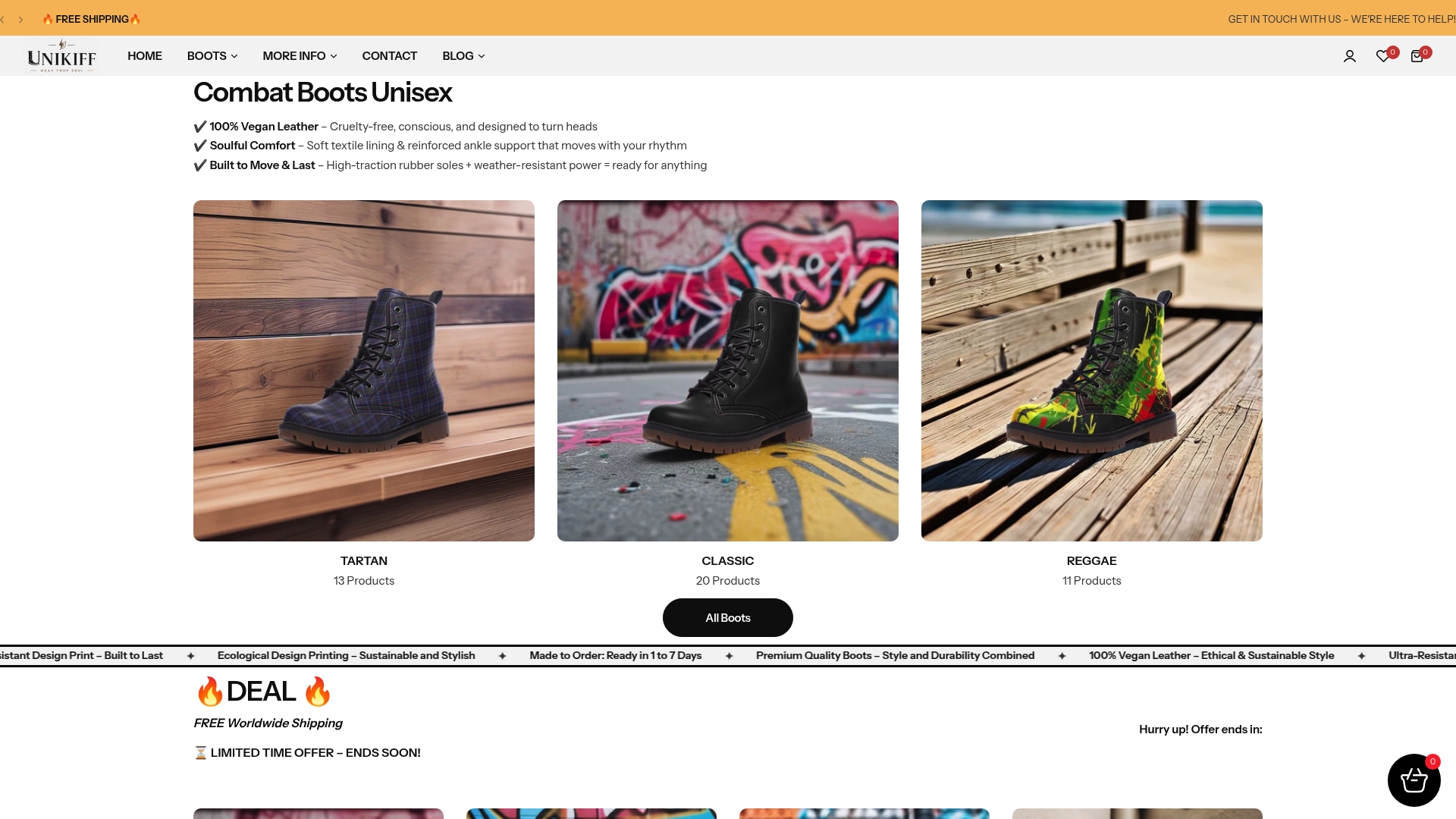
Every pair is made from cruelty-free vegan leather, built for the kind of all-day wear that visible-sock styling actually requires, whether you’re layering a ribbed knit for a grunge look or keeping it simple with a solid crew sock under a black boot. Solid colors work for daily rotation, while the printed designs, skulls, florals, punk graphics, give you a boot that’s already the focal point of the outfit.
Browse the full vegan combat boots collection to find a silhouette that fits your style, and check the sizing guide before you order if you plan on wearing thicker socks regularly. Sizing up half a size is common for anyone pairing these boots with heavyweight wool socks in colder months.
Sources
- Military Socks: Army & Combat Boot | Thorlo
- Change your socks: These are the six best for troops — GearScout / Military Times
- Best Socks for Military Boots & Combat Boots — Darn Tough
- What Socks To Wear With Combat Boots: Ultimate Guide — WisePickers
FAQ
What kind of socks should you wear with combat boots?
A mid-calf merino or merino-blend midweight sock works best for most wear, while a synthetic tactical sock suits hot weather or fast-drying needs. Avoid cotton for anything beyond short, casual wear.
Should you always wear socks with boots?
Yes. Skipping socks in combat boots creates direct friction between skin and the boot’s interior, which leads to blisters far faster than wearing even a thin sock.
What type of socks look good with combat boots?
Ribbed or chunky knit socks in a visible cuff create a layered look that pairs well with combat boots, especially in punk, grunge, or gothic outfits. Thinner, muted-tone socks suit sleeker or more utilitarian looks.
Is it better to wear thick or thin socks with combat boots?
It depends on your boot’s fit and the activity. Thick socks suit rucking, cold weather, and boots with extra room in the toe box, while thin socks work better for hot weather, PT, or boots with a tighter fit.