


For most people who need all-day walkability, flat boots are the safer pick. Platform boots are better when you want height and a statement look. Flats win on stability, sole flexibility, and stair safety, while platforms trade some of that comfort for visual impact and a distinct, elevated silhouette.
TL;DR:
- Platform boots are heavier and less flexible, which can cause leg fatigue, especially over long days or uneven terrain.
- Flats are more stable, easier to walk in, and better suited for stairs, pavement, or extended standing periods.
- Effective pitch, calculated by heel height minus platform height, predicts comfort, with higher platforms creating a gentler walking angle.
- Styling flats suits minimalist outfits and long commutes, while platforms complement statement or festival looks and are ideal for height.
- Unikiff’s vegan combat boots offer both flat and platform styles with adjustable laces, reinforced ankles, and slip-resistant soles for versatile, practical wear.
Table of Contents
- Platform vs Flat Boots: Style, Comfort, and Construction Compared
- How to Style Platform Boots and Flat Boots
- Fit, Walking Technique, and Predicting Comfort Before You Buy
- Who Should Choose Platforms vs. Flats?
- Pre-Purchase Boot Checklist
- How Unikiff’s Vegan Combat Boots Fit This Choice
- Find Your Fit in the Unikiff Combat Boot Collection
- A Closing Note on Taste vs. Practicality
- Sources
- FAQ
Platform vs Flat Boots: Style, Comfort, and Construction Compared
The real difference between platform and flat boots comes down to how weight moves through your foot with every step. A flat boot keeps your foot close to the ground with a thin, flexible sole, so your gait stays natural. A platform lifts your entire foot on a thick, rigid base, changing your balance point and how your calf muscles work over a long day.
Style and visual impact. Platforms create instant volume and edge. WhoWhatWear notes they pair especially well with cropped straight-leg jeans and tailored trousers, letting the sole do the visual work. Flats read cleaner and more versatile. Vogue frames them as a year-round staple that slides into both minimalist and maximalist wardrobes without a second thought.
Comfort and walkability. This is where flatforms complicate the conversation. A flatform has an even sole from heel to toe, so your foot sits flat, unlike a pitched platform where the heel sits higher than the front. Buyer’s guides point out that “platform” actually covers several different constructions, including flatforms, heeled platforms, and heavy architectural soles, and each one walks differently.
Construction checklist. Before you decide, check these details:
- Sole rigidity: a stiffer sole limits ankle roll but also limits natural foot flex.
- Lacing or zipper: full-length lacing adjusts fit better than a side zipper alone.
- Insole: removable, cushioned insoles extend comfortable wear time.
- Weight per boot: heavier soles mean more effort with every step.
Quick verdict by dimension: Choose platforms when the outfit or event calls for height and drama. Choose flats when your day involves stairs, pavement, or more than an hour of standing. FashionGonerogue’s overview of boot silhouettes backs this up, tracing platforms back to disco-era statement dressing rather than everyday utility.
How to Style Platform Boots and Flat Boots
Platforms and flats ask for different proportions, and getting that balance wrong is the most common outfit mistake alternative-fashion shoppers make.
- Wide-leg trousers with platforms. The extra sole height fills the space a wide hem would otherwise swallow, keeping your silhouette grounded instead of top-heavy.
- Cropped hems with platforms. A cropped jean or trouser shows off the platform itself, turning the sole into part of the outfit rather than hiding it.
- Midi skirts with platforms. The added height shortens the visual gap between hem and boot, avoiding that awkward mid-calf cutoff.
- Tailored trousers with flats. A slim flat boot slides cleanly under a straight hem for a polished, commute-ready look.
- Maxi skirts with flats. Flats keep the outfit from feeling front-heavy since there’s no added sole bulk at the bottom.
For a minimalist capsule, a single pair of sock-like flat boots covers office, errands, and travel. For a bolder wardrobe, one pair of platforms in a bold print or hardware detail anchors festival and going-out looks without needing five different pairs. Our guide on styling combat boots for any occasion breaks down more pairing ideas by season.
Pro Tip: If you’re between hem lengths, size your platform height to close the gap rather than choosing a shorter platform and hoping the outfit works anyway. Boots should finish a silhouette, not fight it.
Fit, Walking Technique, and Predicting Comfort Before You Buy
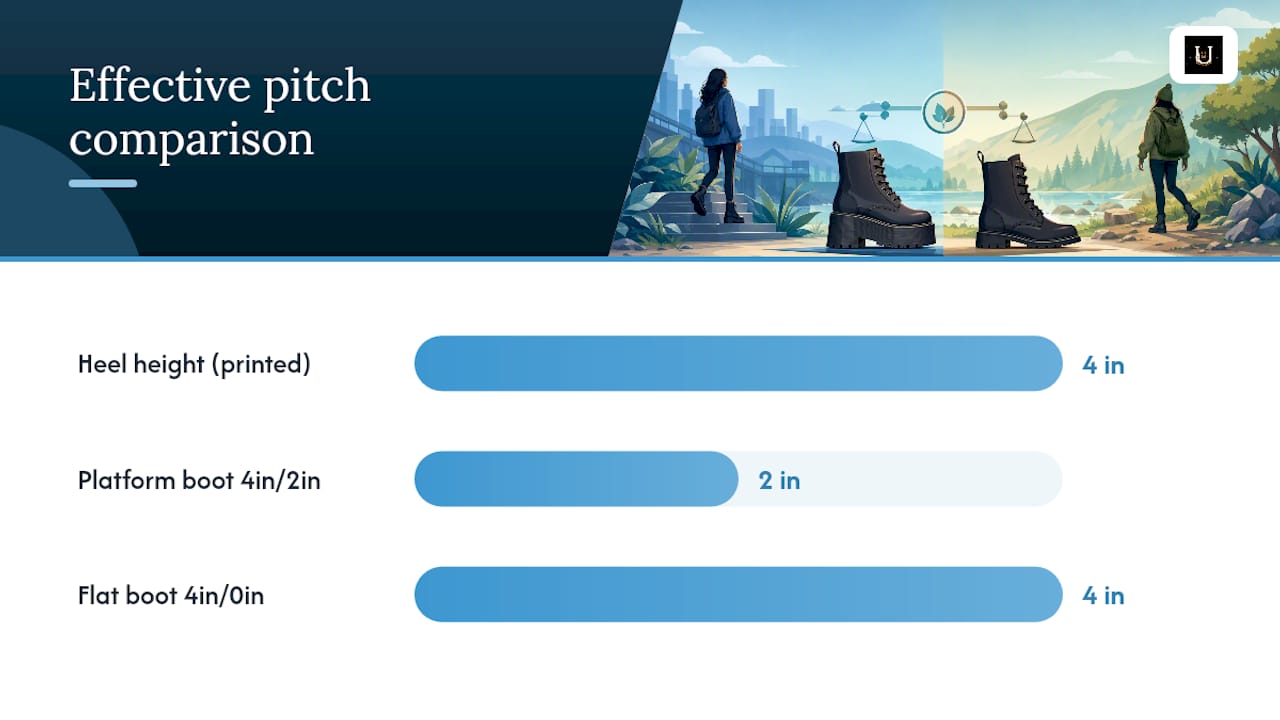
The single most useful number when comparing boots is effective pitch: heel height minus platform height. A buyer’s guide explains that this calculation predicts actual foot angle far more reliably than the heel height printed on a product page. A 4-inch heel on a 2-inch platform creates a much gentler angle than a 4-inch heel with no platform at all, even though both list the same heel height.
Weight matters just as much as angle. Platform soles typically have a thickness that adds noticeable height, and heavier, hardware-heavy platform boots can feel more tiring by the end of a full day compared with lighter flat boots.
Statistic Callout: Dense, architectural platform soles add real weight per boot compared to flats, and that extra mass shows up as leg fatigue well before the end of a workday, not right when you put them on.
Before buying, check these fit details:
- Width across the widest part of your foot, tried on with the socks you’ll actually wear.
- Lacing that reaches close to the toe box, which lets you fine-tune fit rather than fighting one fixed zipper.
- A removable insole, which lets you swap in extra cushioning as the boot breaks in.
- A padded ankle collar, which reduces rubbing during the first few wears.
Platform soles rarely soften much with wear. It’s your gait and the upper material that adapt over time, not the sole itself, so prioritize lacing-to-toe designs and removable insoles for comfort you can adjust yourself. On stairs, land more flatly, shorten your stride, and go heel-first on the way down with a hand on the rail until the new balance point feels automatic.
Who Should Choose Platforms vs. Flats?
Match the boot to what your day actually looks like, not just what looks good on a hanger.
- Commuters and long walkers: Flats or low flatforms. All-day comfort beats a few extra inches of height, and flats handle uneven sidewalks and stairs with far less thought.
- Festival or statement dressing: Platforms, with attention to tread grip and overall weight, since you’ll likely be standing on grass, gravel, or crowded floors for hours.
- Office or meetings: Structured flats or a low-platform boot with reduced pitch, giving you polish without the balance trade-off.
- Undecided between the two: A flatform hybrid splits the difference, adding visible height while keeping the sole flat underfoot.
Pre-Purchase Boot Checklist
Run through this before you click “buy” or before you leave the fitting room:
- Measure your foot width and shaft circumference, then try the boot on with the socks or tights you’ll actually wear with it.
- Pull the heel height and platform height from the product specs and subtract to get the real effective pitch.
- Check the tread pattern, confirm whether the insole is removable, and decide if a zipper’s convenience is worth trading for the adjustability of full lacing.
- Estimate the boot’s weight, read the return policy closely, and wear the boots around your home for short stretches before committing to a full day out.
How Unikiff’s Vegan Combat Boots Fit This Choice
David:
The platform versus flat debate isn’t abstract when you’re the one designing the sole. Unikiff builds lace-up closures that run close to the toe, reinforced ankle structure, and high-grip rubber soles into every pair, which directly addresses the fit and stability checks covered above. Several silhouettes work as structured flats for daily wear, while heavier-tread styles function as bold, platform-like statement boots depending on which sole height you choose… For shoppers who want both practical construction and a distinctive look without animal leather, that dual function matters more than most style guides admit. Combat boots have earned their place as an essential wardrobe staple precisely because they can flex between both roles.
Find Your Fit in the Unikiff Combat Boot Collection
Once you know whether you lean flat or platform, the fastest next step is trying on the shapes built for your use case. Unikiff’s vegan combat boots collection covers both ends of the spectrum, from lower-profile, structured styles suited to commuters and office days to heavier-tread, statement-ready pairs for festivals and nights out.
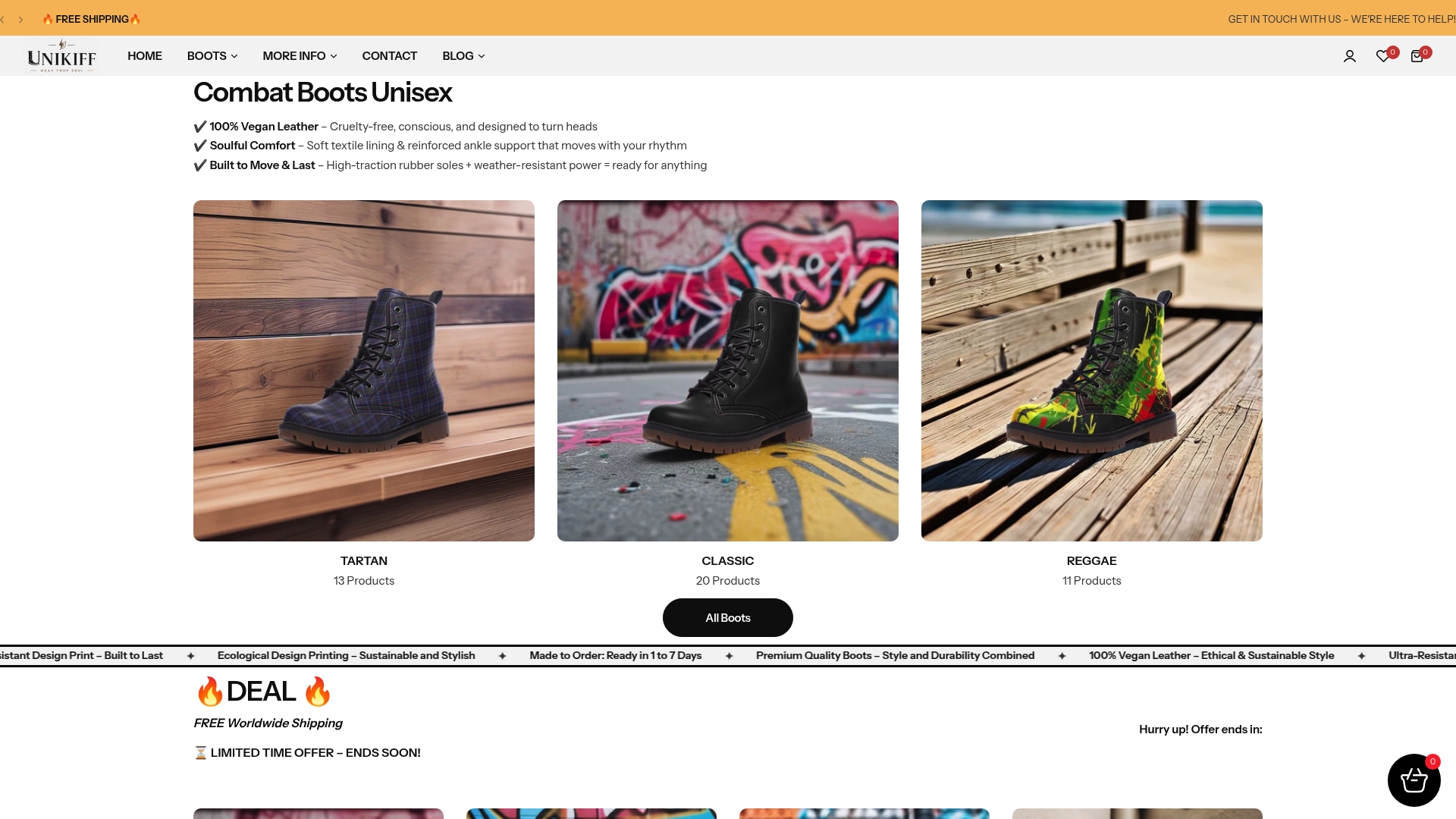
If you’re a daily walker, look toward flatter, lighter builds like the Skull and Roses vegan combat boots or the Dark Purple vegan combat boots for everyday reliability with real personality. Festival-goers and statement dressers tend to gravitate toward bolder prints like the Punk Not Dead vegan combat boots, which hold up to hours on your feet without sacrificing edge. Before you order, run your measurements against the Unikiff size guide so lacing and shaft circumference land right the first time.
A Closing Note on Taste vs. Practicality
There’s no universal winner here. The right boot depends on your daily mileage, your event calendar, and what your wardrobe already leans toward. Try both styles before assuming one is “you,” and browse our combat boot styling guide for more outfit inspiration.
— David
Sources
For deeper research, see WhoWhatWear’s platform boot styling guide, Vogue’s take on flat boots, a detailed buyer’s guide to platform construction, and FashionGonerogue’s reference on boot types. For outfit-building beyond footwear, Slapper N Bangers’ outdoor event outfit guide is a useful companion read.
- The 11 Best Platform Boots and How to Wear Them | Who What Wear
- Flat Boots Are Spring’s Most Practical Trend—Here’s How to Style Them Now | Vogue
- Platform Boots: A Buyer’s Guide To Height, Comfort And Boots That Actually Last
- Types of boots | Fashion Gone Rogue
FAQ
Are platform boots in style in 2026?
Yes. Platform boots remain a recurring statement trend, with WhoWhatWear continuing to feature them as a go-to styling piece for cropped denim and tailored looks.
What are the cons of platform shoes?
The main downsides are added weight, reduced sole flexibility, and a higher center of gravity, which can make stairs and uneven ground feel less stable than in flats.
Are platform shoes harder to walk in?
They can be, especially true pitched platforms with a steep heel-to-toe angle; flatforms, which keep the sole level, are generally easier to walk in than heeled platform styles.
Are platform boots still in style?
Yes, platform boots have stayed in rotation as a statement style rather than fading out, while flat boots remain the more consistent daily-wear choice for comfort and stability.