


If you want a one-of-a-kind, cruelty-free look and don’t mind a short wait, made-to-order brand styles are usually your best bet. If you need boots fast or want to try before you commit, ready-made wins. Unikiff makes vegan combat boots on demand, so your pick depends on how much you value uniqueness versus speed.
TL;DR:
- Made-to-order vegan combat boots reduce overproduction and waste only if customers accept some wait time and brands plan production accordingly.
- Durability depends on the quality of vegan materials, with higher-grade bio-based or microfiber options lasting longer than cheap polyurethane coatings.
- Checking material details, production lead times, and return policies is essential, especially for made-to-order purchases, since swaps are more limited.
- Ready-made boots offer instant delivery and easier returns but pose a higher risk of excess inventory and waste for retailers.
- Patience can lead to more sustainable shopping and better-fitting boots, as research links willingness to wait with reductions in textile overproduction.
Table of Contents
- Made to Order vs Ready Made: Pros and Cons
- How to Judge Vegan Materials for Lasting Durability
- Does Made to Order Really Cut Down on Waste?
- What to Expect for Wait Times, Returns, and Real Cost
- Your Quick Checklist for Picking the Right Route
- Why I Think Shoppers Underrate Patience
- Why Unikiff Fits the Made-to-Order Shopper
- FAQ
- Sources
Made to Order vs Ready Made: Pros and Cons
Picking between these two comes down to what you care about most: speed, originality, or peace of mind on fit. Here’s the quick breakdown.
Made-to-order brand styles tend to offer:
- Unique prints and colorways you won’t find on a mass-market shelf.
- Less overproduction, since boots get made after you order, not before.
- Materials brands often invest in more heavily, since each pair is built to order.
- Clear size guidance upfront, since you can’t easily swap pairs after the fact.
Ready-made boots tend to offer:
- Immediate shipping, often within days.
- The chance to try on in person at a store or try-before-you-decide online — a convenience explained well in the ready‑to‑wear concept.
- A wider range of sizes sitting in stock right now.
- Simpler, faster returns since retailers already hold inventory.
Here’s a myth worth busting: the word “vegan” on a label tells you nothing about how long a boot will last. Vegan just means no animal products went into it. Whether it’s made-to-order or ready-made, you still need to check the actual material behind that label, because cheap PU breaks down fast while better alternatives hold up for years.
How to Judge Vegan Materials for Lasting Durability
Not all vegan leather is built the same, and the gap in quality matters more than whether you bought made-to-order or ready-made. Cheap PU or PVC coatings tend to crack, peel, and stiffen within a year or two. Higher-grade bio-based materials or microfiber alternatives flex better and resist wear for much longer, as outlined in guidance on sustainable materials for vegan leather footwear.
Before you buy, ask the brand for specifics instead of taking “vegan leather” at face value:
- Material composition percentages (what the upper is actually made from).
- Sole material and whether it’s reinforced for grip and flex.
- Stitch reinforcement at stress points like the toe and heel.
- Lining material and breathability.
- Hydrolysis resistance, which affects how the material holds up over time in humidity.
Pro Tip: Ask for the material spec sheet before you order. A brand that can answer these questions without hesitation is usually a brand that stands behind its construction.
Maintenance plays a bigger role in boot life than most shoppers realize. Regular cleaning, conditioning, and proper storage can add years to a pair, which matters for your wallet and for the planet. Our cleaning and maintenance guide for vegan leather boots walks through the basics.

Does Made to Order Really Cut Down on Waste?
Made-to-order production can meaningfully reduce overproduction, but only under the right conditions. Research from UC Riverside found that mass customization and make-to-order approaches can lower inventory waste, but the sustainability payoff depends on customers being willing to wait and on firms aligning their production accordingly.
One finding worth knowing: mass customization research shows that when customers accept longer wait times and firms plan raw materials around that patience, overproduction drops. When that alignment breaks down, hybrid make-to-stock and make-to-order models can actually make overproduction worse, not better.
So what can you do as a shopper? A few things matter more than the production label itself:
- Choose durable materials over the cheapest option, since a boot that lasts longer has a smaller footprint per wear.
- Follow the brand’s care instructions instead of letting boots sit unworn or deteriorate.
- Avoid ordering multiple sizes just to test fit, since serial returns undercut the waste savings that made-to-order is supposed to deliver.
UNEP’s textile value chain guidance lists on-demand production as one of the clearer paths to reducing textile overproduction, alongside better design and product care.
What to Expect for Wait Times, Returns, and Real Cost
Made-to-order production doesn’t have to mean a long wait. A manufacturing case study using a customer order decoupling point strategy found that shifting where customization starts in the production line cut manufacturing lead time from 30 days to 26 days, while also trimming certain costs. That’s the kind of workflow optimization that lets made-to-order brands deliver without the month-long waits some shoppers expect.
Returns work differently depending on the route you pick. Ready-made retailers usually offer faster, simpler returns because stock already sits in a warehouse. Made-to-order purchases rely more heavily on accurate sizing upfront, since a custom-produced pair is harder to simply swap. That’s why checking a detailed size guide before ordering matters more for made-to-order buyers.
Before you check out, add up the real cost:
- The sticker price of the boots.
- Shipping costs both ways if a return is needed.
- Any return or restocking fees.
- Expected repair or resoling costs down the line.
KPMG’s 2025 research found that about 13% of online shoppers buy multiple sizes just to find the right fit, and 42% say a lack of free delivery stops them from buying at all. That pattern drives up returns and costs for ready-made retailers, which is worth factoring into your decision.
Your Quick Checklist for Picking the Right Route
Here’s how to make the call without overthinking it:
- Define your must-haves: do you care more about a unique print, a fast delivery date, or guaranteed fit?
- Check the brand’s material spec and size guide before you order anything.
- Compare the stated production lead time against your own deadline.
- Review the return policy, including who pays for shipping if the fit is off.
- Make the call based on which tradeoff you can actually live with.
Before you order from any brand, collect four things: the material spec, the production lead time, the return policy, and a detailed size guide.
A couple of real-world examples make this easier. A festival-goer who needs boots in two weeks should lean ready-made, since availability beats originality on a tight deadline. A shopper who collects limited prints and cares about reducing waste should lean made-to-order, since that route rewards patience with a boot nobody else is wearing.
Why I Think Shoppers Underrate Patience
Most shoppers treat wait time as a pure downside, something to minimize no matter what. I think that’s backwards. A short wait is often the price of a boot that actually fits your style and doesn’t contribute to a warehouse of unsold inventory. The data backs this up: UC Riverside’s research ties sustainability gains directly to customer willingness to wait, not to the production method alone.
This article discusses vegan combat boots made to order, featuring lace-up closures, reinforced ankle structure, and high-grip rubber soles, built for city wear, festivals, and statement looks, as shown across the vegan combat boots collection.
— David
Why Unikiff Fits the Made-to-Order Shopper
If you’ve decided made-to-order is your route, some brands build exactly that: vegan combat boots made on demand, not pulled from a warehouse shelf stacked with identical pairs. Some pairs use cruelty-free materials, reinforced ankle support, and high-grip rubber soles, so you get the durability benefits covered earlier without compromising on style.
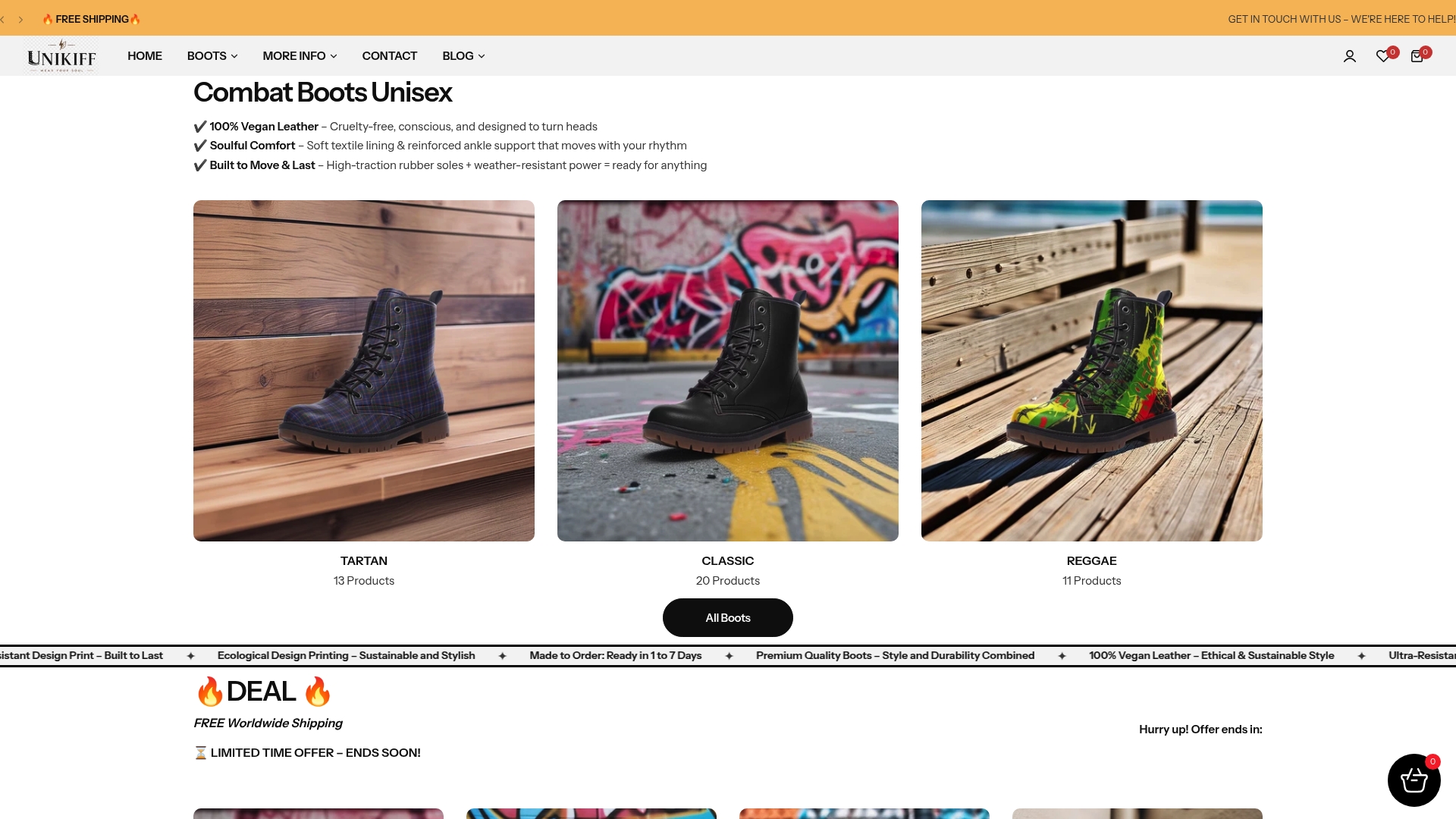
Browse the full range at the vegan combat boots collection, or go straight to a specific look: Classic Combat Boots for timeless solid colors, Punk Combat Boots for rebellious edge, Cottagecore Combat Boots for softer prints, or Skull Combat Boots for bold statement pieces.
Before you order, check the size guide to lock in your fit the first time. Made-to-order works best when you get the sizing right upfront, and that one step saves you the wait of a second order.

FAQ
Is made-to-order more expensive than ready-made boots?
It depends on the brand and materials used rather than the production method itself. Unikiff does not publish fixed prices across its collections, so check each collection page directly for current pricing.
How long does it take to receive made-to-order vegan boots?
Lead times vary by brand and current order volume. Manufacturing research on customer order decoupling point strategies found that optimized workflows can cut lead time from 30 days to 26 days, showing that made-to-order doesn’t have to mean a month-long wait.
Are vegan combat boots as durable as leather ones?
Durability depends more on the specific material than on whether it’s vegan or animal leather. Higher-grade bio-based or microfiber alternatives can hold up well with proper care, while cheap PU coatings wear out faster regardless of label, as detailed in guidance on vegan leather materials.
What should I check before ordering made-to-order boots?
Ask for the material composition, sole type, and production lead time before you order. Also confirm the return policy and check a detailed size guide, since made-to-order pairs are harder to swap than stocked ones.
Does buying ready-made boots create more waste than made-to-order?
Ready-made inventory models carry a higher risk of overproduction and unsold stock compared to on-demand production. UNEP’s textile guidance lists on-demand production as one of the clearer ways to cut textile overproduction and waste.
Sources
- Mass customization can make fashion more sustainable if customers are willing to wait for it | UCR News
- Determination of Customer Order Decoupling Point (CODP) Based on Mass Customization Concept to Minimize Manufacturing Lead Time
- Research shows consumer demand for free delivery and returns | KPMG
- Textile value chain guidance (UNEP)