


A lug sole is a thick rubber or synthetic outsole cut with deep, patterned indentations, called lugs, that bite into loose or wet ground for better traction. You’ll find it on work boots, hiking boots, and increasingly on combat and fashion boots, where the raised tread keeps your footing steady on mud, ice, cobblestones, or slick pavement. It’s a functional design first, though it’s become a style statement, too.
TL;DR:
- Wide channels in lug soles are better at shedding mud but offer less contact on hard surfaces, while tighter channels grip pavement but clog faster in soft terrain.
- Most lug soles are made from rubber or synthetic compounds, with softer blends providing better grip on wet surfaces but wearing faster, and harder compounds resisting cold and chemicals.
- The depth and aggressiveness of lug soles vary depending on the intended use, with hiking boots having deeper treads and fashion boots favoring lighter, cleaner styles.
- Proper cleaning involves removing debris, brushing with water and detergent, and avoiding heat to preserve the rubber’s integrity and traction.
- For city and fashion footwear, lug soles offer a balance of style and grip, but shallow treads are preferable for dry, flat pavement to reduce weight and bulk.
Table of Contents
- Lug Sole Meaning: Anatomy and How to Spot One
- What Lug Soles Are Made From (and Why It Matters)
- Traction Versus Trade-Offs: The Real Pros and Cons
- Where Lug Soles Show Up: Work Boots to Runway Boots
- Cleaning and Maintaining a Lug Sole
- Why Combat Boots Lean on Lug Soles
- A Boot Nerd’s Honest Take on Lug Soles
- Get the Look and the Grip: Unikiff’s Vegan Lug Sole Boots
- Sources
Lug Sole Meaning: Anatomy and How to Spot One
Look down at the bottom of a boot. If you see thick raised blocks separated by deep grooves instead of a smooth or lightly ribbed surface, you’re looking at a lug sole. The raised sections are the lugs themselves, and they usually follow one of a few recognizable patterns.
- V-shaped or chevron lugs, which push mud and debris out to the sides as you walk
- Diamond or block lugs, arranged in a grid for even grip in every direction
- Toothed or serrated edges, common on the heel for braking power on descents
The spacing between lugs, called the channel, matters as much as the lugs themselves. Wide channels shed mud fast but reduce surface contact on hard ground; tighter channels grip pavement better but clog faster in soft terrain. Some boots use a full-lug sole that wraps completely around the edge for maximum coverage, while others use a half-lug design with a flatter section near the toe or a flush sidewall for a cleaner silhouette. The heel block, a distinct raised platform at the back, adds another layer of traction and is a hallmark of the style, according to bootmaker guides like Blundstone’s breakdown of lug sole construction. Depth and spacing shift depending on the job: hiking boots often run deeper and more aggressive, while fashion boots trim the tread down for a lighter, cleaner look.
What Lug Soles Are Made From (and Why It Matters)
Most lug soles start with natural rubber, synthetic rubber blends, or PVC and other injected compounds. The material choice drives almost everything about how the sole performs, from how it flexes in cold weather to how long it lasts under daily wear.
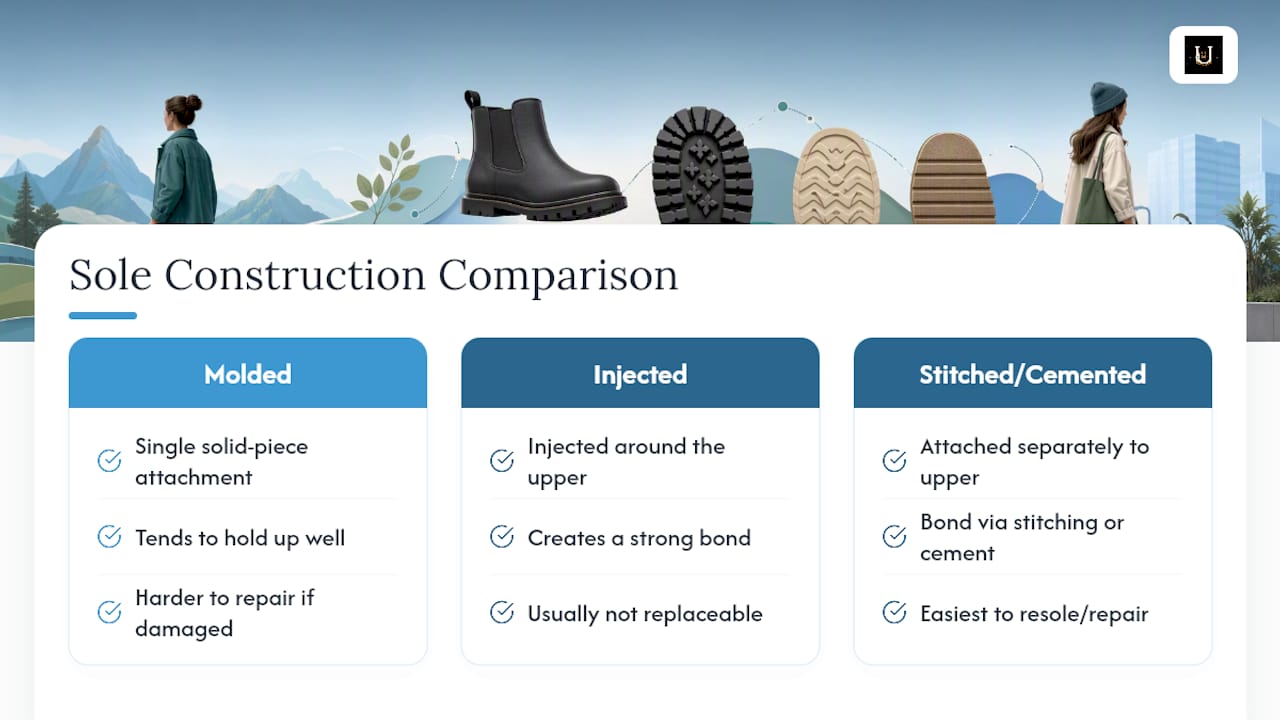
Construction method matters just as much as compound. A molded sole is shaped in one solid piece, which tends to hold up well but can be harder to repair if it’s damaged. Injected soles, formed by injecting liquid rubber or polymer directly into a mold around the upper, create a strong bond but usually aren’t replaceable on their own. Stitched or cemented soles that attach separately to the boot’s upper are the easiest to resole, which is a real advantage if you want a boot that lasts years rather than one season.
Compound formulation also decides resistance to oil, chemicals, and cold. Softer rubber blends tend to grip better on smooth or wet surfaces but can wear faster; harder synthetic compounds resist chemical exposure and hold their shape in freezing temperatures, which is why so many winter work boots lean synthetic.
Traction Versus Trade-Offs: The Real Pros and Cons
A lug sole is built for maximum traction and stability, and that’s the whole point of the design. But like most footwear choices, the benefits come with a few trade-offs worth knowing before you commit to a pair.
The benefits:
- Superior grip on wet, icy, muddy, or uneven ground
- Added stability from a wider footprint and raised heel block
- A layer of insulation and cushioning between your foot and cold or wet surfaces
- Long-term durability, since thicker rubber wears down more slowly than flat soles
The drawbacks:
- Deep channels trap mud and small stones, which means more cleaning
- Aggressive tread can feel stiffer underfoot than a flatter sole
- The chunky profile reads as heavier, even when the actual weight difference is minor
Pro Tip: Match the tread to the terrain. Aggressive, deep lugs make sense for trails and job sites, but if you’re wearing your boots mostly on sidewalks and dance floors, a shallower tread pattern gives you the same silhouette without dragging half a festival field home with you.
Where Lug Soles Show Up: Work Boots to Runway Boots
Lug soles cross more categories than almost any other outsole design, and the reason is simple: traction matters whether you’re on a job site or a dance floor.
- Work and safety footwear. Construction, logging, and industrial boots often pair lug soles with oil-resistant compounds and slip-rated treads, especially in workplaces where OSHA’s foot-protection standard shapes what counts as adequate footwear.
- Outdoor and winter boots. Hiking and cold-weather boots use deeper, more open tread patterns designed to grip loose rock, snow, and ice, with the added benefit of insulating your foot from frozen ground.
- Fashion and streetwear. Combat boots and chunky-sole sneakers borrow the lug sole purely for its look and height, using it to build an aggressive, grounded silhouette that also happens to handle festival mud and city sidewalks just fine.
Cleaning and Maintaining a Lug Sole
Keeping the tread clear is most of the job. Neglect it and you lose both grip and lifespan.
- Knock out large debris first. Tap the soles together or use a stick to remove caked mud and stones before they harden in the channels.
- Brush and wash. A stiff brush with warm water and mild detergent works through the grooves better than a wipe-down; cleaning guides for lug soles recommend this as the standard approach.
- Rinse and air dry. Skip direct heat, which can crack or warp rubber compounds over time.
- Watch for wear signs. Chunks missing from lugs, separation between the sole and upper, or a hardened, brittle compound all signal it’s time for repair or a resole rather than another round of cleaning.
- Store smart. Keep boots away from prolonged sun or extreme cold when not in use, since both accelerate rubber degradation.
For a deeper walkthrough on keeping vegan leather and rubber components in shape between wears, Unikiff’s guide on how to clean and maintain vegan leather boots covers the specifics.
Why Combat Boots Lean on Lug Soles
Designers reach for lug soles on combat and fashion boots for the same reason hikers do: the tread adds height, a protective buffer from wet pavement, and an unmistakable, aggressive silhouette all at once. It’s a functional shape that also happens to photograph well.
Unikiff builds its vegan combat boots around that same logic. Every pair uses high-grip rubber lug soles paired with vegan materials, reinforced ankle support, and lace-up closures built to handle festivals, cobblestone streets, and everyday wear without breaking down. If you want to see how the silhouette plays out across seasons, Unikiff’s guide to combat boots for every season walks through how the tread and shape shift with the weather, and the styling and care guide is worth a look if you’re building an outfit around a new pair.
A Boot Nerd’s Honest Take on Lug Soles
Most people overthink the tread and underthink the fit. A lug sole earns its place on rough terrain or slick city streets, but if you’re mostly walking flat, dry pavement, a shallower tread will feel lighter without costing you much grip. The bigger mistake I see is buyers chasing the boldest tread pattern and ignoring how the boot actually sits on their foot. Check Unikiff’s size guide before anything else, then let the sole match your actual terrain, not just the aesthetic you’re after.
— David
Get the Look and the Grip: Unikiff’s Vegan Lug Sole Boots
Unikiff builds its boots around exactly the trade-off this article just walked through: real traction without the mud-trapping bulk of an overbuilt work sole. Every pair in the vegan combat boots collection uses high-grip rubber lug soles tuned for city streets and festival grounds, not construction sites, so you get the stability and the silhouette without carrying gear you don’t need.
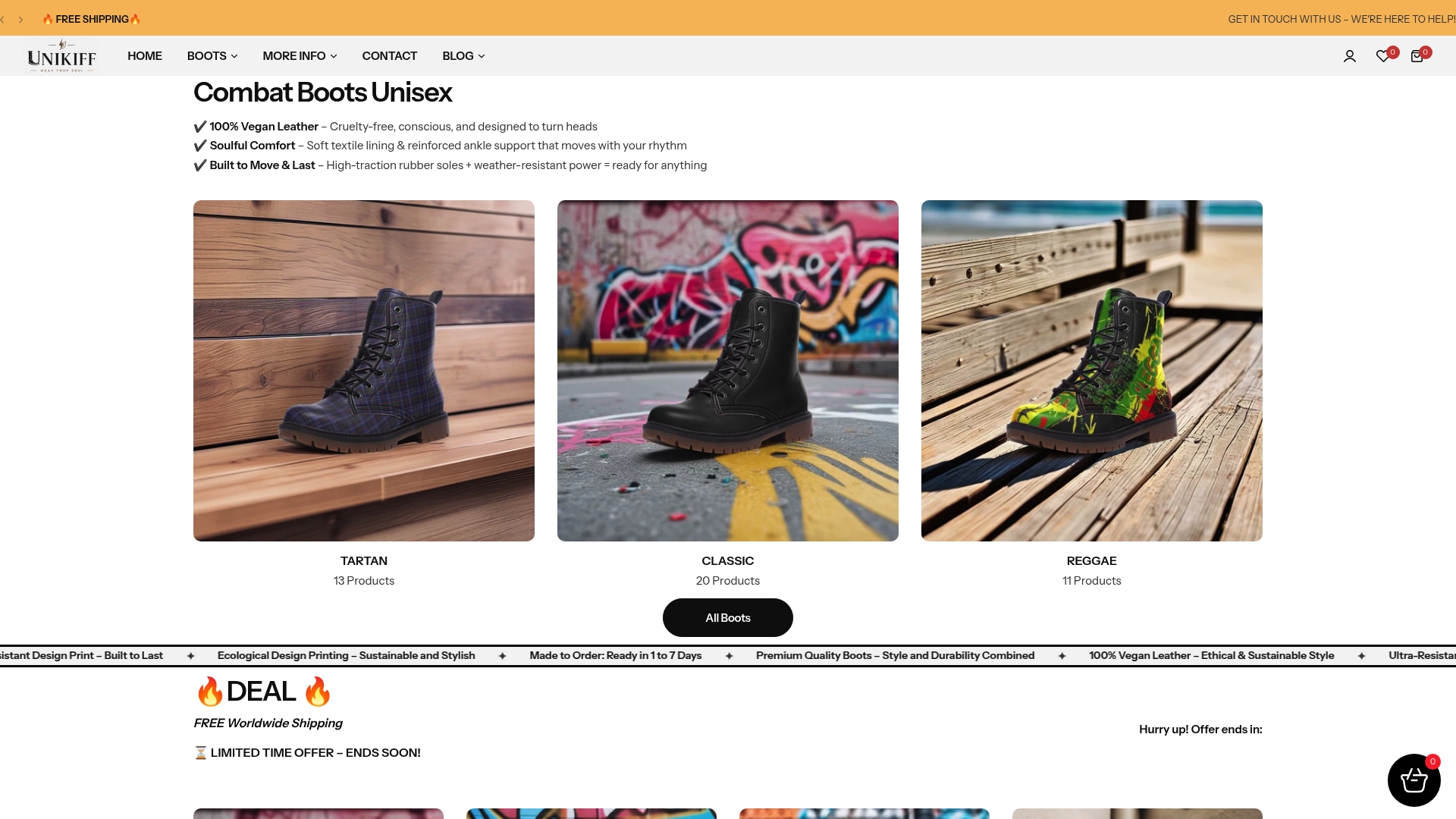
If you’re drawn to bold prints, the Skull and Roses design pairs that tread with a statement look, while the Dark Purple pair keeps things moody and versatile. Check the size guide, pick your print, and see for yourself how a lug sole feels when it’s actually built for how you live.
Sources
This explainer draws on dictionary definitions, safety standards, and bootmaker guides to keep every technical claim grounded. For the core definition, see Merriam-Webster’s entry on lug sole and The Free Dictionary’s lug sole definition. Workplace footwear context comes from OSHA’s foot-protection standard, and construction details come from Blundstone’s guide to lug sole boots.
- LUG SOLE Definition & Meaning - Merriam‑Webster
- OSHA 1910.136 — Foot Protection
- What is a lug sole boot? - Blundstone