


Yes, combat boots can look polished at work when you pair them with tailored pieces and keep your silhouette clean. Three fail-safe combos: tailored trousers with a fitted blazer, a monochrome midi dress with tights, or a pencil skirt with a crisp blouse. Keep reading for full recipes, seasonal swaps, and fit rules that make boots read professional instead of rebellious.
TL;DR:
- Conservative offices favor tailored trousers with a fitted blazer, a pencil skirt and silk blouse, or a matching blazer with wide cropped trousers.
- Midi skirts look professional with neutral tights; anchor silky dresses with a structured blazer, while wool styles can stand alone.
- Choose smooth vegan leather, minimal hardware, and a low profile sole; black, deep brown, and oxblood pair easily with neutral suiting.
- Break in new vegan leather boots over shorter days, then rotate between two pairs and wipe them with a damp cloth to maintain their shape.
Table of Contents
- 1. Six office-ready outfit formulas with combat boots
- 2. How to pair combat boots with bottoms: jeans, trousers, skirts, and dresses
- 3. Accessories, layers, and finishing details that make boots look professional
- 4. Fit, proportion, and color rules to keep the outfit polished
- 5. Choosing cruelty-free vegan combat boots for the office
- 6. Matching vegan combat boots to your office wardrobe palette
- 7. Keeping vegan combat boots comfortable through long workdays
- 8. Why these details matter for how a boot reads at the office
- Finding the right Unikiff pair for your office wardrobe
- FAQ
- Sources
1. Six office-ready outfit formulas with combat boots
A good work outfit with combat boots follows a simple rule: one tailored element balances the boot. Vogue put it plainly when market editor Kelly Connor noted that as long as your hem lines stay longer and your blouse stays buttoned, you do not always have to default to “pinchy pumps.” That advice holds up for every formula below.
- Tailored trousers + fitted blazer + low-profile boots: This is the safest option for conservative offices, since the blazer’s structure and the trouser’s clean line do the heavy lifting while the boots stay understated.
- Monochrome midi dress + tights + matte boots: One color from shoulder to ankle reads elevated, and matte or smooth boot finishes photograph better in meeting-heavy environments than glossy or heavily hardware-studded pairs.
- Pencil skirt + silk blouse + structured bag: Who What Wear shows how pairing combat boots with suiting and tailored separates creates a business-casual look that still has edge.
- Cropped straight jeans + crisp shirt + blazer: Works for smart-casual offices; cuff the jeans slightly so the boot’s shaft shows, which keeps the leg line intentional rather than accidental.
- Knit midi skirt + belted coat: A cold-weather formula for commuting straight to a desk job; the belt adds the structure the boots need to feel finished.
- Matching blazer + wide-leg cropped trouser: A modern suit alternative where the boots replace heels without breaking the tailored silhouette, especially in creative or hybrid offices.
Conservative workplaces do best with formulas 1, 3, and 6, since they lean on suiting. Creative offices have more room for formula 2 and 5, where texture and color do more of the talking.
Pro Tip: Keep one half of your outfit fitted and the other relaxed. Boots plus a slouchy top plus a loose trouser reads messy, not cool.
2. How to pair combat boots with bottoms: jeans, trousers, skirts, and dresses
Each bottom type needs its own adjustments to keep the boots from pulling an outfit toward streetwear.
- Jeans: Choose clean, dark washes in straight or cropped cuts; cuff or tuck the hem so the boot line shows, and skip distressed denim for conservative offices.
- Trousers: A cropped ankle length or slight break works best; subtle bootcut or slim straight trousers keep the leg looking long, and heavier trouser fabric pairs better with a chunkier boot sole.
- Skirts: Midi and pencil lengths read the most professional; pair with a fine-knit top or blazer, and add neutral tights in colder months or conservative settings.
- Dresses: Slip dresses and shirtdresses work when balanced with a structured jacket; InStyle recommends contrasting boots with ladylike pieces like lace or midi skirts and favoring cleaner finishes for dressier looks.
Fabric weight matters as much as length. A silky slip dress needs a structured blazer to anchor it, while a wool shirtdress can carry boots on its own because the fabric already has body.
3. Accessories, layers, and finishing details that make boots look professional
The right accessories carry as much weight as the boots themselves when it comes to looking put together.
- Blazer cuts: A single-breasted, slightly fitted blazer anchors the outfit better than an oversized or boxy cut.
- Structured bags and belts: A boxy bag or a defined belt echoes the boot’s visual weight and keeps the whole look cohesive, a styling move Who What Wear highlights when balancing statement footwear with tailored pieces.
- Socks and tights: Show a sliver of sock for a deliberate, finished look, or tuck tights fully into the boot shaft for a streamlined line.
- Outerwear: A long coat elongates the leg in winter, while a cropped jacket suits transitional weather and shorter hemlines.
Pro Tip: Swap your usual tote for a structured handbag on boot days. It instantly makes the outfit look intentional rather than thrown together.
4. Fit, proportion, and color rules to keep the outfit polished
A few quick rules keep any combat-boot outfit from tipping into sloppy territory.
- Preserve one clean line, either a fitted top or a fitted bottom, so the outfit does not compete with itself.
- Balance the boot’s bulk with at least one structured piece, like a blazer or a boxy bag.
- Stick to tonal or complementary palettes for conservative offices, and save high-contrast or textured pairings for creative workplaces.
- Skip very chunky lug soles or heavily distressed finishes for client-facing days; smoother, low-profile boots read more polished.
Vogue’s core styling rule, keeping a clear and confident line, is really just this list in one sentence: pick one tailored element and let it carry the outfit.
5. Choosing cruelty-free vegan combat boots for the office
Picking the right pair starts with finish, not just material. A smooth, low-sheen vegan leather upper reads more office-appropriate than a heavily textured or studded one, even though both are animal-free. Look for a rounded or slightly tapered toe, a shorter shaft that sits at or below the ankle bone, and minimal exterior hardware, since fewer buckles and grommets make a boot easier to dress up.
Sole height matters too. A thinner, low-profile sole blends into trousers and skirts more easily than a thick lug sole, which tends to pull a look toward streetwear no matter what you pair it with. Our Classic Combat Boots collection focuses on exactly this kind of streamlined silhouette, built from vegan leather with reinforced ankle support and a grippy sole that still reads clean under tailored pants.
Cruelty-free construction does not mean sacrificing the structure that makes a boot look sharp. A supportive ankle panel and a stitched, reinforced toe hold their shape through a full workday, which keeps the boot looking crisp by hour eight instead of slouching the way softer synthetic materials sometimes do.

6. Matching vegan combat boots to your office wardrobe palette
Color coordination makes or breaks a combat-boot outfit faster than almost anything else. For conservative workplaces, black, deep brown, or oxblood boots pair most easily with navy, gray, camel, and other neutral suiting, since they read as a natural extension of the outfit rather than a statement piece.
For offices with more creative latitude, a white or cream boot can anchor an all-neutral outfit with unexpected freshness, while a printed or patterned pair works best as the single bold element in an otherwise simple outfit, think one print, one statement shoe, everything else plain. Our Cottagecore Combat Boots collection leans toward softer tones and botanical details that suit workplaces with a more relaxed dress code, while the Punk Combat Boots line works for creative offices that welcome a bolder edge.

A simple rule: match your boot’s undertone (warm brown versus cool black) to your coat or blazer, since mismatched undertones are often what makes an otherwise good outfit feel slightly off.
7. Keeping vegan combat boots comfortable through long workdays
Comfort over a full workday comes down to fit and break-in, not just cushioning. Vegan leather uppers typically need a short break-in period to soften around the ankle and instep, so wearing a new pair for a few shorter days before a long one helps avoid rubbing.
A cushioned footbed and a supportive ankle structure, such as reinforced panels, can reduce fatigue during long stretches of standing or walking between meetings. Rotating between two pairs, rather than wearing the same boots daily, also extends the life of the sole and upper and gives the material time to recover its shape.
For upkeep, a gentle wipe-down with a damp cloth and an occasional synthetic leather conditioner keeps vegan leather looking fresh and prevents the surface from drying out or cracking, the same basic care routine most footwear brands recommend for synthetic materials. A high-grip rubber sole also holds up better over months of daily wear than a thinner sole unit, which matters if you are commuting or on your feet most of the day.
8. Why these details matter for how a boot reads at the office
I look at combat boots for work through one lens: does the construction hold its shape all day, and does the finish read clean under office lighting? Ankle support, reinforced stitching, and a high-grip sole are not just comfort features, they are what keeps a boot looking sharp at 5 PM instead of slouched. Smooth vegan leather with minimal hardware does the rest, letting a boot sit quietly under tailored pieces instead of competing with them. For more outfit pairings, our guide on styling combat boots from casual to glam has further examples.
— David
Finding the right Unikiff pair for your office wardrobe
These boots are designed with vegan leather uppers, reinforced ankle support, and high-grip soles intended to maintain their shape through a full day at the desk. 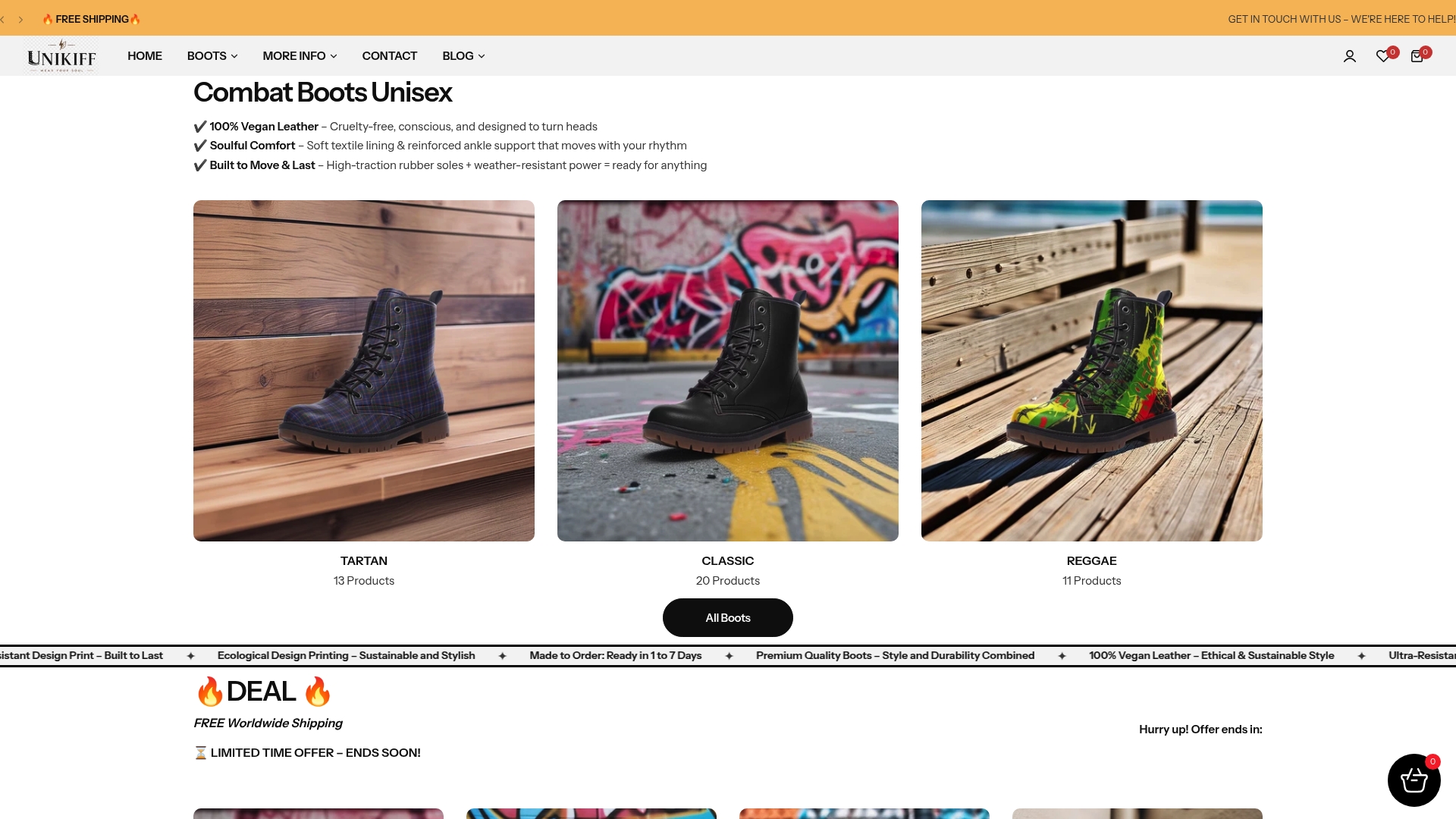
For conservative offices, start with our Classic Combat Boots for a low-profile, suit-friendly silhouette. If your workplace allows more personality, our Cottagecore Combat Boots bring softer botanical details, while the Punk Combat Boots collection suits creative teams who want an edge. Not sure which size fits your foot best? Check our size guide before you order, then browse the full Unikiff shop to find your pair.
FAQ
Can combat boots be worn in a professional office setting?
Yes, combat boots work in most offices when paired with tailored pieces like a blazer, pencil skirt, or trousers. Vogue notes that keeping hemlines longer and blouses buttoned is often enough to make off-duty boots office-appropriate.
What color combat boots are best for work outfits?
Black, deep brown, and oxblood are the easiest colors to match with typical office neutrals like navy, gray, and camel. A white or printed pair can work in creative offices when kept as the outfit’s single statement piece.
How do I keep combat boots from looking too casual at work?
Pair them with at least one structured piece, such as a fitted blazer or a boxy bag, and stick to midi or pencil-length bottoms. Who What Wear shows that balancing boots with tailored separates is what shifts the look from street to polished.
Are vegan combat boots durable enough for daily office wear?
A well-constructed vegan leather boot with reinforced stitching and a supportive ankle panel holds up well through regular wear and standing. Rotating between two pairs and wiping the material down regularly also extends their lifespan.
What accessories pair well with combat boots for the office?
A structured bag, a defined belt, and simple jewelry help balance the boot’s visual weight and keep the outfit looking cohesive. For more accessory ideas, a professional’s guide to office jewelry offers useful pairing tips.
Sources
- 6 Stylish Ways to Make the Off-duty Boot Work for the Office | Vogue
- 11 Outfits With Combat Boots You’ll Want to Try | Who What Wear
- Here’s 15 Things You Can Wear With Combat Boots This Winter | InStyle