


Yes, combat boots pair well with almost any pair of jeans, and the formula boils down to balance: pick straight, relaxed, or cropped denim to let the boot shaft show, or tuck skinny jeans in cleanly so nothing bunches at the ankle. Monochrome (black boots, dark denim) reads polished; contrast (light wash against a bold boot) reads statement. Unikiff makes that second option easy with vegan combat boots built in solid colors and bold prints for exactly this kind of pairing.
TL;DR:
- Heavier denim weighing 12 to 16 ounces provides better balance with chunky combat boots than lightweight summer fabrics.
- Tucking skinny jeans fully into boots or cuffing relaxed styles prevents bunching and maintains a clean silhouette.
- Ankle-length or cropped jeans showcase the boot shaft best, especially with printed or bold-colored footwear.
- Boot design features such as reinforced details, ankle support, and shaft height are crucial for durability and styling flexibility.
- Proper maintenance, like wiping vegan leather boots and storing them upright, extends their wearability and keeps outfits looking sharp.
Table of Contents
- Combat Boots With Jeans: 5 Quick Outfit Formulas
- How to Style Each Jean Silhouette With Combat Boots
- Proportion and Fit Rules That Keep the Look From Reading Like a Costume
- Should You Tuck, Cuff, or Stack Your Jeans With Combat Boots?
- Color and Wash Pairing for Combat Boots and Jeans
- Combat Boots and Jeans Outfit Ideas for Every Occasion
- Why Boot Design Matters More Than People Assume
- The History Behind Why Combat Boots Work With Denim
- Combat Boot Styles and How Each One Wears With Jeans
- How to Keep Combat Boots Looking Sharp
- Accessorizing Combat Boots and Jeans
- An Editorial Take on Styling Rules Versus What Actually Works
- Ready to Build Your Own Combat Boots and Jeans Look?
- Sources
Combat Boots With Jeans: 5 Quick Outfit Formulas
You don’t need a stylist to make this look work. Here are five formulas you can copy today, no overthinking required.
- Cropped jeans + printed boots. Cropped or ankle-length denim is the easiest way to show off a bold boot design without any fabric in the way. Cropped hems emphasize boot design better than any full-length cut, so if you own a statement pair, this is where they earn their keep. Tweak: roll one cuff slightly higher than the other for a lived-in, undone finish.
- Straight-leg jeans + classic black lace-ups. Let the hem rest right at the top of the boot shaft. Clean, no fuss, works for a coffee run or a night out. Tweak: swap a plain tee for an oversized flannel to soften the look.
- Skinny jeans, tucked + Chelsea boots. Tuck the denim in fully so the boot shaft shows uninterrupted. Tweak: a slouchy sweater on top balances the slim leg.
- Boyfriend jeans, single cuff + platform combat boots. One clean cuff above the ankle keeps the loose fit from swallowing the boot. Tweak: add a fitted turtleneck to keep the silhouette from reading sloppy.
- Wide-leg jeans + chunky lug-sole boots. The boot needs real presence here or the pant leg wins. Tweak: cinch a belt at the waist to reset the proportions before they get away from you.
Mix masculine tailoring (formula 2) with softer, feminine layering (formula 3) and you’ll see how flexible this pairing really is.
How to Style Each Jean Silhouette With Combat Boots
Not every denim cut behaves the same way once a chunky boot enters the picture. Here’s the breakdown by silhouette.
- Skinny jeans: Tuck them fully into the boot or cuff once at the ankle. The failure mode here is fabric bunching right above the boot line, which reads messy fast. Cuffing solves it; tucking eliminates it entirely.
- Straight-leg: The most forgiving cut for combat boots. Let the hem land right on the boot shaft, or add a slight stack for a more relaxed, worn-in feel. This is generally the best starting point if you’re unsure.
- Relaxed or boyfriend fit: Cuff once, cleanly, so the boot is visible. Structured, less-stretchy denim holds the cuff shape better than a soft, worn pair, which tends to droop by afternoon.
- Wide-leg or flared: These need a boot with real visual weight. A slim lace-up gets lost under a wide flare; a platform sole or thick lug tread holds its own.
- Cropped or ankle-length: The simplest pairing for showing off boot detail. Ankle-high or cropped denim highlights the shaft and reduces bunching more effectively than any other cut, which is why it shows up constantly in editorial outfit photography.
Pro Tip: If your boots have laces or hardware you’re proud of, crop your jeans. If your boots are a clean, minimal silhouette, a straight-leg jean with a slight break at the shaft photographs better than a full crop.
Proportion and Fit Rules That Keep the Look From Reading Like a Costume
Chunky boots carry visual weight. Thin, flowy denim next to a heavy lug sole creates an imbalance that reads off, even if you can’t immediately say why.
- Match denim weight to boot weight. Heavier denim in the 12 to 16 ounce range balances the visual heft of a chunky boot far better than lightweight summer denim, which tends to look flimsy next to reinforced leather or a thick sole.
- Shorter frames: Avoid a hard horizontal line across the widest part of the calf. Cuff just above the boot shaft, or pick a slouchier boot that elongates the leg line instead of cutting it.
- Taller frames: You can afford a stiffer boot and a straighter, longer hem. Monochrome dressing (dark denim, dark boot) reads even taller.
- Quick fixes: Adjust hem length before you adjust anything else. A tailor’s hem or a simple cuff solves 90% of proportion complaints.
Denim Weight Callout: Stylists consistently point to a 12 to 16 ounce range for jeans as the sweet spot for balancing chunky combat boots without either piece overpowering the other.
Combat boots also act as what stylists call a bridge piece: the contrast between a rugged boot and something softer, like a silk cami or fine knit, is what elevates the whole outfit instead of making it feel like a costume.
Should You Tuck, Cuff, or Stack Your Jeans With Combat Boots?
Each finishing technique solves a different problem, and picking the wrong one is usually what makes an otherwise good outfit look unfinished.
- Tuck when you’re wearing skinny jeans and want the full boot shaft visible. Example: skinny jeans tucked in, paired with an oversized sweater, or tucked skinny jeans under a cropped moto jacket. Risk: if the denim is too loose at the calf, tucking creates unwanted bulk inside the boot.
- Cuff when you’re wearing boyfriend, relaxed, or straight jeans and want a clean, deliberate edge. Example: one cuff with a graphic tee, or a double cuff with a blazer for smart-casual. Risk: an uneven or overly wide cuff looks accidental rather than styled.
- Stack when you’re wearing straight or slightly long jeans and want an effortless, lived-in look. Example: stacked denim with a flannel, or stacked jeans under a longline coat. Risk: too much stacking reads sloppy fast, and cuffing or the right hem length is usually the simplest fix for excessive bunching at the ankle.
Color and Wash Pairing for Combat Boots and Jeans
Getting color right is what separates a thrown-together outfit from one that looks intentional.
- Monochrome: Black boots with dark-wash or black jeans instantly read smart-casual, no extra effort required. This is your safest, most versatile combination.
- Contrast: Light-wash or white jeans put a bold or printed boot front and center. If you own a statement pair, this is where it should live.
- Bridging layers: A jacket or bag in a mid-tone color connects a dark boot to a light jean without looking disconnected.
- Seasonal notes: Darker washes and black denim lean into fall and winter layering; lighter washes and cropped hems suit spring and summer, especially with printed boots as the focal point.
Combat Boots and Jeans Outfit Ideas for Every Occasion
- Weekend errands: Straight-leg jeans, a plain tee, and classic black lace-up boots. Zero thinking required.
- Street style: Wide-leg denim, an oversized jacket, and a platform combat boot for real visual presence.
- Smart-casual: Dark, monochrome jeans and boots with a tailored blazer, the classic bridge-piece move stylists rely on.
- Statement look: Cropped jeans with a printed boot, like Unikiff’s Skull and Roses design, as the outfit’s focal point.
- Travel: One durable pair of combat boots covers city walking, dressier dinners, and layered airport outfits, which makes them close to a one-shoe packing solution.
Why Boot Design Matters More Than People Assume
Styling rules only take you so far if the boot itself doesn’t cooperate with your denim. A stiff, low-shaft boot fights against tucked skinny jeans. A boot with real ankle support holds a cuff shape better than one that collapses by noon.
Unikiff builds around a few specific features that solve these exact problems:
- Lace-up closures
- Supportive ankle structure
- Reinforced details
- High-grip rubber soles
A higher shaft height gives tucked jeans somewhere to sit without bulk collecting at the ankle. Reinforced detailing holds a cuff’s shape through a full day of walking instead of going limp. None of this is about the boots looking good in a photo for five minutes. It’s about the boot doing its job through the cuff, the tuck, or the stack you actually chose.
The History Behind Why Combat Boots Work With Denim
Combat boots started as military footwear, built for durability and traction rather than looks. Punk and grunge subcultures in the late 20th century pulled them out of uniform and into everyday wardrobes, pairing them with denim as a deliberate rejection of polished, mainstream fashion.
That pairing stuck for a practical reason: denim and boots share the same rugged, durable DNA. Jeans were workwear before they were fashion, and boots were functional before they were statement pieces. Putting them together never looked forced because they came from the same place.
Grunge in the 1990s cemented the combination further, with distressed denim and heavy boots becoming shorthand for an entire aesthetic. Editorial fashion never really let go of it. Fashion editors continue to treat combat boots as a reliable seasonal staple precisely because they layer so easily with denim across changing trends, year after year.
What started as utility gear became a styling foundation that outlasted most footwear trends built purely for looks. That staying power is why the pairing still feels current instead of nostalgic.
Combat Boot Styles and How Each One Wears With Jeans
Not all combat boots behave the same way with denim. The construction changes what pairing works best.
Classic lace-up boots are the most versatile option. They handle tucking, cuffing, and stacking equally well because the laces let you adjust volume at the ankle. If you’re building a first pair, start here.
Chelsea-style combat boots skip the laces for a sleek pull-on silhouette. They pair especially well with tucked skinny jeans since there’s no lace bulk competing with the denim, and they slide easily under a straight-leg hem too.
Wedge or platform-sole boots add height and visual weight, which makes them the strongest match for wide-leg or flared jeans. A slim lace-up boot gets visually lost under heavy flare; a platform sole holds the proportion.
Printed and bold-colored boots function almost like a fifth silhouette category. They work best with simpler, lighter-wash denim so the print does the talking, which is exactly the kind of sophisticated contrast that keeps a look from tipping into costume territory.
Knowing which construction you’re wearing changes the cuff height, the denim weight, and even the wash you should reach for.

How to Keep Combat Boots Looking Sharp
A great outfit falls apart fast if the boots themselves look tired. A few habits keep them ready for repeat wear.
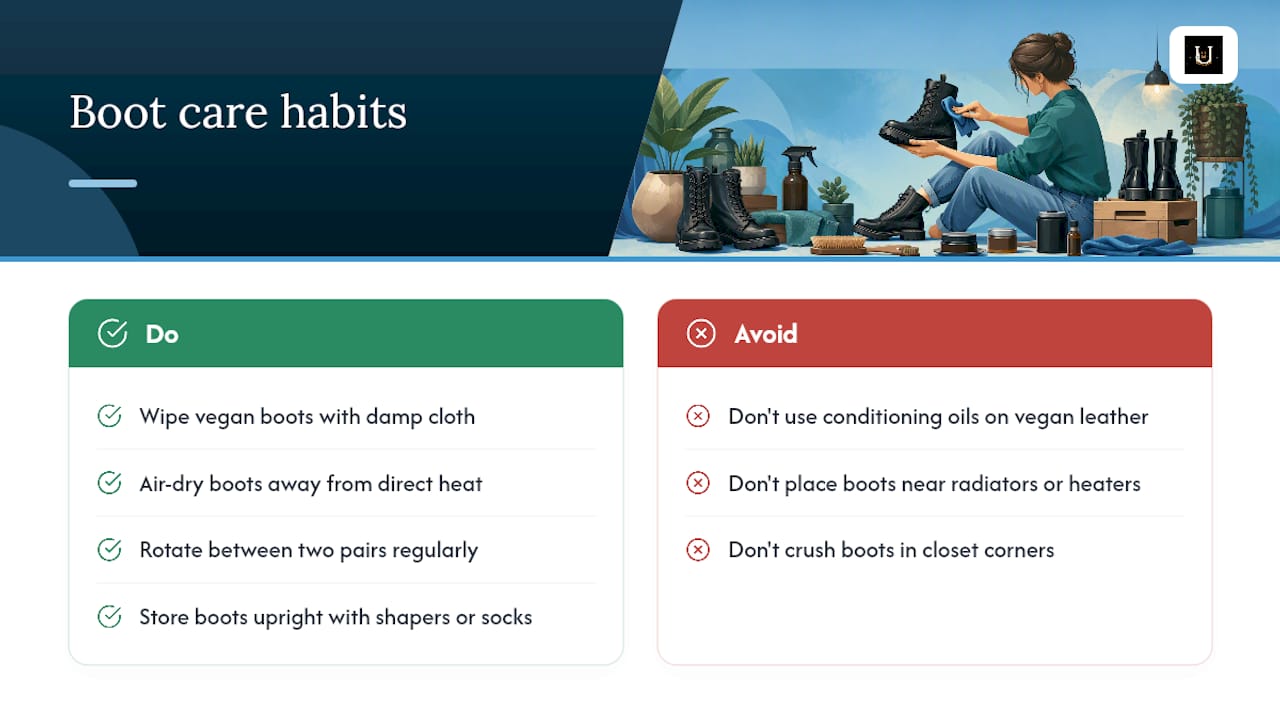
Wipe down vegan leather boots with a damp cloth after wear, especially if you’ve been walking through rain or mud. Unlike traditional leather, vegan materials don’t need conditioning oils, but they still benefit from a quick wipe to prevent dirt from settling into seams and reinforced stitching.
Let boots air dry away from direct heat. Tossing them next to a radiator or heater can warp the sole or crack the material over time.
Rotate between two pairs if you wear combat boots often. Giving soles and structure a rest day extends the life of the high-grip rubber sole and the ankle support that makes tucking and cuffing look clean in the first place.
Store boots upright, not crushed in a closet corner. Boot shapers or even rolled-up socks stuffed inside the shaft help combat boots hold their form, which matters more than people expect once you’re relying on that shaft to look sharp under cuffed or tucked denim.
Accessorizing Combat Boots and Jeans
The boots and jeans do the heavy lifting, but the finishing pieces decide whether the outfit looks pulled together or half-done.
A cropped moto jacket or an oversized denim jacket adds structure on top without competing with the boots for attention. For smart-casual versions, a tailored blazer works as that same bridge piece, pairing something rugged with something refined.
Socks matter more than most people think. A visible sock peeking above the boot shaft, in a contrasting color or pattern, adds a small, deliberate detail when jeans are cropped or cuffed high.
Bags should lean simple. A structured crossbody or a worn leather-look tote balances the boot’s bulk without adding more visual weight to the lower half of the outfit. Skip delicate, tiny bags. They read out of proportion against a chunky sole.
Jewelry works best minimal and metal-toned, echoing any hardware on the boots themselves, like eyelets or buckles, rather than fighting against it.
An Editorial Take on Styling Rules Versus What Actually Works
Most styling advice treats combat boots and jeans like a puzzle with one correct answer. It isn’t. The research and the outfit formulas above point to something simpler: proportion and denim weight matter more than any specific silhouette you own.
Conventional advice tends to fixate on matching boot style to jean style as if there’s a rigid chart to memorize. What actually determines success is heavier, straighter denim balancing a chunky sole, and a clean cuff or tuck eliminating bunching. Master those two moves and almost any combination works.
If you’re prioritizing one thing, prioritize the boot’s construction first. A boot with real ankle support and a proper shaft height gives you more styling flexibility than any jean you could buy, because it holds a cuff, survives a tuck, and stays wearable through seasons of rotation. The jeans are replaceable. A well-built pair of boots is the actual foundation.
— David
Ready to Build Your Own Combat Boots and Jeans Look?
If you already know your denim rules and just need the boots to match, Unikiff makes that part simple: cruelty-free vegan leather combat boots in both timeless solids and bold prints, built with the ankle support and shaft height that make tucking, cuffing, and stacking actually work instead of fighting your outfit.
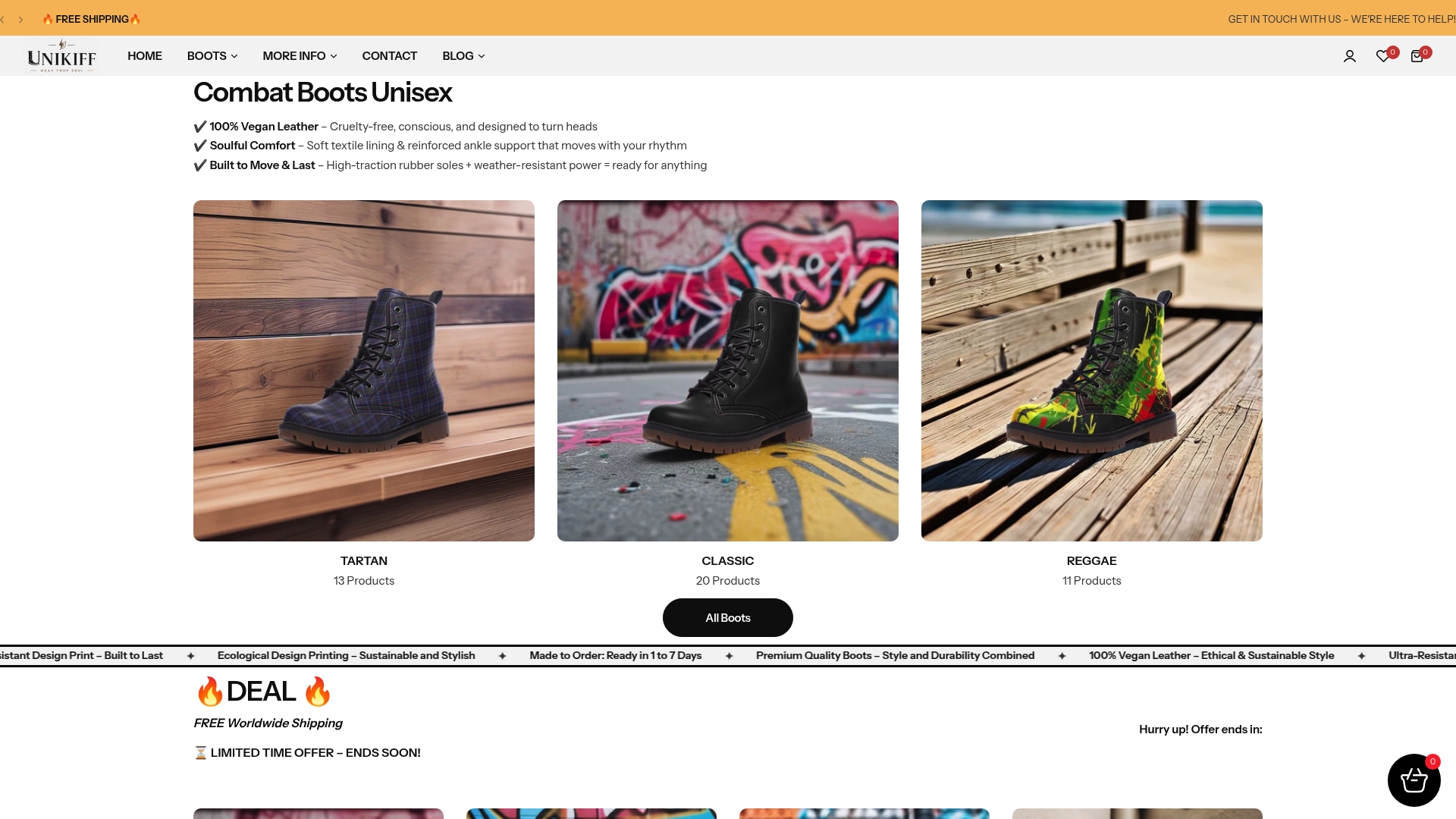
Browse the Unikiff vegan combat boots collection to find a solid black pair for monochrome looks or a printed style like the Dark Purple boots for a statement outfit. Not sure which shaft height fits your favorite jeans? Check the size guide before you order so tucking and cuffing both work exactly the way you planned.
Sources
- How to Wear Combat Boots: 16 Outfit Ideas With a Subtle Edge | InStyle
- 11 Outfits With Combat Boots You’ll Want to Try | Who What Wear
- How to Wear Boots With Jeans: 10 Outfit Rules Every Guy Should Know | Real Men Real Style