


Combat boot shaft height is the vertical distance from where the boot upper meets the sole to the top of the shaft. Heel height doesn’t count. To measure it yourself, run a tape measure from the sole (near your instep) straight up to the collar while the boot sits flat on the floor. Most combat boots fall into a few familiar bands: short (about 6"), mid (about 8"), mid-tall (9" to 10"), and tall (11" to 12"+). We’ll walk through exact measuring steps, what each height range actually does for you, and how groups like OSHA and military guidance treat footwear height as a real, sometimes non-negotiable, requirement.
Key Takeaways
Shaft height is measured from the sole to the top of the collar, excluding the heel, and choosing the right one depends on matching that number to your calf circumference and intended use.
| Point | Details |
|---|---|
| Measure correctly | Run tape from the sole near your instep to the shaft’s top edge, excluding heel height. |
| Match height to use | Pick 6" to 8" for fashion, 8" to 10" for work or tactical needs, 10"+ for riding or fieldwork. |
| Check circumference too | Measure the widest point of your calf opening while wearing your intended socks. |
| Verify uniform rules first | Confirm current employer or military height requirements before assuming compliance. |
| Shop by measurement | Unikiff lists exact shaft heights per style and offers a size guide for calf fit and returns. |
Table of Contents
- How to measure combat boot shaft height correctly
- What do common combat boot shaft heights mean?
- Why does calf shape change how a boot fits?
- Which shaft height fits your specific use?
- How Unikiff helps you land on the right fit
- Find your shaft height in the Unikiff collection
- Frequently Asked Questions
- Sources
How to measure combat boot shaft height correctly
Getting an accurate number takes two minutes and a tape measure. Skip this step and you’ll end up guessing between sizes every time you shop.
- Set the boot on a flat, hard surface so it isn’t leaning or slouched.
- Find the spot on the sole nearest your arch or instep, which is the industry reference point most brands use.
- Run the tape straight up the back or side seam to the top edge of the shaft (the collar).
- Record that number in inches. That’s your shaft height.
Wikihow’s own measuring guide confirms this method and specifically warns against including the heel in your total. A boot with a 2 inch heel and a 6 inch shaft is not an 8 inch boot. Mixing those numbers up is the single most common mistake people make when comparing product listings.
Boots with thick midsoles or platform outsoles make this trickier because the sole line curves. When that happens, measure from the point where the upper visibly separates from the sole unit, not from the ground.
Shaft circumference matters just as much as height. Wrap the tape around the widest part of the calf opening, usually a few inches below the collar, to get that number. Fit guides consistently recommend measuring circumference while wearing the socks you’ll actually wear with the boots, since a thick wool sock can change your real-world fit by half an inch or more.
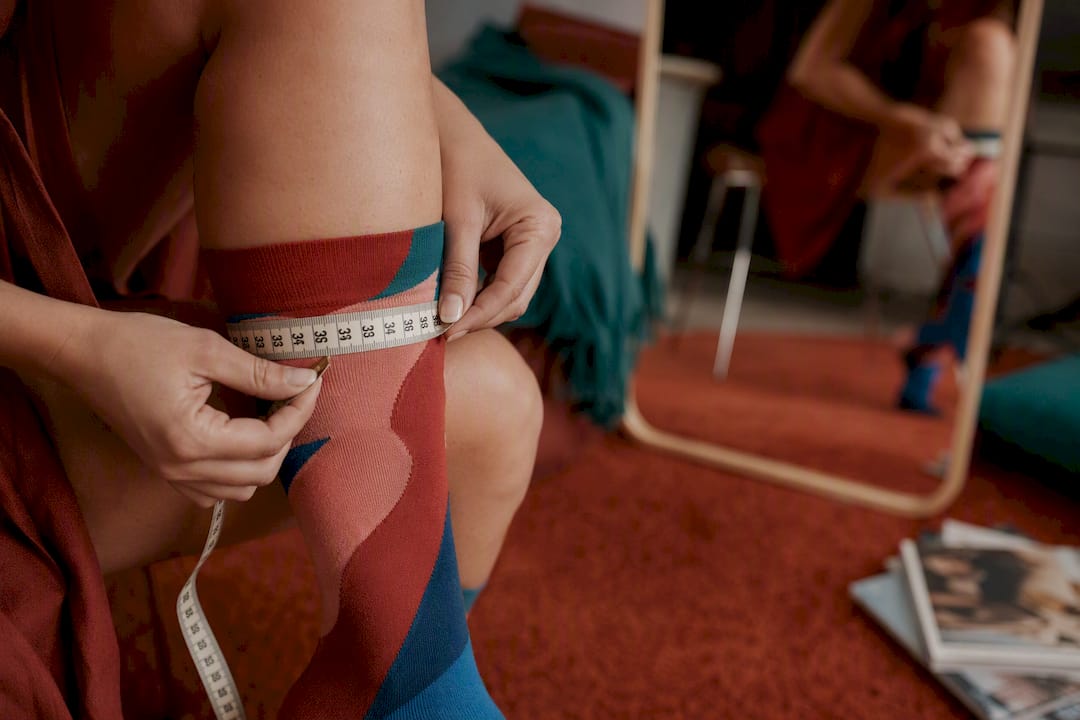
Pro Tip: Measure both legs. Most people have a slightly larger calf on their dominant side, and a boot that fits one leg perfectly can pinch the other.
Pull-on boots measure the same way as lace-ups, but check the collar carefully. Older boots with creased or collapsed tops can read half an inch short if you don’t smooth the leather flat before measuring.
What do common combat boot shaft heights mean?
Shaft height numbers translate directly into where the boot hits your leg and what it does for you there.
Short (around 6 inches) sits right at or just above the ankle bone. It’s the lightest option for mobility, favors everyday city wear and long walking days, and is common in both fashion combat boots and lighter-duty work boots. The trade-off is less ankle support and no coverage against debris, mud, or brush.
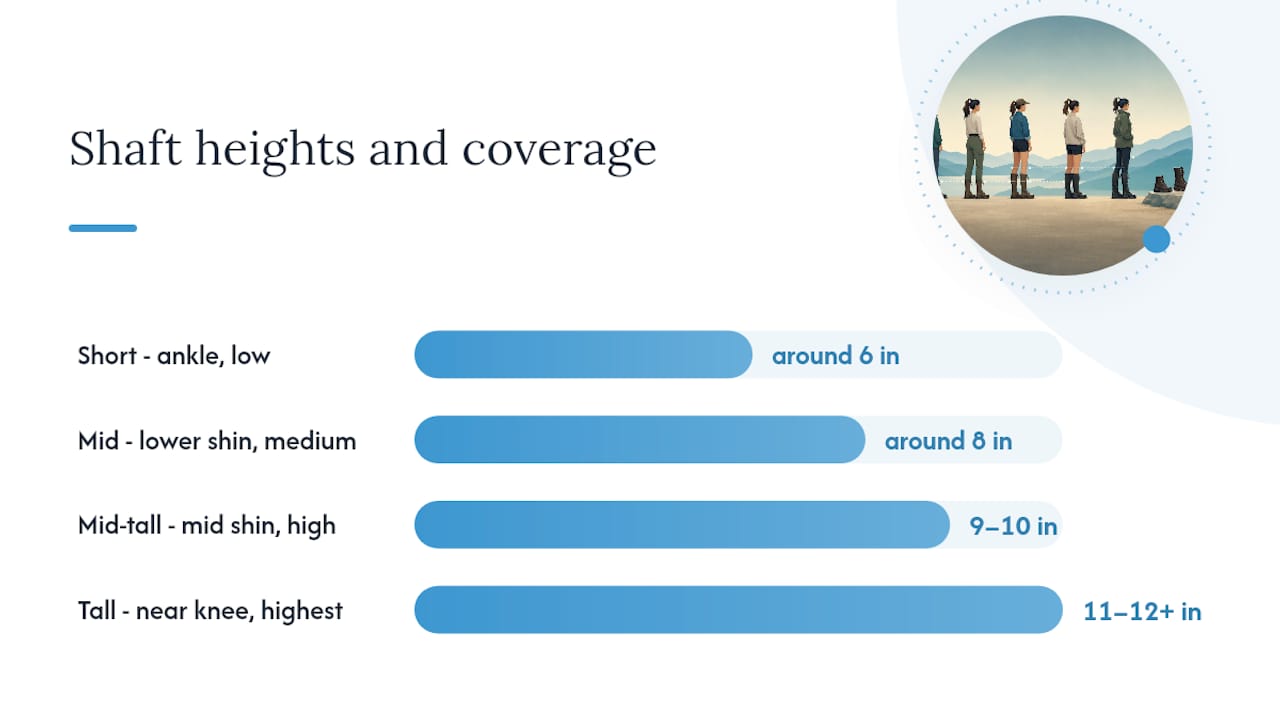
Mid (around 8 inches) typically lands a few inches above the ankle bone, on the lower shin. This is the sweet spot cited most often in work-boot guidance for added ankle stability without sacrificing much mobility. It’s a strong pick for standing jobs, moderate outdoor use, and everyday alternative-fashion styling.
Mid-tall (9 to 10 inches) climbs closer to mid-shin. This range shows up constantly in tactical and uniform contexts because it balances ankle protection with enough flexibility to walk, kneel, and move quickly.
Tall (11 to 12 inches or more) reaches toward the base of the knee. Riding boots and heavy field boots live in this range, since the taller shaft protects the shin from impact, brush, or a horse’s stirrup leather. Western boot guidance notes shafts in this tall range are the traditional standard for that category, which shows how consistent these height bands are across boot families, not just combat styles.
One thing that trips people up: heel height changes how tall a boot looks without changing the shaft measurement at all. A 6 inch shaft on a boot with a chunky 1.5 inch heel will visually read taller than an 8 inch shaft on a flat-soled boot. If you’re shopping by eye instead of by the spec sheet, that’s an easy way to end up with the wrong height.
Why does calf shape change how a boot fits?
Two boots with the identical shaft height can fit completely differently depending on shaft circumference and your calf shape. A muscular or wider calf needs more room at the collar even if the height itself is correct, while a tapered calf can end up swimming in a wide shaft and gapping at the top.
Run through this checklist before you commit to a size:
- Try boots on wearing the actual socks you plan to use, not thin dress socks.
- Stand and walk a few steps. Sitting-only fit checks miss pressure points that show up when you bend your ankle.
- Watch for pinching at the widest part of your calf when the boot is fully laced.
- Check for gapping or bunching at the collar, which usually means the circumference is too generous for your leg.
- Test for heel slip by walking, not just standing still.
Stiffer, taller boots generally need a longer break-in period than shorter styles, since there’s more material flexing with every step. Vegan leather constructions, including the ones Unikiff builds its boots from, tend to soften with wear similarly to traditional leather but can vary by thickness and lining. If a boot feels tight at the collar but the height itself is right, a tongue pad or a few sessions of hand flexing the shaft before wearing it out can solve the problem faster than sizing up.
Which shaft height fits your specific use?
Match the height to the job, not the other way around. A quick decision framework:
- 6" to 8" for daily fashion wear, city walking, and casual outfits where mobility and lightness matter more than coverage.
- 8" to 10" for many work environments, tactical training, and all-day standing jobs that need real ankle support.
- 10" to 12"+ for riding, heavy fieldwork, or anywhere you need shin protection from brush, debris, or stirrup contact.
Weigh protection against mobility honestly. Heavy fieldwork or long days on uneven ground justify a taller shaft even if it costs you some flexibility, while an office or retail job rarely does.
If you need a boot for uniform or workplace compliance, don’t assume any of the above applies to your situation. OSHA classifies footwear as personal protective equipment, meaning your employer can set specific height and coverage rules. Military guidance under AR 670-1 has historically required boots in the 8 to 10 inch range, but these standards move. A recent example: the Air Force reversed a planned 8 inch minimum boot height back down to 6 inches after pushback from service members. Check current official guidance before you buy, not last year’s memo.
How Unikiff helps you land on the right fit
We build our vegan combat boots knowing shaft height and calf room can make or break a pair. Every product page lists exact shaft measurements, our size guide walks you through checking calf circumference against your own leg, and our returns policy gives you room to size up or down if the fit isn’t quite right the first time.
Find your shaft height in the Unikiff collection
Once you know your number, matching it to a boot is easy. Our lineup runs from ankle-grazing short styles built for daily wear to taller mid-calf silhouettes with more shin coverage, all cut from cruelty-free vegan leather with lace-up closures, reinforced ankle structure, and high-grip rubber soles built to handle real days, not just runway shots.
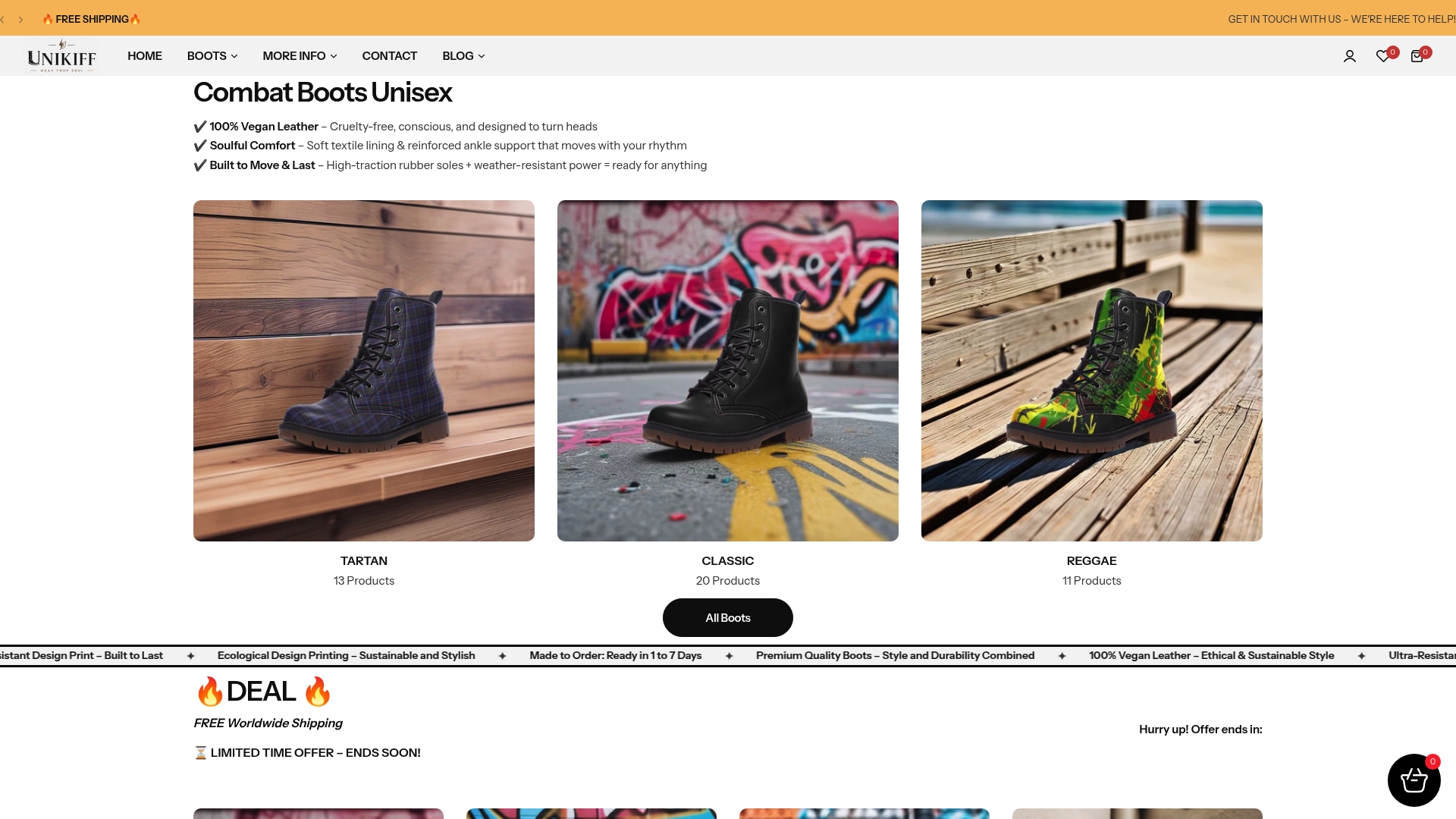
Start with the vegan combat boots size guide to measure your calf circumference and compare it against each product’s listed shaft height. From there, browse the full vegan combat boots collection to see how different heights pair with gothic, punk, and grunge styling, or check out styling ideas for balancing shaft height with an outfit. If you’re building a fall look around your new pair, this fall fashion trend guide has useful pairing ideas too. Pick your size, check the shaft measurement against your own leg, and place your order.
Frequently Asked Questions
Does shaft height include the heel? No. Shaft height only measures from where the sole meets the upper to the top of the collar. Heel height is a separate measurement entirely.
What’s the best boot shaft height for everyday wear? Most people find 6" to 8" comfortable for daily walking and city use, since it offers a little ankle support without limiting mobility.
How do I measure my calf for combat boot shaft circumference? Wrap a tape measure around the widest part of your calf, at roughly the height the boot collar will sit, while wearing the socks you plan to use with the boots.
Are taller combat boots better for riding? Taller shafts, generally 10" to 12" or more, give better shin protection against stirrup leathers and brush, which is why riding boots tend to run taller than fashion combat boots.
Do military boot height rules ever change? Yes. Requirements can shift with policy updates, as shown by the Air Force’s recent adjustment of its minimum boot height. Always check current official guidance rather than relying on older rules.
Sources
- How to Measure a Boot Shaft - wikiHow
- OSHA regulation: 1910.136 - Foot protection
- About-face! Air Force lowers boot height requirement following backlash | Stars and Stripes