


Six lacing patterns turn one pair of combat boots into six different outfits, and you don’t need new boots to pull it off. Criss-cross stays classic and works with everything. Ladder lacing builds a bold, structured grid that reads punk instantly. Straight bar gives you clean, minimal rows perfect for goth or streetwear. Spider-web turns your boots into a statement piece for festivals and events. Loose and slouchy lacing nails grunge without any effort. Hidden knot keeps the finish invisible for a polished, editorial look.
- Ladder + round laces = punk structure
- Straight bar + flat laces = goth minimalism
- Spider-web + ribbon laces = festival statement
- Loose criss-cross + worn laces = grunge ease
- Hidden knot + matching laces = clean, event-ready
Pro Tip: Ladder lacing tends to require shorter laces than criss-cross because it holds tension so efficiently, according to Ian’s Shoelace Site.
Keep scrolling for exact steps on tying each one, plus which lace type actually makes each pattern pop.
Key Takeaways
Matching a lacing pattern’s complexity to your boot’s eyelet count matters more than following any single trend, and Unikiff’s reinforced eyelets are built to support that flexibility.
| Point | Details |
|---|---|
| Match pattern to eyelets | Ladder and spider-web need many eyelets and tall boots to look intentional, not cramped. |
| Choose lace material deliberately | Flat or ribbon laces reveal woven patterns; round laces add bulk to structured ones like ladder. |
| Buy the right length | Nine-plus eyelet pairs or spider-web patterns typically need laces of 63 inches or longer. |
| Let lacing set the mood first | Pick your pattern before finalizing the outfit since it drives punk, goth, or cottagecore styling. |
| Shop structure built for style | Unikiff’s reinforced eyelets and supportive ankle design hold up under ladder and spider-web lacing. |
Table of Contents
- Which Combat Boot Lacing Styles Work Best For Each Aesthetic?
- How Do You Lace Combat Boots In Each Signature Style?
- What Laces Actually Work For Each Pattern?
- How Do You Style Combat Boot Lacing For Different Aesthetics?
- How Do You Finish And Maintain Boot Lacing?
- Which Unikiff Boots Work Best With These Lacing Styles?
- What’s The Real Takeaway On Lacing For Style?
- Ready To Try A New Lacing Style On Your Own Boots?
- Frequently Asked Questions
- Sources
Which Combat Boot Lacing Styles Work Best For Each Aesthetic?
Not every lacing pattern suits every boot. Eyelet count, boot height, and how much visual noise you want all factor in. Here’s a quick visual breakdown before you pick up a lace.
- Criss-cross: The default X pattern. Versatile enough for punk, goth, cottagecore, or plain city wear, and it works on boots with as few as five eyelet pairs.
- Ladder: Horizontal rungs stacked between vertical risers. This one demands attention, and it looks strongest on tall boots with plenty of eyelets since the structured pattern needs room to read clearly.
- Straight/bar: Flat horizontal bars, no crossing. Minimal, almost architectural. Pairs well with tonal outfits where you want the boot to disappear into the look rather than shout over it.
- Spider-web: A woven, radial pattern that fans out from the center. It’s decorative rather than functional, and it needs a long lace, flat or ribbon style, plus a high boot with many eyelets to show off properly.
- Loose/slouchy: Skip the top eyelet or two, loosen the tongue, let the laces hang a little. Instant grunge, zero effort.
- Hidden knot/tuck: Same base pattern as criss-cross or bar, but the knot disappears into the boot for a seamless finish. Ideal when you’re dressing up and don’t want stray lace ends competing with your outfit.
Pro Tip: If your boots have six or fewer eyelet pairs, skip spider-web entirely. It reads as cramped and messy on low-cut styles. Save it for taller silhouettes where the pattern has real estate to spread.
How Do You Lace Combat Boots In Each Signature Style?
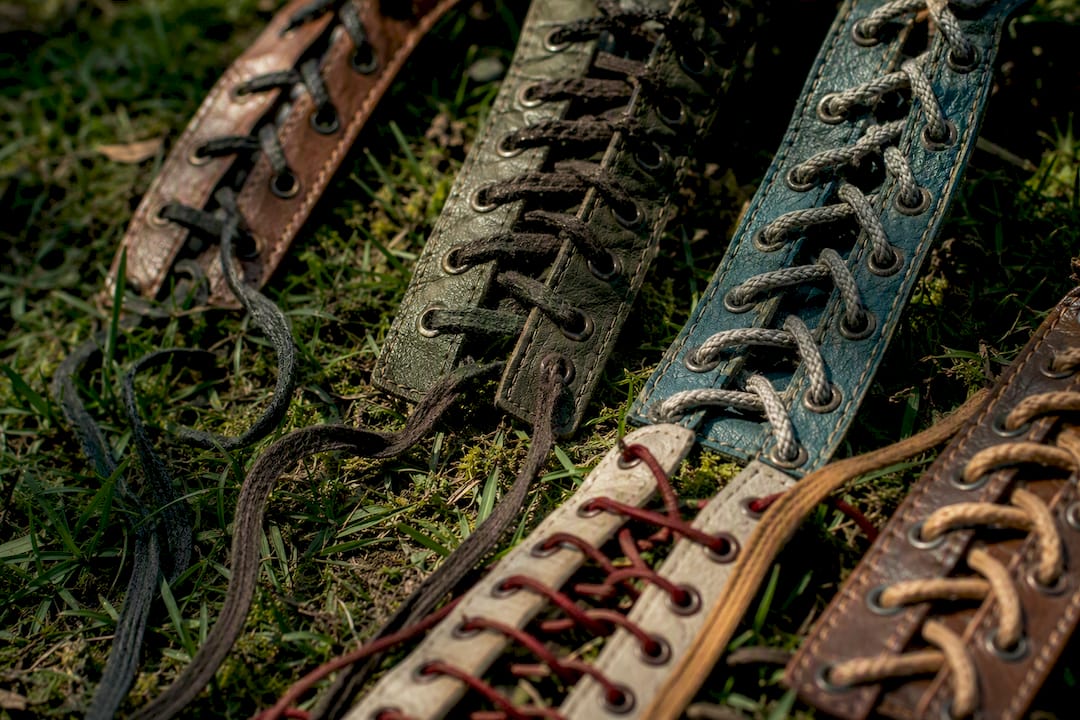
Grab your boots and a spare set of laces before you start. Undo the current lacing fully; trying to modify an existing pattern halfway through almost always ends in a knot.
Criss-cross (the reliable default):
- Start at the bottom eyelets, one lace end through each hole, so both ends sit level inside the boot.
- Cross each end diagonally to the opposite side, working upward.
- Pull each crossing snug as you go, don’t wait until the top to tighten.
- Finish at the top eyelets and tie or tuck.
Ladder (structured and punk-leaning):
- Begin at the bottom eyelets like criss-cross, ends level inside.
- Run one lace straight up the inside to the next eyelet on the same side (the “riser”), then across to the opposite eyelet (the “rung”).
- Repeat up the boot, alternating risers and rungs on each side.
- To tighten later, pull the vertical risers outward and up; to loosen, pull the horizontal rungs, a trick straight from ladder lacing technique guides.
Straight/bar (minimalist rows):
- Thread both ends in from outside at the bottom eyelets.
- Run each lace straight up the inside of the boot to the eyelet directly above.
- Bring it out and across to create a flat horizontal bar on the outside.
- Continue alternating sides until you reach the top.
Spider-web (decorative statement):
- Start at the center eyelets with both ends even.
- Cross diagonally, then loop each end under the opposite existing lace before crossing again, building the radial “web” outward.
- Work symmetrically in both directions from the center pair.
- Use a long flat or ribbon lace since the woven pattern requires extra length to complete without running short.
For display boots, pull patterns snug and even. For everyday wear, leave a little give at the ankle so you’re not fighting your laces by noon.
What Laces Actually Work For Each Pattern?
The wrong lace turns a great pattern into a mess. Flat laces compress and reveal detail, which is why they’re the go-to for complex woven patterns like spider-web, where a round lace would just blur the design. Round laces, on the other hand, add volume and definition, ideal for a chunky ladder pattern that’s meant to look substantial. Ribbon laces sit between the two, wide and flat like satin ribbon, and they’re the strongest choice for spider-web when you want the weave photographed or worn to an event.
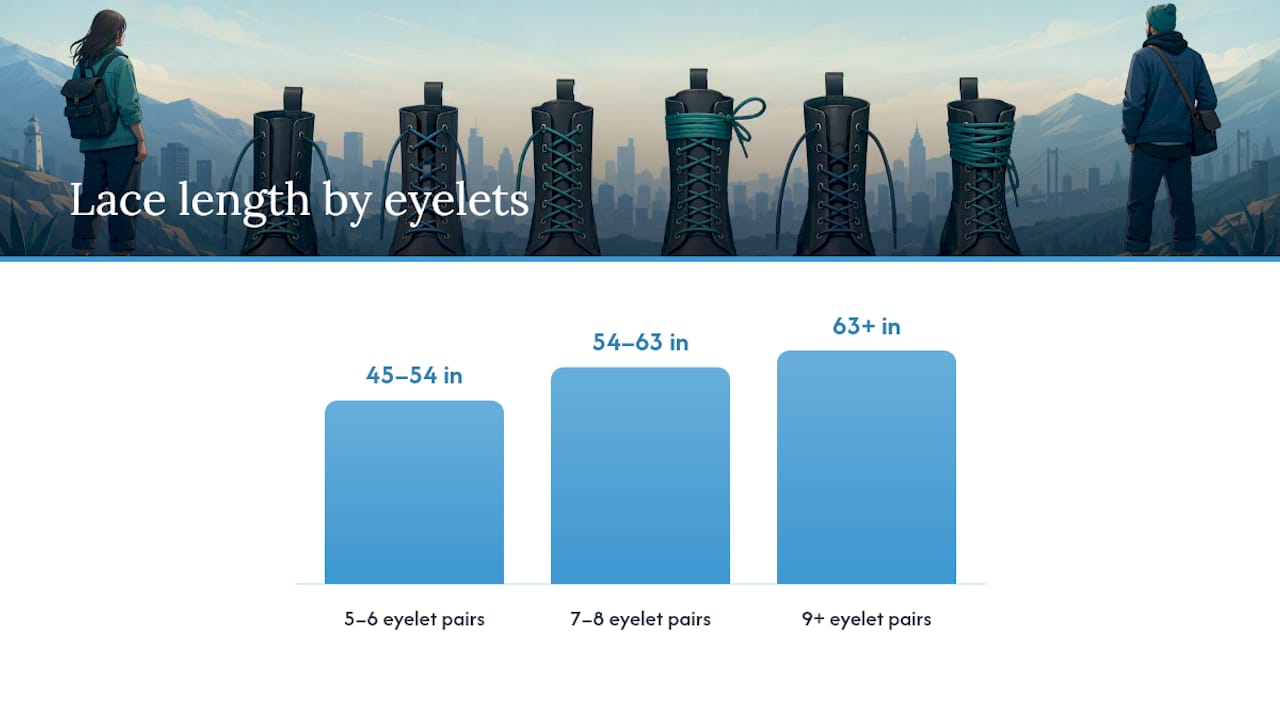
Length matters as much as material. As a rough guide:
- 5 to 6 eyelet pairs: short to medium laces (around 45 to 54 inches) for criss-cross or bar
- 7 to 8 eyelet pairs: medium to long (54 to 63 inches), especially for ladder since it eats up length quickly
- 9+ eyelet pairs or spider-web: long laces (63 inches or more), because ladder and spider-web patterns typically need extra length to complete the pattern without running short at the top.
Color is where you get to play. Matching laces keep the boot uniform and let an outfit take the spotlight. A contrasting lace, red on black, white on a printed upper, works as an accent when the rest of your outfit is neutral. For double-laced looks, try two-tone pairs threaded together for texture without extra pattern complexity.
How Do You Style Combat Boot Lacing For Different Aesthetics?
The lacing pattern sets the mood before the rest of your outfit even gets a say. Pair it right and the whole look clicks into place.
- Punk/grunge: Ladder or loose criss-cross with cuffed straight-leg denim, a graphic tee, and either a bold red lace or a chain draped across the vamp for extra edge.
- Goth/dark romantic: Straight bar or hidden knot lacing under a slip dress or lace blouse. The clean lacing keeps attention on the fabric contrast between delicate material and the boot’s structure.
- Cottagecore twist: Subtle criss-cross with a floral midi dress or prairie skirt. The softer pattern keeps the boot from overpowering the feminine silhouette.
- Minimal streetwear: Tonal bar lacing (lace matching the boot color) with a monochrome outfit and one clean accessory, nothing more.
Socks and hosiery change the silhouette more than people expect. Sheer tights under a slouchy lace read delicate; thick ribbed socks pushed over the boot top with a ladder pattern read heavier, more utilitarian. Lace charms are a small detail with outsized payoff, clip one at the base of a spider-web pattern and it becomes the outfit’s focal point. Editorial styling guidance consistently backs this juxtaposition: hard boot, soft fabric, deliberate contrast. Keep your color palette to two or three tones total. Combat boots already say a lot; let the lacing and one accent color finish the sentence instead of shouting over it.
How Do You Finish And Maintain Boot Lacing?
A great pattern falls apart if the finish looks sloppy. For hidden-knot styles, tie your knot low near the ankle, then tuck the ends down inside the boot shaft rather than letting them dangle over the tongue.
- Tuck excess lace flat, not bunched, so it doesn’t create a visible lump under skinny jeans.
- For display boots you won’t retighten often, a small glue dot under the final knot keeps the pattern locked, though it’s a one-way move since removing it later can strain the lace or eyelet.
- Spot clean laces with a damp cloth and mild soap rather than tossing them in the wash, which frays flat and ribbon laces fast.
- Wipe vegan uppers clean and let them air dry away from direct heat. Heat drying is the fastest way to warp or crack vegan leather.
Pro Tip: Swap laces seasonally instead of washing worn ones repeatedly. A five dollar lace refresh does more for a tired boot than any cleaning routine.
Which Unikiff Boots Work Best With These Lacing Styles?
Unikiff builds every boot with reinforced eyelets and a supportive ankle structure specifically because alternative fashion lacing puts more strain on hardware than a standard tie job. A tall, many-eyelet silhouette in the punk or gothic collections handles ladder and spider-web patterns without the eyelets pulling loose. A lower-cut, fewer-eyelet style suits criss-cross or straight bar cleanly, no wasted lace length.
Every pair is made from vegan leather with a high-grip rubber sole, built for festival ground and city sidewalks alike, so the pattern you choose doesn’t have to sacrifice durability.
David has spent years covering vegan and alternative fashion footwear, and the pattern he sees most often ignored is simple: match the lacing density to the eyelet count, not the trend. A ladder pattern squeezed onto a five-eyelet boot always looks cramped, no matter how sharp the outfit is around it.
What’s The Real Takeaway On Lacing For Style?
Most guides treat lacing as an afterthought, something you do once and forget. That’s backwards. The lacing pattern is doing half the styling work before you even choose an outfit, and the research on ladder and spider-web patterns backs that up directly: eyelet count and boot height determine whether a pattern reads as intentional or accidental, not personal taste.
The conventional advice, “pick whatever looks good,” skips the practical constraint that actually matters. A spider-web pattern on a six-eyelet boot isn’t a style choice, it’s a lace shortage waiting to happen. Get the eyelet math right first, then layer in aesthetic choices like color and material.
If you take one thing from this guide, prioritize matching pattern complexity to boot structure before you touch outfit coordination. A structured boot in the wrong pattern undersells itself; a simple boot overloaded with an intricate weave looks like it’s trying too hard. Once the lacing fits the boot, the outfit part gets easy.
Ready To Try A New Lacing Style On Your Own Boots?
Once you know which pattern fits your aesthetic, the boot underneath needs to hold up its end. Unikiff builds every pair with reinforced eyelets and a supportive ankle structure so ladder, spider-web, or criss-cross patterns actually stay put through festivals, city walking, and everyday wear, without the cracking or breakdown you get from animal leather alternatives.
Browse the full vegan combat boots collection to find a silhouette suited to your lacing style of choice, whether that’s a tall punk-ready boot or a lower-cut cottagecore pair. Not sure which size to order? Check the boot size guide before you buy so your new laces have the right fit to work with. If gothic prints are calling your name, the Skull and Roses design pairs especially well with straight-bar lacing and a slip dress.
Frequently Asked Questions
What’s the easiest combat boot lacing style for beginners? Criss-cross is the simplest starting point. It works on nearly any boot, requires no special lace length, and suits almost every alternative fashion aesthetic from punk to cottagecore.
Which lacing style looks best for a punk outfit? Ladder lacing or a deliberately loose criss-cross both read as punk, especially with round laces in a bold color paired against cuffed denim or a graphic tee.
Do I need special laces for spider-web lacing? Yes. Spider-web needs a long flat or ribbon lace to reveal the weave clearly and complete the pattern without running short partway up the boot.
Can I use these lacing techniques on any combat boot? Most patterns work on any boot, but ladder and spider-web need enough eyelet pairs, generally seven or more, to look intentional rather than cramped.
How often should I replace combat boot laces? Replace laces when they fray, stretch out, or lose their color. A fresh lace swap, especially in a new color, is one of the fastest ways to update a boot’s look without buying new footwear.
Sources
- Ian’s Shoelace Site – Spider Web Lacing
- Ian’s Shoelace Site – Ladder Lacing
- How to wear combat boots (InStyle)
Recommended
- 👢 How to Elevate Your Look with Combat Boots: Style Tips and Tricks! – Unikiff
- 👢 From Street to Chic: How to Style Women’s Combat Boots for Any Occas – Unikiff
- The Versatility of Combat Boots: Dress Them Up or Down! 👢✨ – Unikiff
- Combat Boots for Every Occasion: Your Ultimate Styling Guide! 👢✨ – Unikiff