


For multi-day outdoor festivals, pick boots if you expect mud, camping, or crowd pressure, and pick cushioned trail or running sneakers if you expect long dry walks, heat, or lots of pavement. Boots protect your ankles and keep grime out but weigh more and breathe less. Sneakers stay light and airy but offer less protection when the ground turns to soup. Whatever you choose, test it on your feet before the gates open and pack a backup.
TL;DR:
- A footwear study found outsole design lowered heel pressure 15% and loading rate roughly 7%; a contoured insert lowered heel pressure another 11% to 12%.
- Walk in new footwear for several hours before the event, wear moisture wicking socks instead of cotton, and replace them every 8 to 12 hours.
- Apply moleskin or gel pads to known hot spots before they hurt, and use heel lock lacing if your heel slips inside the shoe.
- Festival veterans report 40,000 to 50,000 daily steps at large events, so choose durable tread and reinforced stitching, then pack a backup pair.
Table of Contents
- How comfort and cushioning compare in soles and insoles
- Weather and ground: mud, dust, rain, and heat change the math
- Breaking in, socks, and blister prevention for multi-day comfort
- Which materials last and how to clean festival shoes fast
- How boots and sneakers pair with festival outfits
- A scenario-to-shoe checklist you can scan in one minute
- Why Unikiff vegan combat boots are festival-ready
- What dozens of festival weekends taught me about footwear
- Ready to try Unikiff boots for your next festival
- FAQ
- Sources
How comfort and cushioning compare in soles and insoles
Comfort over a long festival weekend comes down to what is under your foot, not the logo on the side. A footwear study on in-shoe pressure found that outsole design and heel-to-toe pitch mattered more than insert choice: the test shoe cut heel peak pressure by 15% and lowered average loading rate by about 7% compared with a control shoe, and a contoured insert added inside that same shoe reduced heel pressure by another 11 to 12%. The takeaway: the base shoe does most of the work, and a good insole fine-tunes it.
Look for these features when you are comparing options:
- A contoured insole that cradles your arch instead of a flat foam pad.
- Enough heel-to-toe pitch to roll your weight forward naturally with each step.
- A supportive midsole that resists packing down after hours of standing.
- An outsole with real tread, not a smooth fashion sole.
Sneakers generally win on raw cushioning per ounce, which matters when you are covering miles between stages. Boots give up some of that softness but add structure that helps when a crowd is pressing in from every side or your ankle twists on uneven ground.
Pro Tip: Walk in your festival shoes for two to four hours before the event and pay attention to any hot spots; a problem that shows up at hour three will be unbearable at hour thirty.
Outsole design reduced heel peak pressure by 15% and loading rate by about 7% compared with a control shoe, with contoured inserts adding further relief inside the same shoe. That gap is bigger than most people expect from an insole swap alone.

If your feet already ache after a few hours in flat shoes, a drugstore orthotic insert is a cheap way to test whether more arch support solves the problem before you buy new footwear.
Weather and ground: mud, dust, rain, and heat change the math
The forecast and the venue’s ground conditions should drive your decision more than style preferences. Boots handle muddy fields, damp campsites, wet grass, and the stray stomp from a neighbor in the crowd far better than open mesh sneakers. Waterproof membrane technology used in many boots and treated shoes helps keep feet dry when the ground turns soft, and a wipeable upper means less time scrubbing dried mud out of seams afterward.
Dry, paved festivals or desert heat call for the opposite approach. Breathable trail sneakers with solid tread move heat away from your feet and shed weight you will feel after the tenth mile of walking between stages and parking.
For festivals where the weather could go either way, build in some flexibility:
- Pack a small bottle of waterproof spray for canvas or suede uppers.
- Bring quick-dry socks and a spare pair in a sealed bag.
- Carry plastic bags and duct tape for an emergency rain wrap over low shoes.
- Use a towel to dry feet and swap socks mid-day if your camp is nearby.
Festival advice from stylists and veterans consistently splits the decision the same way: boots for protection in wet or muddy conditions, sneakers for breathability on dry, high-mileage days. After the event, let shoes air dry away from direct heat and brush off dried mud before it works into the stitching.
Breaking in, socks, and blister prevention for multi-day comfort
Blisters ruin more festival weekends than bad weather does, and almost all of them are preventable. New boots especially need mileage before day one, since stiff materials that have not flexed yet will rub in the same spots for hours.
- Walk at least a few hours in your chosen shoes before the festival, ideally on pavement and a dirt trail to mimic real conditions.
- Choose socks with a merino wool blend or synthetic wicking fiber over cotton, which holds moisture and causes friction.
- Swap socks every 8 to 12 hours to cut down on the chafing festival-goers call “Welly Leg.”
- Apply moleskin or a gel pad to known trouble spots like heels and the ball of the foot before you feel a hot spot forming.
- Try a heel-lock lacing technique if your heel slips inside the shoe, which keeps the foot from sliding and rubbing with every step.
Pro Tip: Pack a small blister kit with moleskin, gel pads, and a bit of repair tape; treating a hot spot the moment you feel it is far easier than treating a blister that has already formed.
A friction-reducing balm applied before you head out works well for anyone prone to blisters regardless of shoe choice.
Which materials last and how to clean festival shoes fast
Material choice decides whether your shoes survive one festival season or ten. Vegan and synthetic leathers, along with treated canvas, wipe clean far more easily than delicate suede, which stains permanently when mud dries into the nap. Cleanability and water resistance rank among the top practical criteria that festival shoe guides point to, ahead of brand or trend considerations.
Before you buy, check the construction details that predict how long a shoe will hold up:
- Reinforced stitching along stress points rather than glue alone.
- A quality rubber outsole with deep tread that resists shredding on gravel.
- A sturdy toe cap or reinforced panel where crowds tend to step.
- An upper that wipes clean rather than one that absorbs stains.
On-site, a quick wipe-down and pulling out insoles to air overnight prevents smells and keeps materials from breaking down early. Once you are home, a full clean and complete dry before storage avoids mildew; see our guide on how to clean white sneakers for tips that help your shoes stay bright and fresh. Avoid tossing festival shoes in a hot dryer, which can warp soles and crack synthetic uppers, and a bit of fabric glue or shoe repair adhesive can save a separating sole rather than sending the whole pair to the trash.
How boots and sneakers pair with festival outfits
Function and style do not have to compete. Combat-style and ankle boots with a low heel protect your feet while working with nearly every festival look, from flowy boho dresses to denim shorts and band tees. Sneaker fans have options too: trail runners and chunky silhouettes read as intentional rather than sporty, while low-profile runners work best on dry, paved grounds.
A few practical styling notes:
- Light or white sneakers soil fast in dust and mud, so a dark colorway holds up better visually over a weekend.
- Thick socks peeking over boots or sneakers add texture without extra weight.
- Layer socks with shorts or cropped pants so your shoe choice reads as part of the outfit, not an afterthought.
- If you want a photo-ready look for evenings, pack a lighter second pair and save your sturdy shoes for daytime stage-hopping.
A scenario-to-shoe checklist you can scan in one minute
Match your shoe to the situation you actually expect, not the one you hope for:
- Muddy camping weekend: boots, for ankle protection and a wipeable surface; pack dry socks and a waterproof spray.
- Desert heat with long transfers: breathable trail sneakers, for airflow and lighter weight; bring sunscreen for exposed feet in sandals as a backup only if the ground is clean.
- City festival on pavement: low-profile sneakers, for cushioning over hours of walking; bring a second pair for evening comfort.
- Mosh pit or heavy crowd: boots, for stepped-toe protection and ankle support; pack blister kit essentials in case of long standing.
Festival veterans report logging an average of 40,000 to 50,000 steps a day at large multi-day events, which makes the shoe decision matter far more than it might for a single afternoon out. Test your pick on a multi-hour walk before you commit to it for the whole weekend.
Why Unikiff vegan combat boots are festival-ready
We design every pair to be cruelty-free without giving up the durability or ankle support that heavy festival use demands.
These boots fit well for scenarios like:
- Camping festivals with wet grass or soft, muddy paths.
- Dense crowds where stepped toes and ankle twists are common.
- Outfits built around alternative, gothic, punk, or grunge styling that still need to survive three days outdoors.
Before you commit a pair to festival duty, check our size guide to confirm fit, since a boot that is snug in the store can feel different after hours of walking. Even festival-ready boots benefit from a short break-in period at home.
What dozens of festival weekends taught me about footwear
I have shown up to festivals in the wrong shoes more than once, including a pair of unbroken sneakers that left me limping by day two. The fix that stuck: short practice walks in any new shoe for at least a week before an event, and a sock rotation every half day regardless of how the shoes feel at the time.
Gaiters earned a permanent spot in my bag after one particularly muddy weekend turned my ankles into a swamp by noon. The biggest lesson is less glamorous than any outfit: fit beats looks every time, and a backup pair in the car has saved more than one festival for me.
— David
Ready to try Unikiff boots for your next festival
We built boots for exactly the kind of weekend where mud, crowds, and long days on your feet are the norm, not the exception. Every pair is designed to offer protection without compromising on style.
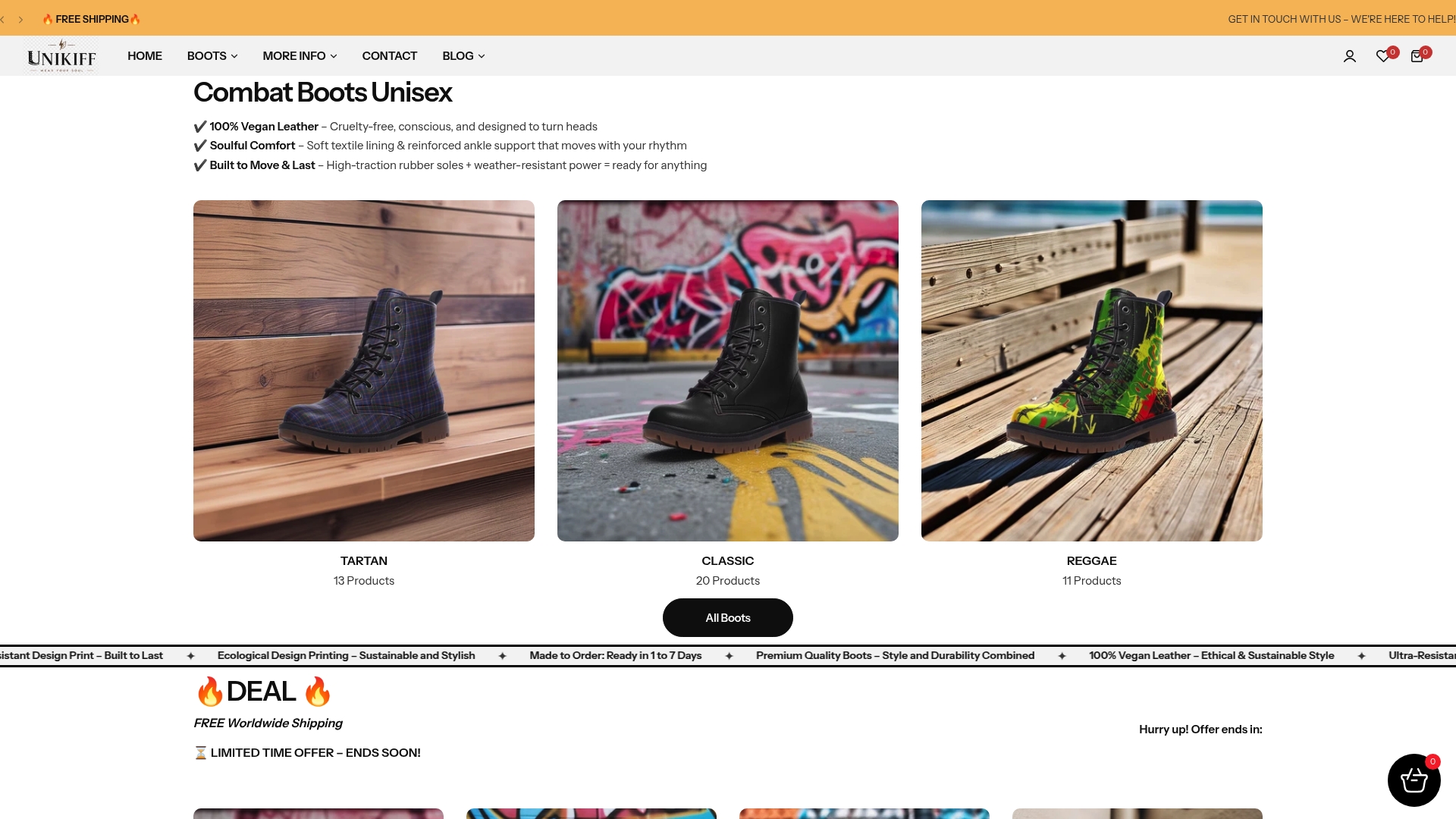
- Browse the full Vegan Combat Boots collection to find a silhouette and print that matches your festival look.
- Check our size guide before ordering to get the fit right the first time.
- Break the boots in with short walks ahead of the event and pack a lighter backup pair just in case.
| What you get | Detail |
|---|---|
| Materials | vegan, cruelty-free leather |
| Support | Lace-up closure with supportive ankle structure |
| Grip | High-grip rubber outsole |
| Styles | Classic, Punk, Cottagecore, Tartan, Skull, Celestial Witch, Boho-Hippie |
Explore the Classic Combat Boots for a festival-ready staple, or check the Punk Combat Boots if your look leans bolder.
FAQ
What is the best footwear to wear to a festival?
The best choice depends on conditions: boots suit muddy, wet, or crowded festivals where ankle protection matters, while breathable sneakers suit dry, hot, pavement-heavy events. Whichever you pick, break it in beforehand and bring a backup pair in case weather shifts.
Which is better, boots or sneakers?
Neither wins outright. Boots offer more protection and weather resistance, while sneakers offer lighter weight and better airflow, so the right pick depends on the terrain, weather, and crowd density you expect.
What’s the hottest shoe out right now?
Trends shift by season, and no single shoe dominates every festival look. For alternative and gothic-leaning outfits, vegan combat boots remain a steady choice because they pair protection with a distinct visual style.
What do Gen Z call shoes?
Casual slang for shoes varies by community and changes quickly, so there is no single fixed term in common use. Sticking with clear words like “sneakers” or “boots” keeps your footwear choice easy to shop for regardless of trending slang.
Sources
- Immediate effects of footwear design on in‑shoe plantar pressures, impact forces and comfort
- I found the perfect festival season shoe (Vogue)
- GORE‑TEX technology overview (festival footwear performance context)
- How to keep your feet smiling at music festivals (Compeed)