


Choose black if you want a boot that hides scuffs, works with every outfit you own, and asks nothing of you on a Tuesday morning. Choose white if you want the statement piece runway editors keep pointing to for 2026, and you’re willing to wipe it down after every wear. Both colors are available in vegan leather combat styles, so the real decision is about your lifestyle, not the leather.
TL;DR:
- White boots require more frequent cleaning and are highly susceptible to stains from dirt, mud, and outdoor elements, especially in suede or nubuck finishes.
- Black boots hide dirt better, develop a pleasing patina with age, and can go weeks without cleaning, making them more practical for outdoor or winter wear.
- The choice of color should consider the wearer’s environment, frequency of use, and cleaning tolerance, with black suited for daily, outdoor, and winter conditions, and white ideal for indoor or controlled settings.
- White boots are more seasonal, favored in spring and summer, but recent runway trends show winter white adapts well to heavier fabrics in colder months with proper care.
- Price and availability are similar for black and white styles within the same brand, but white options tend to sell out faster due to smaller, seasonal batches.
Table of Contents
- Black vs White Boots: Cleaning, Aging, and Fit Differences
- Styling Black and White Boots for Real Outfits
- The Three-Question Rubric for Choosing Your Boot Color
- Do Black and White Boots Work in Every Season?
- Does Skin Tone Affect Whether Black or White Boots Suit You?
- How Boot Color Changes Perceived Formality
- Are White Boots More Expensive or Harder to Find Than Black?
- Unikiff’s Take: Why We Make Both Colors, Not Just One
- See Unikiff’s Black and White Vegan Combat Boots
- Sources
- FAQ
Black vs White Boots: Cleaning, Aging, and Fit Differences
The maintenance gap between these two colors is the single biggest factor buyers underestimate. White leather shows every scuff, splash, and grass stain the day it happens, which means it demands active upkeep to avoid visible discoloration. Black, by contrast, hides dirt and tends to develop a worn-in patina that actually looks better with age, according to a care guide from Fashion Magazine.
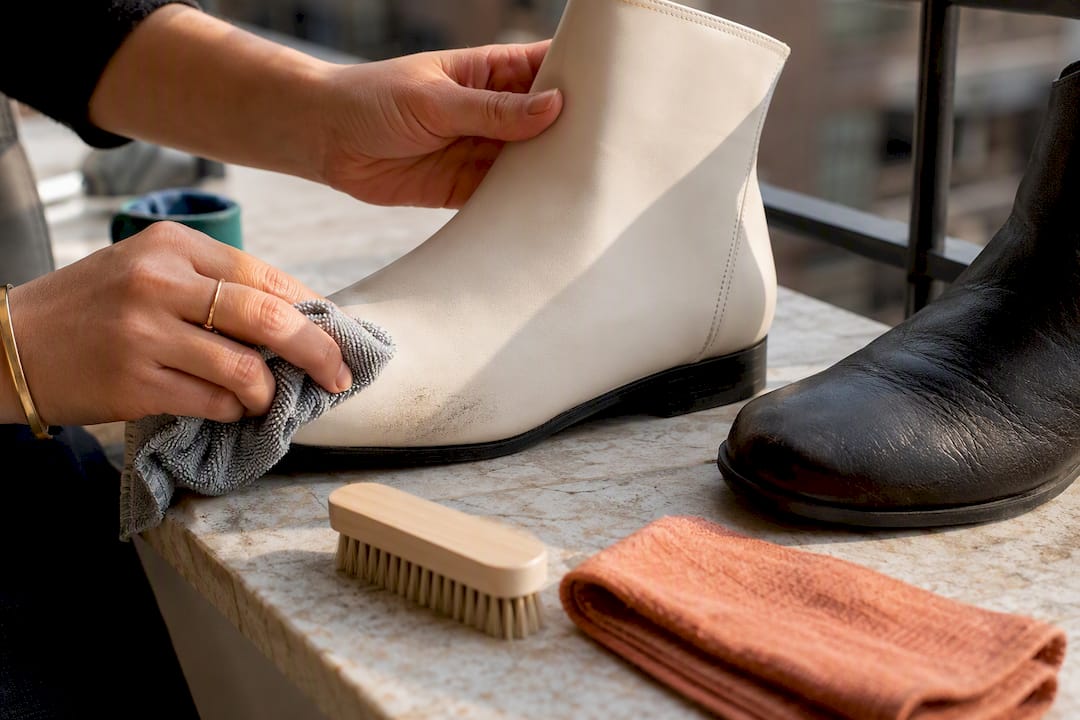
That difference shows up differently depending on the finish. Patent white shrugs off light dirt with a quick wipe, but suede white is nearly impossible to keep pristine outdoors. Oiled or matte black, on the other hand, can go weeks between cleanings and still look intentional rather than neglected.
Here’s a simple care breakdown by finish:
- Smooth black leather: wipe weekly, condition monthly, scuffs blend in naturally.
- Smooth white leather: wipe after every wear, spot clean scuffs immediately before they set.
- Patent finishes (either color): quick wipe with a damp cloth, no conditioner needed.
- Suede or nubuck: use a suede brush and avoid water; white suede requires the most caution of any finish.
Vegan leather follows nearly the same routine as animal leather: wipe clean, use a protector spray formulated for vegan materials, and treat laces and soles as separate cleaning jobs rather than an afterthought, according to Unikiff’s own vegan leather care guide.
One thing color does not affect: fit. Sizing comes down to the lining, the insole, and the construction of the boot, not the shade of the upper. Don’t assume a white pair runs differently than the black version of the same model.
Pro Tip: Apply a matte protector spray to white boots before their first wear, not after the first scuff. It’s far easier to prevent staining than to reverse it, and a quick reapplication every few weeks keeps the color looking factory fresh.
Styling Black and White Boots for Real Outfits
Black is the boot equivalent of a little black dress. It disappears into almost anything, which is exactly the point. White works the opposite way: it’s meant to be noticed, and stylists increasingly use it as the anchor of an outfit rather than a background piece.
Five ways to wear black boots:
- Monochrome black on black jeans and a black jacket for a streamlined, editorial look.
- Tailored contrast with cropped trousers and a blazer for office-adjacent styling.
- Denim classic paired with straight-leg jeans, rolled at the ankle.
- Festival utility layered with cargo pants and a cropped top.
- Winter layering under a maxi skirt with thick tights for warmth without bulk.
Five ways to wear white boots:
- Contrast play against all-black outfits, letting the boots be the single focal point.
- Spring neutrals, paired with cream, beige, or soft gray for a tonal look.
- Slipdress and boots, a combination fashion editors keep returning to for its unexpected edge.
- Denim on denim, matching white boots with white or light-wash jeans for a clean, cohesive silhouette.
- Runway-inspired statement, mixing white boots with unexpected color blocking, a pairing fashion editors highlighted repeatedly in 2026 boot trend coverage.
Socks matter more than most people think. Matching your sock color to your boot elongates the leg line, while a deliberately contrasting dark sock under white boots creates a graphic break that reads as intentional styling rather than a mismatch.
On the sport and outdoor side, white loses fast. Mud, trail dust, and heavy outdoor activity will wreck a white boot in a single outing. Save white for indoor events, city commuting, or staged photo moments, and reserve black for anything involving actual terrain.
The Three-Question Rubric for Choosing Your Boot Color
Ask yourself these three questions before you check out:
- How often will you wear them? Daily wear favors black. Occasional statement wear favors white.
- What’s your environment? Urban commuting, festivals with mud, or outdoor activity all point to black. Curated events, controlled indoor settings, or fashion-forward city days make white workable.
- What’s your cleaning tolerance? If you’re not willing to wipe down your boots after most wears, white will disappoint you within a month.
Score yourself honestly. Two or three “black” answers means black is the practical call. Two or three “white” answers means you’re the exact buyer white boots were designed for.
Finish matters here too. Patent white is the easiest white to maintain since dirt wipes off in seconds. Oiled or waxed black develops the richest patina over time. Suede in either color carries real caveats: gorgeous look, high fragility.
When comparing product pages, check for:
- A listed protector finish or recommended spray
- Sole grip rating for your typical terrain
- Ankle support structure, especially for all-day wear
- A clear return and size policy in case the fit runs off
For vegan combat boots specifically, look for reinforced stitching at flex points since vegan leather uppers handle stress differently than traditional hides, and a mismatched sole grip can undercut an otherwise great boot.
Do Black and White Boots Work in Every Season?
Season plays a bigger role in this choice than most buyers realize. Black boots handle cold weather instinctively: they read as heavier, pair naturally with wool, and hide the salt stains and slush marks that winter throws at every pair of shoes. That’s part of why black remains the default boot color from late fall through early spring in most climates.

White shifts the calendar. It reads as a warm-weather color, which is exactly why editors keep placing it in spring and summer editorial spreads rather than winter ones. A white boot against a light sundress or rolled white jeans feels seasonally correct in a way a black combat boot doesn’t quite achieve in July.
That said, the “white is for summer only” rule is softening. Winter white showed up on 2026 runways paired with heavier fabrics like wool coats and cable knits, proving the color isn’t strictly seasonal anymore. The catch is practical, not stylistic: white boots in snow or slush require far more cleanup than the same boots on a dry sidewalk in June.
If you live somewhere with real winters and want white anyway, treat them as an indoor or event boot for that season rather than a daily driver. Save the daily winter rotation for black, and bring white boots out for the controlled environments where salt and slush aren’t a threat.
Does Skin Tone Affect Whether Black or White Boots Suit You?
Skin tone doesn’t disqualify either color, but it does change how the contrast reads. Deep and rich skin tones tend to make white boots pop with high visual contrast, which is part of why white has become a favorite among stylists building bold, high-contrast looks for editorial work.
Fair and light skin tones create a softer contrast against white, which can look elegant but sometimes reads as less graphic unless paired with darker socks or trousers to reintroduce that contrast lower on the leg.
Black boots sidestep this conversation almost entirely. Because black reads as a neutral against nearly every skin tone, it’s the safer pick if you’d rather focus your outfit planning on color coordination elsewhere and not worry about how your boots interact with your complexion.
The more useful lens isn’t skin tone alone, it’s personal coloring as a whole, meaning hair, eyes, and the color palette you already gravitate toward. Warm-toned dressers with golden undertones in their wardrobe often find white boots integrate more naturally, while cooler, jewel-toned wardrobes tend to let black boots blend in without a second thought.
How Boot Color Changes Perceived Formality
Black boots read as more formal by default. That’s a holdover from decades of black dress shoes and boots signaling professionalism, and it still applies even in combat boot silhouettes. A black lace-up boot can pass in office-casual settings, evening events, and dressier gatherings where a white boot would feel out of place.
White flips that formality scale. It reads as casual, playful, and statement-driven rather than buttoned-up, which is exactly why stylists reach for it in streetwear and festival contexts rather than boardrooms. That doesn’t make white “less serious” fashion. It makes it a different kind of serious, one built around personal expression rather than dress-code compliance.
Dress codes that specify “business casual” or “smart casual” tend to tolerate black boots without a second glance. The same dress code applied to white boots is a coin flip depending on the venue, and it’s worth checking the room before committing to white for anything work-adjacent.
For alternative fashion specifically, gothic, punk, and grunge styling, the formality rules bend anyway. Both colors work inside those subcultures, but black remains the anchor color of most gothic and punk wardrobes, while white functions as the deliberate outlier that breaks up an otherwise dark palette.
Are White Boots More Expensive or Harder to Find Than Black?
Pricing between black and white boots is generally comparable within the same product line since the cost difference comes from materials and construction, not dye color. Where the gap shows up is in availability and depth of selection.
Black remains the default color most brands produce first and restock most often, simply because it’s the color that sells consistently year round. White, especially in specialty categories like vegan combat boots, tends to run in smaller batches tied to seasonal trend cycles, meaning popular white styles can sell out faster and restock less predictably.
If you’ve spotted a white pair you like, the practical move is to buy sooner rather than waiting, since white inventory tends to move in shorter cycles than black. Black, meanwhile, is close to always available, which is part of its appeal for anyone who wants a reliable go-to rather than a limited drop.
Unikiff’s Take: Why We Make Both Colors, Not Just One
We didn’t design black and white vegan combat boots as interchangeable options. Each color forces different tradeoffs in materials and construction. White uppers need a cleaner-wiping vegan leather and a protector-ready surface, while black tolerates richer textures that develop character over time. Both still get the same reinforced ankle structure and high-grip rubber soles because comfort and support shouldn’t depend on color choice.
Customer feedback keeps landing in three buckets: commuters who want a black pair that survives daily wear, festival-goers layering white boots into a statement look, and shoppers building an entire alternative wardrobe around one bold color choice.
— David
See Unikiff’s Black and White Vegan Combat Boots
There are unisex vegan combat boots available in both black and white, each with lace-up closures, supportive ankle structure, reinforced detailing, and high-grip rubber soles built for city wear, festivals, and everyday statement outfits.

Every design choice in this guide points back to the same question: durability versus upkeep. These boots are built to answer both sides of that question rather than forcing you to compromise, with protector-ready finishes on the white styles and naturally forgiving textures on the black ones. Browse the full vegan combat boots collection to compare colors side by side, and check the size guide before you order so your first pair fits right the first time.
Sources
- How to clean white boots: care guide
- 5 Boot-Colour Trends to Note for Spring 2026 and Beyond | Who What Wear
FAQ
What Is the Best Color for Boots?
There’s no single “best” color, it depends on your routine. Black is the most practically versatile choice for daily wear, while white works best for buyers who want a statement piece and don’t mind extra cleaning.
What Does Wearing White Boots Mean Stylistically?
White boots signal confidence and intentional style since the color demands attention rather than blending into an outfit. Fashion editors treat white as a deliberate focal point, not a neutral background choice.
Are White Boots Still in Style in 2026?
Yes. White boots showed up repeatedly across 2026 runway and editorial roundups, including pairings with neutral palettes and unexpected color combinations, confirming a real runway-backed resurgence.
Which Color Boots Go With Everything?
Black. It’s the most universally versatile boot color and pairs with nearly any outfit, while white functions more as a focused style statement than an everyday neutral.
Does Unikiff Make Both Black and White Vegan Combat Boots?
Yes. Unisex vegan combat boots are offered in both black and white, along with bold printed designs, all featuring reinforced ankle support and high-grip soles.