


Choose 6 inch boots when you need mobility, airflow, and all-day comfort. Choose 8 inch boots when you need extra ankle coverage, brush protection, or your job requires it.
- Pick 6 inch: patrol work, driving, ladder climbing, warm-weather hiking, casual and fashion wear.
- Pick 8 inch: heavy brush, deep mud or snow, long rucks, and roles where the uniform policy or safety rules mandate taller shafts.
- Check first: some military, security, and construction employers require a minimum shaft height regardless of what you’d prefer.
Key Takeaways
Six inch boots win on mobility and airflow, while eight inch boots win on coverage and stability, provided they’re laced all the way to the top.
| Point | Details |
|---|---|
| Mobility vs. coverage | 6 inch boots move easier; 8 inch boots block more debris, water, and brush. |
| Lacing determines support | An 8 inch boot only delivers its stability benefit when laced fully to the top. |
| Break-in time differs | 6 inch boots typically soften faster than 8 inch boots due to less calf contact. |
| Check employer rules first | Uniform or safety policy can override personal height preference entirely. |
| Unikiff offers both heights | Unikiff’s vegan combat boots pair lace-up ankle support with cruelty-free materials for daily wear or bold styling. |
Table of Contents
- 6 Inch Boots: Where the Lower Shaft Wins
- 8 Inch Boots: Where Coverage Takes Over
- How Do 6 Inch and 8 Inch Boots Compare Side by Side?
- What Should You Check Before Buying?
- What Does the Research Say About Fit and Break-In?
- Sources
6 Inch Boots: Where the Lower Shaft Wins
A 6 inch boot moves with your foot instead of fighting it. The shorter shaft gives your ankle a fuller range of motion, which matters for anyone bending, climbing, or shifting positions all day. Research comparing the two heights confirms that shorter boots allow more ankle movement and typically break in faster since there’s less material to soften against your leg.
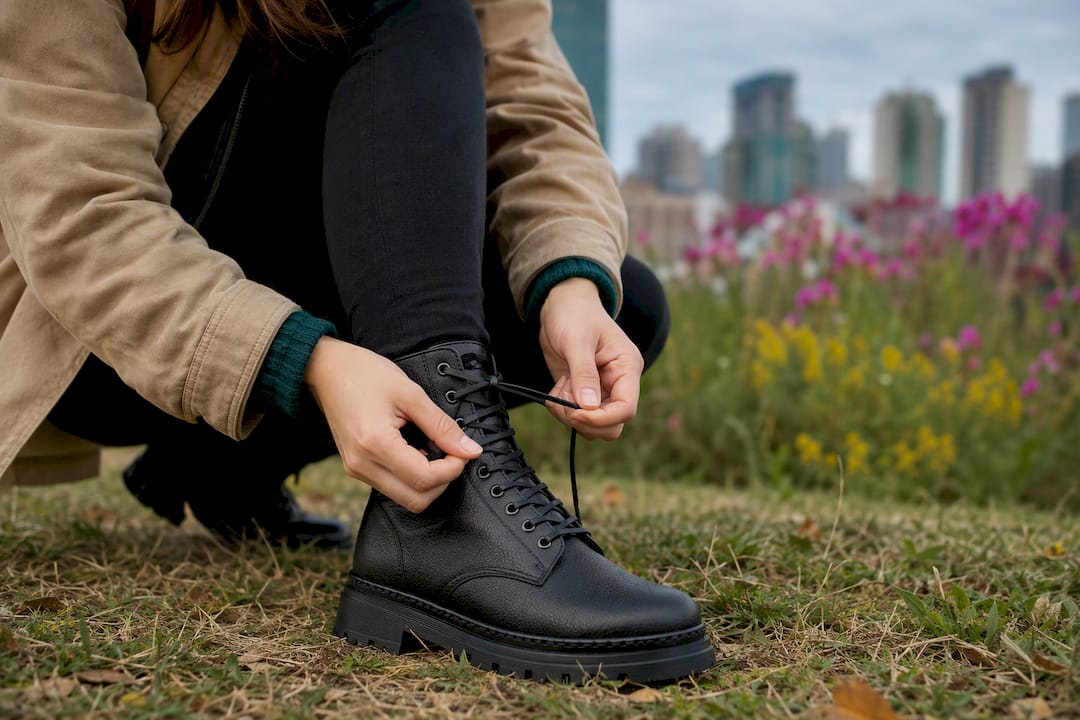
The lower cut also breathes better. Less shaft material means more airflow, so your feet run cooler on warm days or during long shifts indoors.
Best for:
- Patrol and first-responder work that demands quick footwork
- Light construction and farm work
- Driving-heavy jobs, where a tall shaft can catch on pedals
- Hiking on maintained trails
The tradeoff shows up in rough terrain. Thick brush, deep water crossings, or a heavy rucksack load will expose the 6 inch boot’s lower coverage fast.
Pro Tip: Lace snugly through the ankle eyelets and pick a mid-cushion wool sock. That combination locks your heel in place and compensates for the shorter shaft’s lower ankle support.
8 Inch Boots: Where Coverage Takes Over
An 8 inch boot exists for one reason: coverage. The taller shaft blocks debris, brush, and water from reaching your ankle, and that added barrier is why military units and many outdoor labor roles default to it.
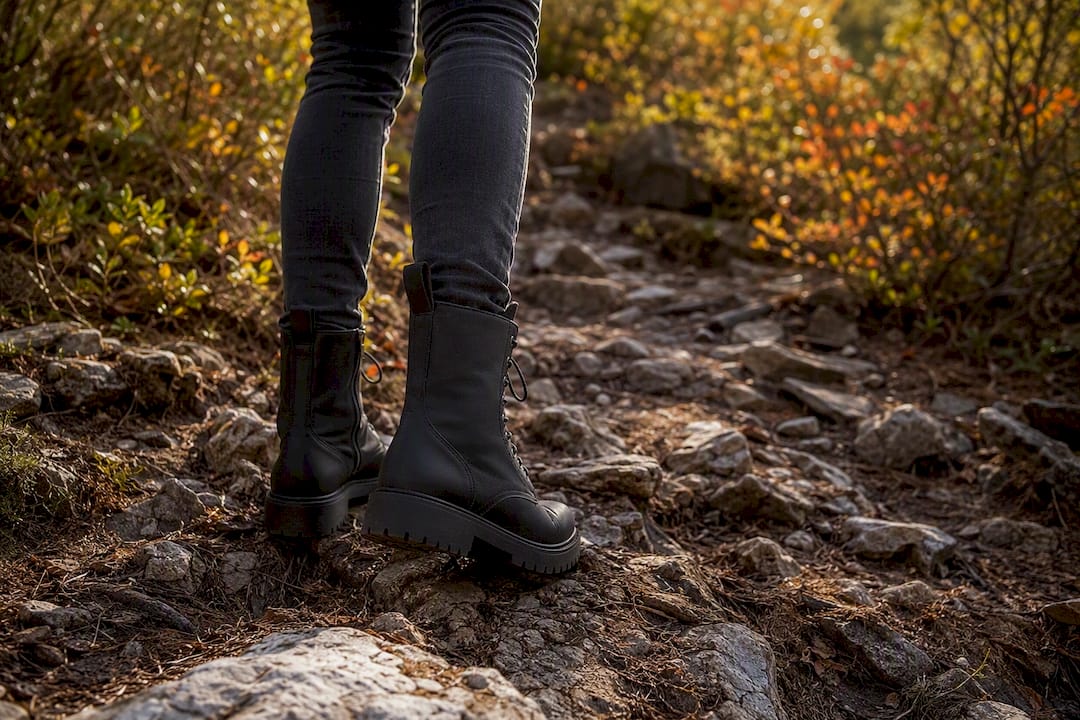
Stability is real, but it’s conditional. The perceived ankle support only shows up if you lace the boot all the way to the top. Ergonomic guidance on work boot fit points out that proprioceptive feedback, not the shaft material alone, creates that locked-in feeling. Skip the top eyelets and you’re just carrying extra weight for nothing.
Best for:
- Military and tactical roles with uniform-mandated height
- Long rucks and heavy brush hiking
- Cold-weather or wet-terrain outdoor labor
The cost is comfort. Taller boots run warmer, weigh more, and need a longer break-in period since the shaft has to conform to your calf.
Pro Tip: If your job or branch requires 8 inch boots, don’t loosen the top laces for comfort. You’ll lose the stability the extra height was supposed to give you.
How Do 6 Inch and 8 Inch Boots Compare Side by Side?
| Factor | 6 Inch Boots | 8 Inch Boots |
|---|---|---|
| Flexibility / range of motion | High, ankle moves freely | Lower, restricted by shaft |
| Protection / coverage | Moderate, ankle exposed | High, blocks debris and water |
| Ventilation / warmth | Cooler, better airflow | Warmer, less airflow unless vented |
| Weight | Lighter | Heavier |
| Break-in time | Shorter | Longer |
| Best for | Patrol, driving, light labor, trails | Military, heavy brush, long rucks |
| Key features to check | Flexible outsole, breathable liner | Waterproof membrane, top-lace hooks, vents |
Pick 6 inch if your day involves constant movement and moderate terrain. Pick 8 inch if your terrain or your employer leaves no room for negotiation. The close call is moderate outdoor work, where either height can perform if the boot fits and laces correctly.
What Should You Check Before Buying?
- Confirm your employer’s or uniform’s required shaft height and toe protection rating before shopping by preference.
- Match the boot to your terrain: maintained trails and pavement favor 6 inch, brush and mud favor 8 inch.
- Consider your shift length. Longer duty cycles amplify weight differences that feel minor in a five-minute store try-on.
- Test lacing to the top on any 8 inch boot in-store. If it won’t lace snug without pinching, move on.
- Check the outsole flex point. A stiff sole undercuts the mobility advantage of a 6 inch boot.
Ask your employer: Is there a minimum shaft height? Is electrical hazard rating required? Is waterproofing mandatory for your role?
Red flags when shopping:
- Heel lifts inside the boot when you walk
- Loose shaft that shifts side to side on an 8 inch model
- No venting on a tall boot meant for warm climates
- Missing waterproof membrane when the job demands one
What Does the Research Say About Fit and Break-In?
Break-in time isn’t the same across heights. Six inch boots typically soften up faster since there’s less material contacting your leg. Eight inch boots need more patience because the shaft has to conform to your calf shape.
- Start with short wear sessions, two to three hours, and increase gradually over one to two weeks.
- Wear the sock you’ll actually use on the job during every break-in session, not a thin liner.
- Lace fully to the top on 8 inch boots from day one. Loose lacing during break-in trains the boot to fit loosely later.
- Add an insole only after the shaft has softened. Doing it too early can crowd your foot and worsen blister risk from excess internal movement.
How Does Shaft Height Affect Your Silhouette?
A 6 inch boot sits at the narrowest part of your ankle, keeping the leg line open. An 8 inch shaft climbs toward mid-calf, which reads bolder and chunkier under cropped pants.
- Shorter frames often look more balanced in 6 inch styles paired with straight-leg pants.
- Taller boots (in the 8–12 inch mid-calf range) can add visual weight, so heel height and pant cut shift how tall the shaft actually looks.
What I’ve Learned Reaching for Both Heights
Balancing style and function in combat-style boots taught me that most people overthink the tradeoff. I reach for a lower shaft for daily wear and errands, and only go taller when I know I’ll be outside in rough conditions for hours. My rule: match the boot to the day, not the outfit.
Ready to Shop Cruelty-Free Combat Boots?
Vegan combat boots don’t have to mean choosing between style and support. Unikiff builds lace-up designs with reinforced ankle structure and high-grip rubber soles, so you get real stability without animal leather.
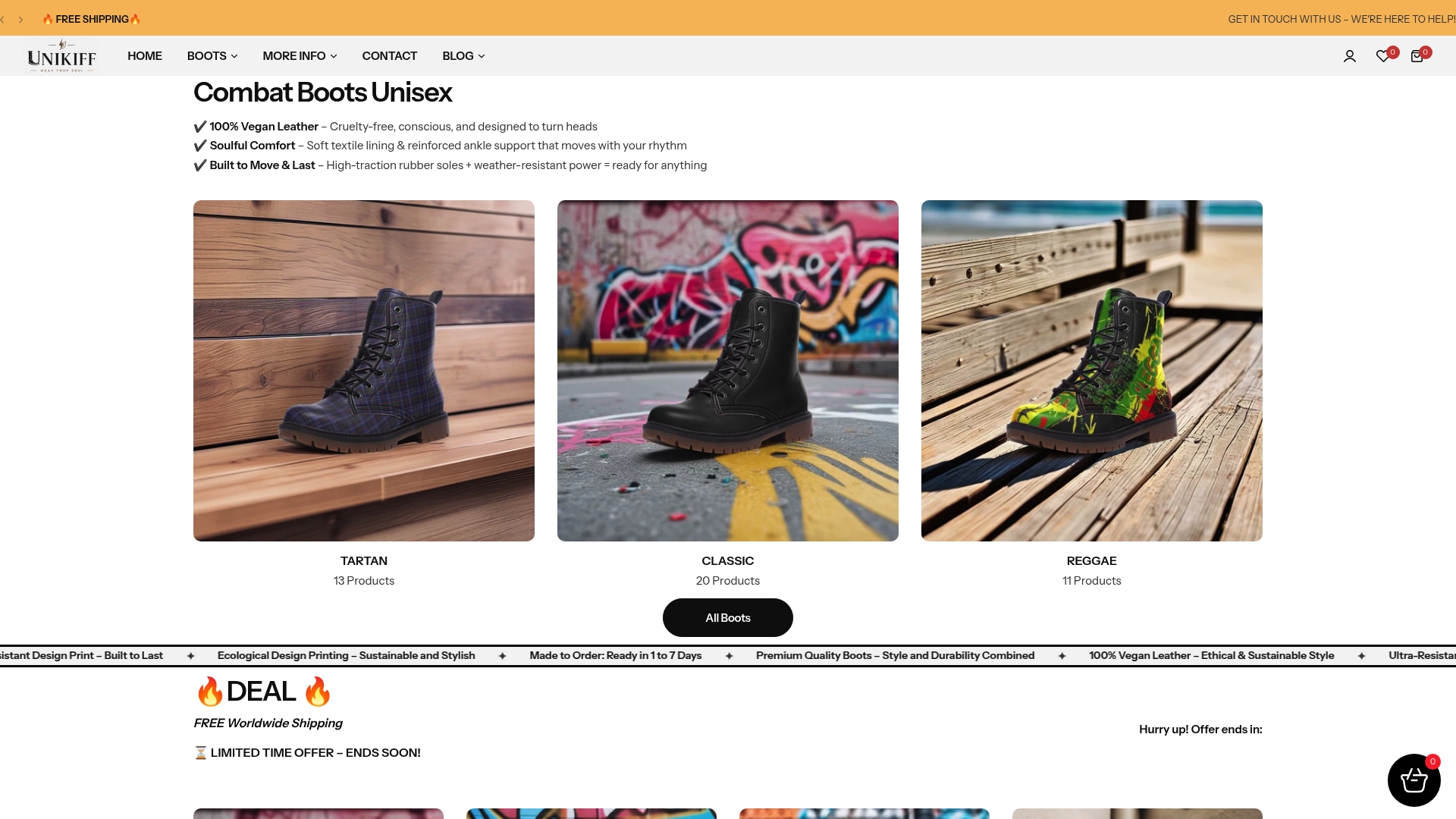
Whether you want a solid black pair for everyday wear or a bold gothic print for festival season, the full vegan combat boots collection has options in both silhouettes. Not sure which size fits your calf or ankle shape? Check the size guide before you order to avoid a break-in headache later.
Sources
- 6” Boot vs. 8” Boot: Which Boot is Best for Your Job?
- How to choose the best work boots
- Personal Protective Equipment - OSHA